
Birdwatching in the Danube Delta Romania –
Complete UNESCO Wetland Guide (360+ Species)
Europe's finest wetland birding. 360+ species, the continent's largest Dalmatian Pelican colony, and channels untouched by mass tourism. Explored from a 4-star floating hotel — the only one in the delta.
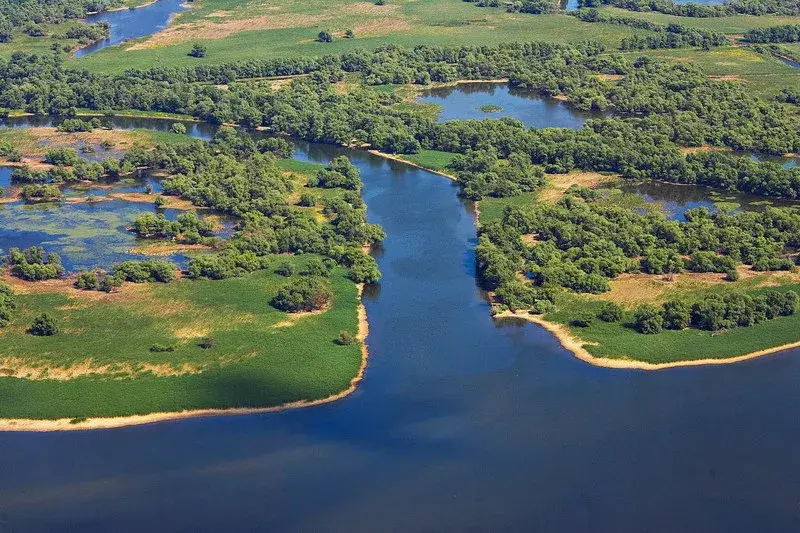
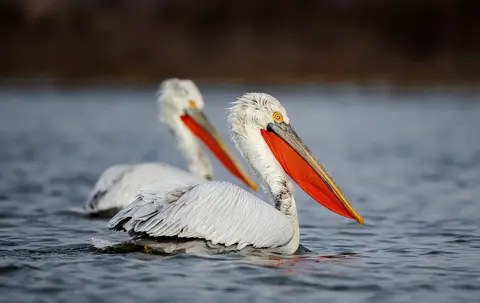
The Danube Delta is Europe's second-largest river delta and the continent's best-preserved wetland, covering 5,800 km² in eastern Romania. Designated a UNESCO Biosphere Reserve in 1990 and a Ramsar Wetland of International Importance, it hosts over 360 bird species — including 250+ breeding species — and serves as a critical staging and wintering site for millions of waterbirds on the Central Asian and Black Sea flyways. The delta's largest breeding colony of Dalmatian Pelicans (Pelecanus crispus), a globally vulnerable species — one of Europe's most important breeding strongholds, with approximately 450–500 pairs recorded in Romania annually.
Danube Delta — Key Facts
23 Ecosystems in One Reserve
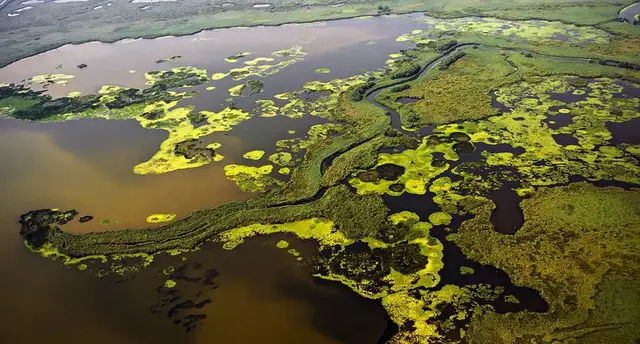
The Danube Delta contains 23 distinct natural ecosystems — an exceptional concentration that explains why so many species find breeding, feeding, and staging habitat within a single accessible area.
Reed Beds
The world's largest continuous reed bed — over 1,600 km². Breeding Marsh Harrier, Bearded Tit, Great Reed Warbler, Bittern, Purple Heron, and millions of roosting passerines on migration.
Floating Islands (Plauri)
Unique to the delta — floating mats of peat and vegetation drifting on the channels. Nesting sites for Black Tern, Whiskered Tern, and Ferruginous Duck. Inaccessible without a boat.
Open Lakes
Lac Furtuna, Lac Nebunu, Lac Roșu — large open water bodies with pelican roosts, diving ducks, White-tailed Eagles, and Osprey in migration. Best viewed from the floating hotel at dawn.
Channels & Canals
Over 1,000 km of waterways from wide navigable arms to narrow backchannels 3m wide. Kingfisher territories, Penduline Tit colonies, Night Heron roosts, and Otter in the narrow gârle.
Letea Forest
Romania's oldest nature reserve (protected since 1938). A sub-Mediterranean oak forest on sand dunes — completely unexpected in a delta. Roller, Hoopoe, Golden Oriole, Lesser Spotted Eagle, and wild horses.
Black Sea Interface
The delta mouth at Sulina and Sfântu Gheorghe — where the Danube meets the Black Sea. Tern and gull concentrations, Mediterranean Gull, Caspian Tern, and (if lucky) cetaceans offshore.
All 23 ecosystems are accessible on our 4-day floating hotel cruise. The 5-day programme adds the strictly protected core zone and the Letea Forest by horse-cart. View all departures →
Key SpeciesWhat You'll See in the Danube Delta
The following selection covers the most sought-after and reliably seen species. All are regularly recorded on Ibis Tours cruises, with sighting rates noted for peak season (April–June).
🦢 Pelicans & Large Waterbirds
- Dalmatian Pelican Pelecanus crispus — very high (May, peak season) · VU
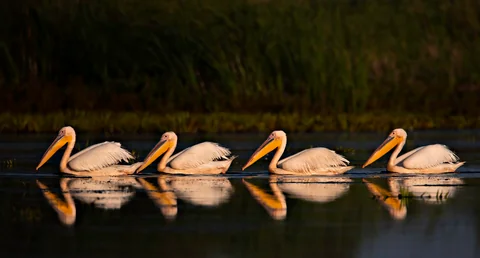
- Great White Pelican P. onocrotalus — very high (May, peak season)
- Pygmy Cormorant Microcarbo pygmaeus — 90%+ (May)
- Great Cormorant Phalacrocorax carbo — 99%
- Great Egret Ardea alba — 98%+ (all months)
- Little Egret Egretta garzetta — 90%
- Grey Heron Ardea cinerea — 99%
- Purple Heron Ardea purpurea — 90%+ (May)
- Glossy Ibis Plegadis falcinellus — 80%+ (May)
- Eurasian Spoonbill Platalea leucorodia — 70%+ (May)
🐦 Herons & Reed Species
- Squacco Heron Ardeola ralloides — 85%+ (May–Jun)
- Night Heron Nycticorax nycticorax — 90%+ (dusk)
- Little Bittern Ixobrychus minutus — 70%
- Eurasian Bittern Botaurus stellaris — 40%
- Marsh Harrier Circus aeruginosus — very high (May)
- Bearded Tit Panurus biarmicus — 80%
- Great Reed Warbler Acrocephalus arundinaceus — 90%
- Savi's Warbler Locustella luscinioides
- Penduline Tit Remiz pendulinus — 75%
- Whiskered Tern Chlidonias hybrida — 95%+ (May–Jul)
🦅 Raptors & Scarce Species
- White-tailed Eagle Haliaeetus albicilla — 90%+ (Apr–Jun)
- Osprey Pandion haliaetus — 40% (migr.)
- Lesser Spotted Eagle Aquila pomarina — 70%
- Short-toed Snake Eagle Circaetus gallicus
- Montagu's Harrier Circus pygargus
- Ferruginous Duck Aythya nyroca — 70%+ (May) · NT
- Red-necked Grebe Podiceps grisegena
- Ruddy Shelduck Tadorna ferruginea
- Levant Sparrowhawk (migr.)
- Red-footed Falcon Falco vespertinus — 80%+ (May–Jun) · NT
🎨 Colourful Specialities
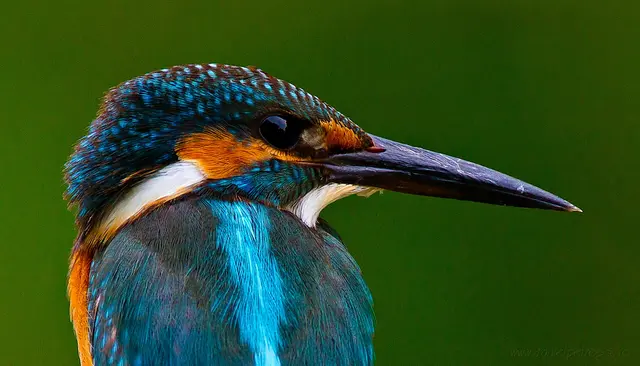
- Common Kingfisher Alcedo atthis — 98%+ (all season)
- European Roller Coracias garrulus — 85%+ (May–Jun)
- European Bee-eater Merops apiaster — 90%+ (May–Jun)
- Hoopoe Upupa epops — 70%
- Golden Oriole Oriolus oriolus — 60%
- Collared Flycatcher Ficedula albicollis
- Black-winged Stilt Himantopus himantopus
- Avocet Recurvirostra avosetta
- Collared Pratincole Glareola pratincola
- Roller, Bee-eater, Hoopoe all in sandy open country
Each species listed above has a dedicated field guide with identification tips, seasonal charts and photography advice. Browse all 18 species guides →
Where to BirdKey Birding Areas in the Delta
The delta's 5,800 km² is divided into strictly protected cores, buffer zones, and transition areas. Ibis Tours guides access all three — the core zones require a licensed naturalist, which all our guides are.
Sireasa — Sontea — Lac Nebunu
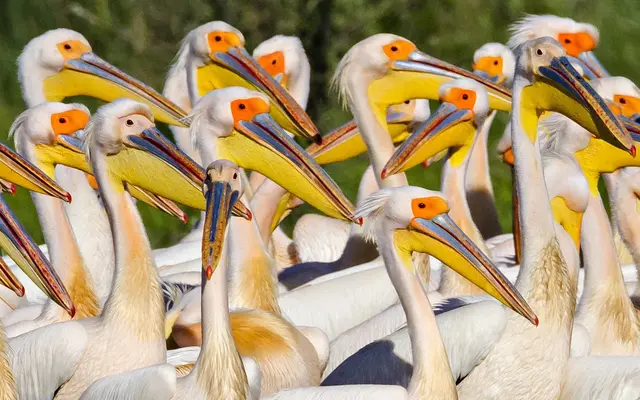
The western delta's strictly protected UNESCO core. A network of narrow channels and open lakes hosting the delta's densest waterbird concentrations. Dalmatian Pelicans, all egret species, Ferruginous Duck, and White-tailed Eagle. Access requires a licensed guide and ARBDD permit — both included in all Ibis Tours programmes.
Canal Magearu — Floating Islands
The central delta's most photogenic channel. Kilometres of floating islands (plauri) draped in water lilies, with Purple Heron colonies, Black Tern nesting on lily pads, Marsh Harriers quartering the reeds, and Kingfishers on every exposed perch. Ibis Tours anchors here overnight, giving access at dawn when most day-trip boats are still docked.
Letea Forest
Romania's oldest nature reserve, protected since 1938. A sub-Mediterranean forest of ancient oaks growing on sand dunes between the delta's northern channels — an extraordinary ecosystem. Roller, Bee-eater, Hoopoe, Golden Oriole, Black Woodpecker, and wild horses that have lived here for centuries. Reached by horse-cart from Letea village on the 5-day cruise.
Sulina — Black Sea Mouth
Where the Danube meets the Black Sea. Caspian Tern, Mediterranean Gull, Sandwich Tern, and Slender-billed Gull gather at the sandbars. The historic Sulina lighthouse and the Turgut shipwreck are visible from the boat. In calm conditions, Common Dolphins appear offshore. Reached on the 4-day and 5-day cruises.
Danube Delta Birding — Month by Month
| Period | Highlights | Key Species | Rating |
|---|---|---|---|
| March – April | Pelicans arrive, breeding starts, first summer migrants appear. Cool but excellent. | Pelicans, Marsh Harrier, hirundines, waders on passage | ★★★★ |
| May – June | Peak diversity. All breeders present, colonies at maximum activity, long golden hours. | All delta species + Roller, Bee-eater, Pratincole, waders | ★★★★★ |
| July – August | Post-breeding concentrations, juveniles, early wader migration. Hot, fewer species but outstanding views of pelicans on lakes. | Pelicans, egrets, waders, early raptors | ★★★★ |
| September – October | Migration peak on the Via Pontica. Raptors, storks, massive passerine movement. Red-breasted Geese arrive in Dobrogea. | Raptors, storks, Red-breasted Goose, waders | ★★★★ |
| November – February | Winter: spectacular goose and duck flocks in Dobrogea. Fewer species in the delta itself but uncrowded and atmospheric. | Red-breasted Goose (8,000–24,000 wintering birds), White-fronted Goose, Rough-legged Buzzard | ★★★ |
Why the Floating Hotel Changes Everything
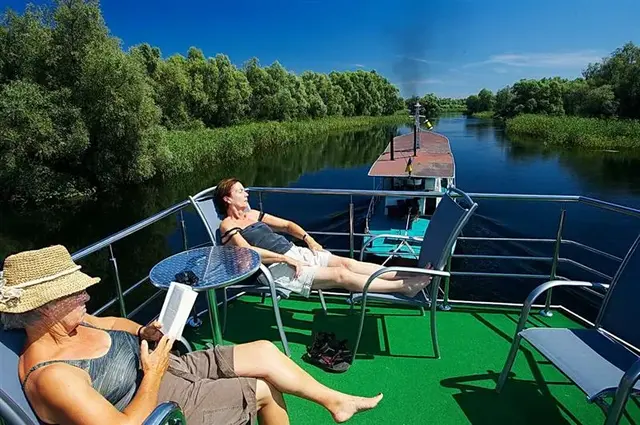
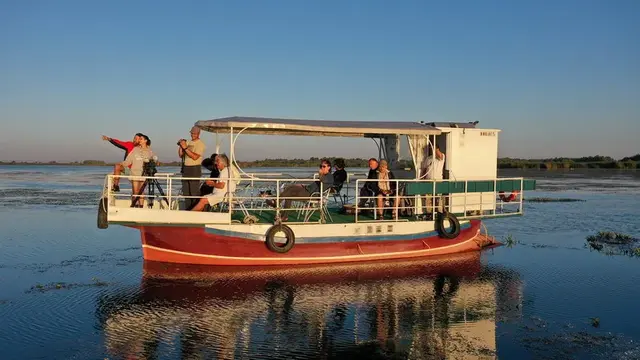
Every day-trip boat leaves the delta by evening. Ibis Tours stays in — anchored overnight in the interior channels and lake shores where no road or pension can reach.
This access difference is not marginal. Dawn and dusk — when birds are most active — are exclusively available to guests aboard the floating hotel.
- Anchored next to pelican colonies at dawn — impossible from any land base
- Full-day access to strictly protected zones requiring licensed naturalist guide
- Slow exploration boat (8–10 km/h) launched from the hotel each morning
- 4-star accommodation: en-suite cabins, restaurant, sundeck
- All meals included — traditional Romanian and international cuisine
- Only floating hotel in the Danube Delta — own by Ibis Tours since 1995
Danube Delta Birding Tours
All programmes include floating hotel accommodation, full board, exploration boat with specialist guide, and ARBDD delta permits. Maximum 20 guests aboard, excursions in small groups of 5–8 per motorboat.

🚢 4-Day Wildlife Cruise
The flagship Danube Delta programme. Sireasa–Sontea–Nebunu protected zone, Canal Magearu floating islands, Letea forest, and the Black Sea mouth at Sulina. Three nights aboard.
View Itinerary →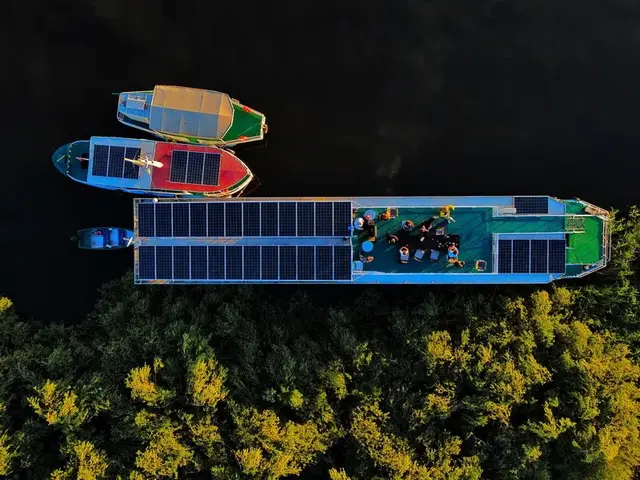
🚢 5-Day Extended Cruise
An extra day reaches the Red-breasted Goose wintering grounds in Dobrogea and allows a full day in the strictly protected core zone. The most complete delta programme available.
View Itinerary →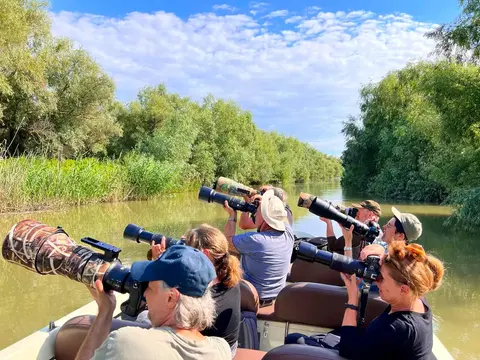
📸 Photography Programme
Bespoke photography itineraries designed around target species. Slow photo-boat with beanbags, shore hides, and floating hide anchored overnight next to pelican colonies. Led by Daniel Petrescu (NatGeo UK, 2025).
View Programme →Danube Delta Birdwatching — Questions
The Danube Delta hosts over 360 bird species, including 250+ breeding species. It is Europe's most important waterbird breeding area. The delta holds one of Europe's most important breeding populations of Dalmatian Pelicans (Pelecanus crispus) — a globally vulnerable species — approximately 450–500 breeding pairs recorded in Romania. All five European pelican, egret and heron species breed here.
May is the single best month: all breeding species present, colonies at maximum activity, passage migrants still moving through, and days lasting until 21:00. April and June are nearly as good. September–October is excellent for migration on the Via Pontica flyway. The delta has significant birdwatching value year-round.
Three factors combine to make the Danube Delta exceptional: (1) Scale — 5,800 km² of intact wetland habitat concentrated in one accessible area. (2) Diversity — 23 distinct ecosystems from reedbeds and floating islands to sub-Mediterranean forest and Black Sea interface. (3) Concentration — waterbird colonies of a density found nowhere else in Europe, viewable from a slow boat at close range without disturbance.
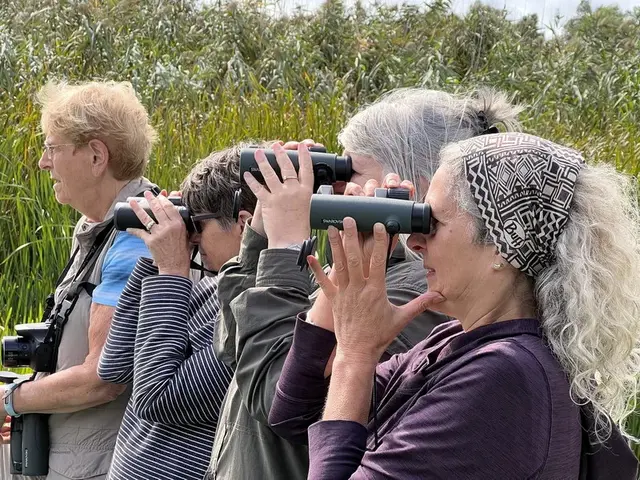
Binoculars (8×42 or 10×42) are essential and should be brought by every guest. A telescope is useful but not required — many of the best sightings in the delta are at close range from the slow exploration boat. Ibis Tours guides carry spotting scopes. For photography, a 500–600mm lens is recommended for birds in flight; 300–400mm is sufficient for pelicans and herons at close range.
The closest hub is Tulcea, reachable by train or car from Bucharest (approx. 4 hours). Direct flights from London, Amsterdam, Frankfurt, Vienna, and other European cities serve Bucharest Henri Coandă Airport. Ibis Tours departs from Tulcea port — transfer assistance from Bucharest can be arranged on request.
Wildlife Beyond Birds: The Full Danube Delta Ecosystem
The Danube Delta is the only biosphere reserve in Europe where you can observe White-tailed Eagles, European Otters, wild Horses, and a Pelican colony in the same morning. For guests who arrive focused purely on birds, the broader wildlife often becomes an equal highlight.
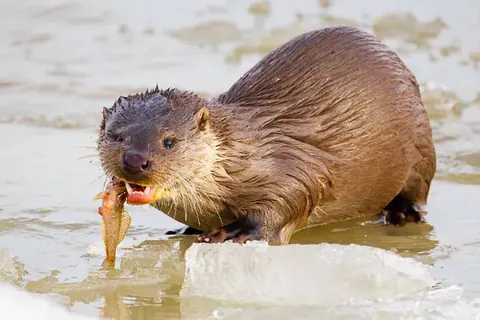
European Otter
Present throughout the delta's narrow channels, most active at dawn. Regularly seen from the floating hotel motorboat — watch for ripples and the characteristic arching dive. The delta's fish abundance makes it one of Romania's strongest otter populations.
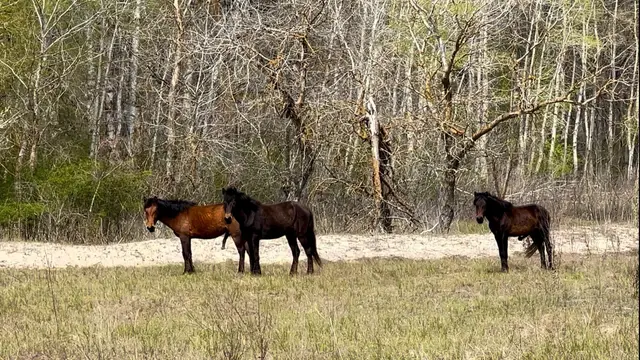
Wild Horses of Letea
The Letea Forest harbours Romania's only population of semi-feral horses — descended from domestic animals abandoned over generations. Groups of 20–50 horses graze the sandy clearings between ancient oaks. No other delta ecosystem in Europe has wild horses.
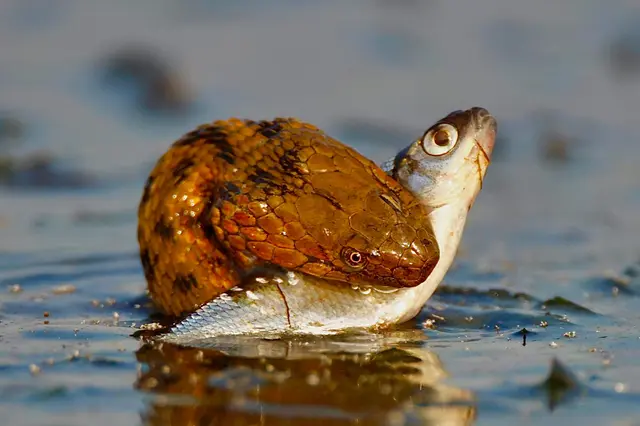
Dice Snake & Grass Snake
Both species are abundant and regularly seen basking on floating vegetation. The Dice Snake (Natrix tessellata) is a strong swimmer, often observed hunting in shallow water alongside herons. Completely harmless — a favourite subject for macro photographers.
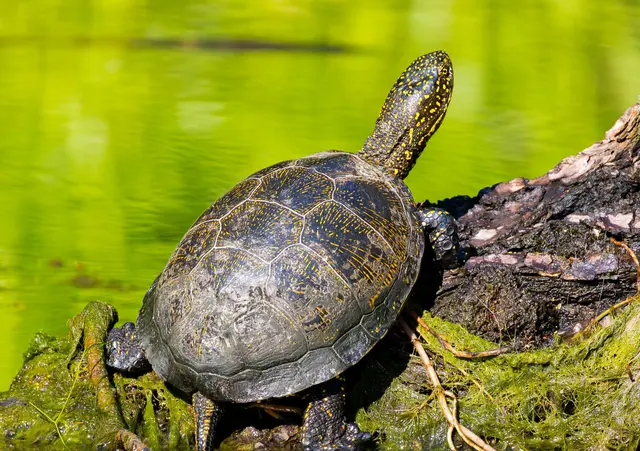
European Pond Turtle
Basking turtles are a constant companion on delta excursions — groups of 10–20 stacked on logs are a familiar sight. Emys orbicularis is declining across Europe; the delta holds a thriving population. Best observed on warm May and June mornings.
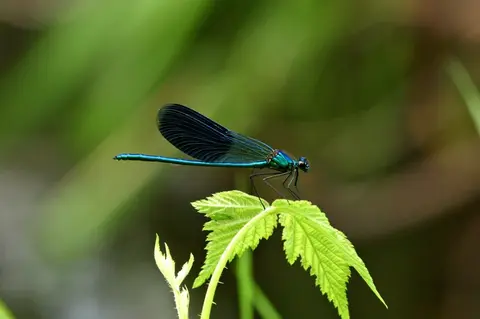
Dragonflies & Damselflies
Over 50 species recorded in the delta, including several that are uncommon elsewhere in Europe. The channel edges in June produce spectacular concentrations. Red-veined Darter, Scarlet Darter, and Emperor Dragonfly are all regularly observed. Bring a macro lens.
Fish & River Ecology
The delta feeds Europe's richest concentration of waterbirds precisely because its water is extraordinarily productive. Over 100 fish species, including the endangered Beluga Sturgeon (Huso huso), make the delta a key IUCN conservation area. The pelicans you photograph are eating carp and roach you cannot see.
The Danube Delta's biodiversity extends well beyond what we cover here. Romania is one of Europe's richest countries for invertebrate life, with over 60 dragonfly and damselfly species recorded in the delta alone. The surrounding Dobrogea steppe and Carpathian foothills support more than 200 butterfly species, several of which are rare or absent from western Europe. For larger fauna — bears, wolves, lynx and wild cats — see our mammals of Romania guide.
Wildlife Photography in the Danube Delta
The Danube Delta is one of Europe's outstanding wildlife photography destinations. The combination of high subject density, close approach distances (enabled by the floating hotel's quiet positioning), and exceptional light conditions at dawn and dusk produces images that are difficult to replicate elsewhere on the continent.
📸 Lens Choice
A 500mm prime or 100–500mm zoom covers 80% of opportunities. The Dalmatian Pelican, approaching to within 20–30 metres at feeding areas, can fill the frame with a 300mm. For atmospheric reeds and landscape shots, a 24–70mm or 70–200mm is equally valuable — don't neglect the environment.
⏰ Timing
The 90 minutes after dawn are unbeatable. Soft backlight, mist on channels, maximum activity. For pelicans: 06:00–08:00 in May produces ideal light for flight shots. September is the favourite month for landscape photographers — golden reeds, low sun angles, and atmospheric haze on the water.
🚢 From the Vessel
The floating hotel's stern deck provides a stable beanbag platform at approximately 1.5 metres above the waterline — eye-level with waterbirds. For motorboat shooting: always brace against the gunwale, shoot parallel to the direction of travel, and ask the guide to cut the engine for flight approaches.
🎯 Key Subjects
Dalmatian Pelican in flight (late April colony activity), Kingfisher on perch (Bee-eater nesting banks at Caraorman), White-tailed Eagle over open lake, Purple Heron emerging from reed, and the pelican/egret mixed roost at sunset — all are reliably achievable on a 4-5 day cruise.
Planning Your Danube Delta Birdwatching Trip
How Much Time Do You Need?
Three days is the minimum to meaningfully experience the delta's bird diversity. Four days (our standard programme) allows full coverage of the main zones — Sireasa–Sontea core, Canal Magearu floating islands, Letea Forest, and the Sulina arm. Five days allows a second visit to the best sites in different conditions and significantly increases the probability of seeing rarer species.
| Duration | Zones covered | Typical species count | Best for |
|---|---|---|---|
| 4 Days | Sireasa–Sontea, Magearu, Letea, Sulina | 100–130 species (May) | First-time visitors, mixed wildlife interest |
| 5 Days | All above + Musura Bay, second visits, extended Letea | 120–150 species (May) | Serious birders, photographers, return visitors |
| 10 Days (combo) | Delta 5 days + Carpathians bear watching 2 days + Dobrogea steppe | 150–200 species + mammals | Comprehensive Romania wildlife programme |
Getting to Tulcea
Tulcea is the departure point for all Ibis Tours delta cruises. The most practical route from Western Europe is a direct flight to Bucharest Henri Coandă Airport (OTP) — served from London Heathrow, Amsterdam, Frankfurt, Vienna, Munich, Paris, and most European hubs — followed by a 4-hour car transfer to Tulcea. Ibis Tours can arrange airport pickup and transfer. The train from Bucharest Gara de Nord to Tulcea runs daily (approximately 5 hours).
What to Bring
The floating hotel provides all accommodation, meals, excursion equipment, permits, and guide services. You bring optics (8×42 binoculars are ideal), weather-appropriate clothing in neutral colours, DEET repellent (essential June–August), and your camera if applicable. Detailed packing guidance is available in our Floating Hotel Complete Guide.
Physical Requirements
Delta birding is genuinely accessible. Motorboat excursions require stepping on and off a low gunwale (minimal agility needed). The floating hotel is stable. There is no hiking, climbing, or sustained exertion. The main physical challenge is sitting in the same position for 2–3 hours at a time during excursions — a camp chair or folding cushion helps on long sessions.
Danube Delta Species Field Guides
Expert identification guides, best months, photography tips and where to find each species in the delta.
 Dalmatian PelicanVU — high encounter rate
  Great White PelicanLC — colonial nester
 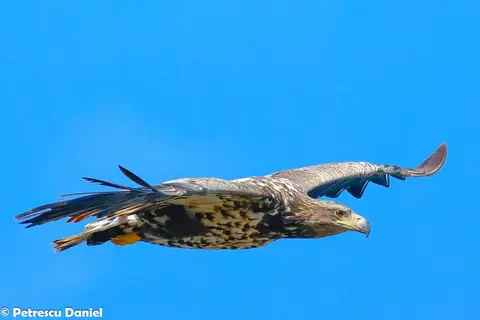 White-tailed EagleLC — 2.45m wingspan
 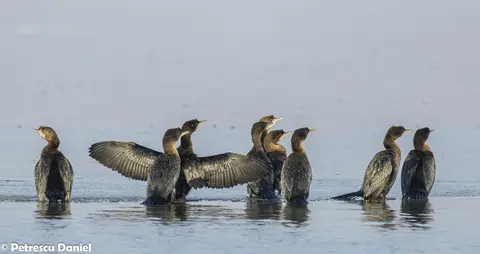 Pygmy CormorantLC — largest EU colony
 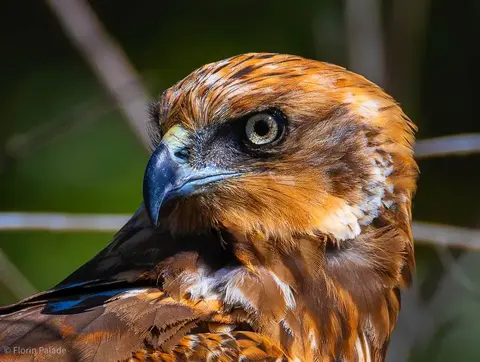 Marsh HarrierLC — high encounter probability seen
 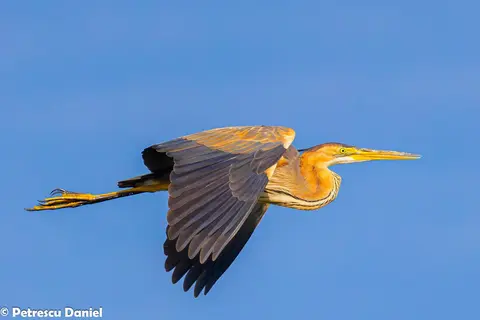 Purple HeronLC — 90%+ seen
 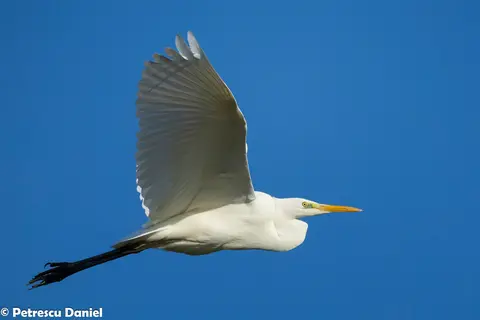 Great EgretLC — 98%+ seen
 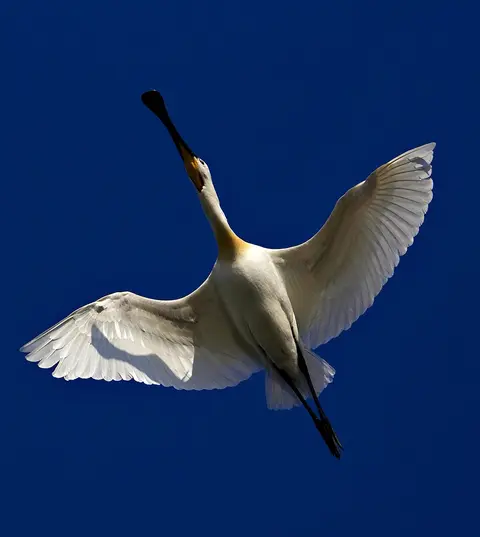 Eurasian SpoonbillLC — scything feeder
 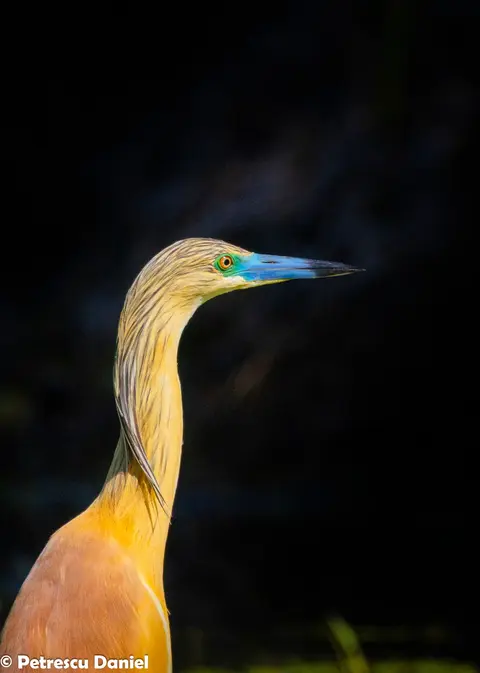 Squacco HeronLC — brown to white
 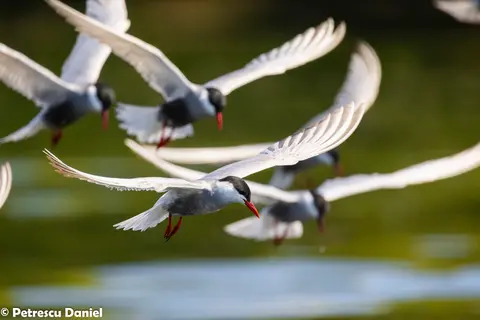 Whiskered TernLC — 95%+ seen
 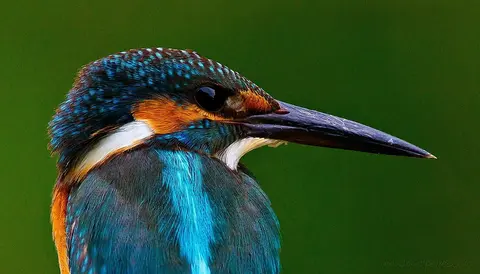 Common KingfisherLC — every channel
 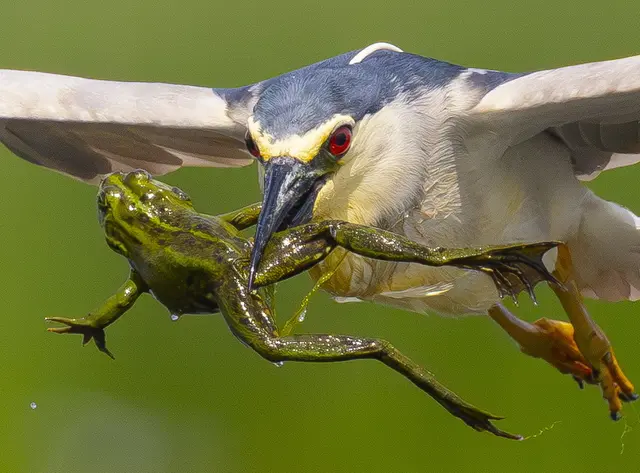 Night HeronLC — dusk specialist
 Book your Danube Delta birding cruise
The only floating hotel in the delta. 30 years of specialist expertise. Expert ornithologist guides. Small groups, dawn access to the strictly protected zones.