
Birdwatching in Dobrogea Romania –
Steppe, Lagoons & Ancient Mountains (250+ Species)
Where Asia meets Europe. Ancient Hercynian mountains, Ponto-Sarmatic steppe, and Black Sea lagoons — home to Pied Wheatear at its global western limit, Saker Falcon, raptor migration corridors, and the world's largest flocks of Red-breasted Geese.
Dobrogea occupies Romania's south-eastern corner — a 16,000 km² peninsula between the Danube and the Black Sea. Geologically, it is the oldest land in Romania: the Măcin Mountains formed during the Hercynian orogeny some 400 million years ago, predating the Carpathians by hundreds of millions of years. The landscape is unique in Europe — a mosaic of Ponto-Sarmatic steppe grassland, sub-Mediterranean oak forest, granite megaliths, brackish lagoons and Black Sea coast. This concentration of habitats in a compact, accessible area makes Dobrogea one of the most species-rich regions on the continent and the natural complement to any Danube Delta birdwatching trip.
Dobrogea — Key Facts
6 Distinct Landscapes in One Region
Dobrogea sits at the crossroads of four biogeographic zones — Pontic, Mediterranean, Balkan, and Central European. This overlap produces a concentration of habitats and species found nowhere else on the continent.
Ponto-Sarmatic Steppe
Europe's westernmost fragment of the vast Eurasian steppe. Calandra Lark, Stone-curlew, Isabelline Wheatear and European Souslik — species that feel more Central Asian than European.
Măcin Mountains
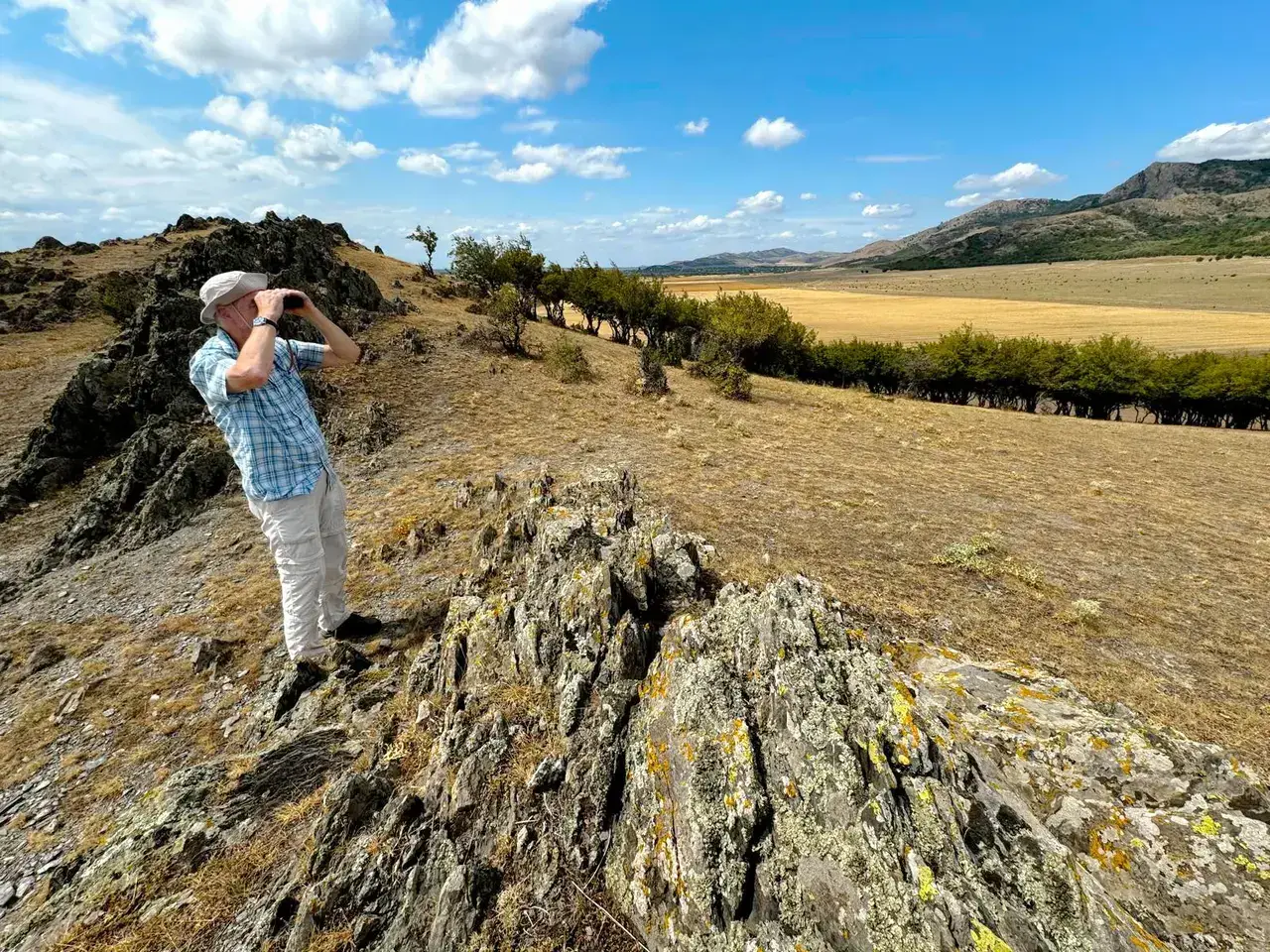
Granite megaliths and rocky steppe between 7 and 467 metres. Romania's driest mountains, hosting Pied Wheatear, Rock Thrush, Long-legged Buzzard and Saker Falcon among Hercynian-age rock formations.
Babadag Forest
Sub-Mediterranean deciduous forest with Sombre Tit, Middle Spotted Woodpecker, Levant Sparrowhawk and an exceptional butterfly fauna. Eastern Olivaceous Warbler in the forest-edge scrub.
Razim–Sinoe Lagoons
The largest lagoon complex in Romania (1,015 km²). Pelican dispersal, Mediterranean Gull colonies, Caspian Tern, Kentish Plover and migrating waders in extraordinary numbers. Histria ruins add classical history.
Black Sea Coast
Sandy beaches, cliff headlands and salt marshes at Vadu and Capul Doloșman. One of Europe's major raptor migration corridors — the Via Pontica flyway — concentrating thousands of raptors in autumn.
Cheile Dobrogei (Dobrogea Gorges)
Limestone gorges cutting through the plateau. Eagle Owl, Long-legged Buzzard, Rock Bunting, Blue Rock Thrush and an exceptional flora including endemic Campanula romanica.
Dobrogea is included in all Ibis Tours extended programmes as a natural complement to the Danube Delta cruise. The steppe adds 30–50 species impossible to find inside the delta. View all departures →
Key SpeciesWhat You'll See in Dobrogea
The following selection covers the most sought-after species — the birds that bring international birders specifically to Dobrogea. Many are at the western or northern edge of their global range here.
🦅 Raptors & Falcons
- Long-legged Buzzard Buteo rufinus — resident, up to 7/day
- Saker Falcon Falco cherrug — rare breeder · EN
- Red-footed Falcon Falco vespertinus — colonies, 25+/day · NT
- Levant Sparrowhawk Accipiter brevipes — Babadag Forest
- Lesser Spotted Eagle Aquila pomarina — up to 5/day
- Imperial Eagle Aquila heliaca — scarce · VU
- Booted Eagle Aquila pennata
- Short-toed Snake Eagle Circaetus gallicus
🌾 Steppe Specialities
- Pied Wheatear Oenanthe pleschanka — western range limit
- Isabelline Wheatear Oenanthe isabellina — common on steppe
- Calandra Lark Melanocorypha calandra
- Stone-curlew Burhinus oedicnemus
- Tawny Pipit Anthus campestris
- Sombre Tit Poecile lugubris — Babadag Forest
- Ortolan Bunting Emberiza hortulana
- Rock Thrush Monticola saxatilis — Măcin crags
🌊 Wetland & Coastal
- Dalmatian Pelican Pelecanus crispus — lagoon dispersal · VU
- Great White Pelican Pelecanus onocrotalus — Razim flocks
- Mediterranean Gull Ichthyaetus melanocephalus — colonies
- Caspian Tern Hydroprogne caspia
- Collared Pratincole Glareola pratincola
- Kentish Plover Charadrius alexandrinus
- Ruddy Shelduck Tadorna ferruginea
- Paddyfield Warbler Acrocephalus agricola — western range
🎨 Colourful & Scarce
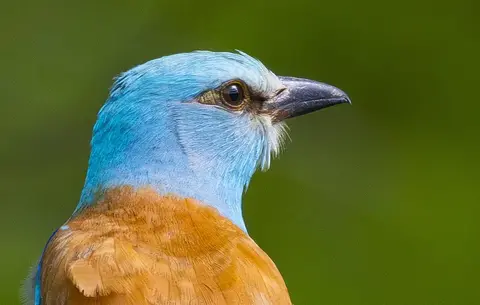
- European Roller Coracias garrulus — 85%+ (May–Jun)
- European Bee-eater Merops apiaster — colonies, 90%+
- Hoopoe Upupa epops — 70%+
- Common Kingfisher Alcedo atthis — lagoon edges
- European Nightjar Caprimulgus europaeus
- Spanish Sparrow Passer hispaniolensis
- Eastern Olivaceous Warbler Iduna pallida
- Red-breasted Goose winter flocks · VU
For detailed identification notes and seasonal charts, see our species field guides →
Where to BirdKey Birding Areas in Dobrogea
Măcin Mountains National Park
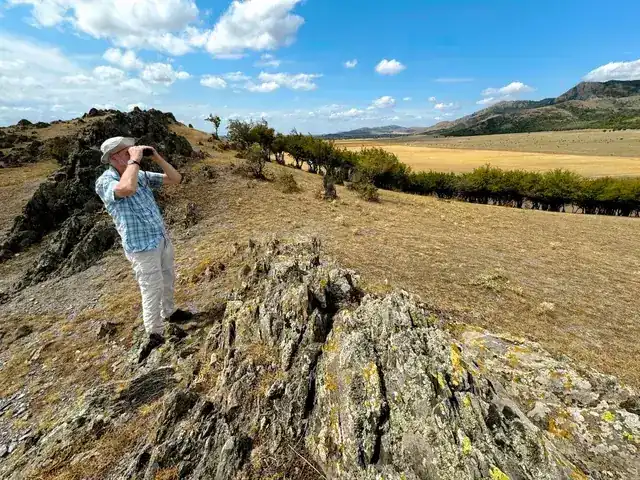
Romania's oldest geological formation — 400-million-year-old granite megaliths rising from steppe grassland. The ascending thermals between valleys and ridges concentrate raptors, making this Europe's only national park protecting Ponto-Sarmatic steppe ecosystems. 181 bird species are recorded here, including Long-legged Buzzard nesting on crags, Pied and Isabelline Wheatears on rocky slopes, and Saker Falcon hunting European Sousliks on the open ground below.
Dobrogea Steppe & Falcon Colonies
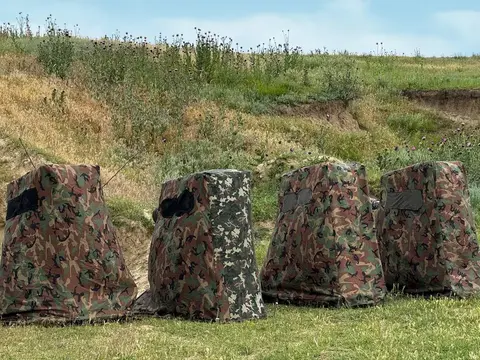
The open grasslands between Măcin and the coast support Red-footed Falcon colonies in poplar windbreaks — breeding adults and juveniles at close range from the car. Calandra Lark singing overhead, Stone-curlew on ploughed fields, Montagu's Harrier quartering the crops, and Tawny Pipit on sandy tracks. In autumn, migrating raptors pour south along the Via Pontica flyway in their thousands.
Babadag Forest & Cheile Dobrogei
Sub-Mediterranean oak forest at Babadag holds Levant Sparrowhawk, Sombre Tit, Middle Spotted Woodpecker and an exceptional butterfly diversity. Nearby, the limestone gorges of Cheile Dobrogei are home to Eagle Owl, Long-legged Buzzard, Rock Bunting and the endemic Campanula romanica. Eastern Olivaceous Warbler and Barred Warbler inhabit the forest-edge scrub.
Razim–Sinoe Lagoons & Black Sea Coast
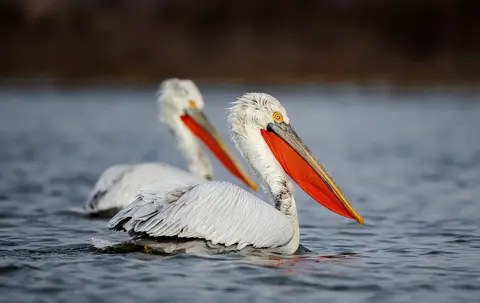
Romania's largest coastal lagoon complex — 1,015 km² of brackish water, salt marshes and sandy barriers. White and Dalmatian Pelicans disperse here from delta colonies. At Histria, Mediterranean Gull colonies breed alongside Avocet, Black-winged Stilt and Kentish Plover. Vadu beach is the best site on the Romanian coast for autumn waders. In winter, tens of thousands of Red-breasted Geese — over half the world population — gather on the surrounding steppe fields.
Dobrogea Birdwatching Calendar
| Season | Months | Highlights | Key Species |
|---|---|---|---|
| Spring Migration | Apr–May | Breeding territories established. Raptors returning. Steppe in wildflower bloom — peonies, irises, orchids. | Roller, Bee-eater, Isabelline Wheatear, Lesser Spotted Eagle |
| Peak Breeding | May–Jun | Best overall period. Falcon colonies active. Maximum species diversity. Long days, warm evenings for nightjar. | Pied Wheatear, Red-footed Falcon, Levant Sparrowhawk, Nightjar |
| Autumn Migration | Sep–Oct | Via Pontica raptor migration. Wader passage at Vadu. Pelican dispersal to lagoons. Steppe golden in evening light. | Migrating raptors, waders, Mediterranean Gull, Caspian Tern |
| Winter Goose | Dec–Feb | Globally significant Red-breasted Goose flocks on steppe fields. White-fronted and Greylag Geese. Winter raptors. | Red-breasted Goose, White-tailed Eagle, Rough-legged Buzzard |
Ibis Tours in Dobrogea
5-Day Extended Delta + Dobrogea Cruise
The flagship programme. Combines the Danube Delta floating hotel cruise with dedicated Dobrogea steppe days — Măcin Mountains, Babadag Forest, and the Razim–Sinoe lagoon complex. The complete Romanian birding experience.
View itinerary →Dobrogea & Black Sea Birding Day Trips
From Tulcea, day excursions to the Măcin Mountains steppe, Cheile Dobrogei gorges, Babadag Forest and the coastal lagoons. Ideal as add-ons before or after a delta cruise.
Enquire →Beyond Birds: Dobrogea's Natural Heritage
Dobrogea's biodiversity extends far beyond ornithology. The region concentrates 50% of Romania's entire flora within just 0.05% of its surface area. More than 900 butterfly species have been recorded in the Măcin Mountains alone. The coastal lagoons and steppe ponds support rare dragonfly species including the Dark Spreadwing at its inland limit. For an introduction to the region's remarkable plant communities — from Dobrogean peonies to endemic Campanula romanica — see our Dobrogea flora guide. Mammal highlights include the European Souslik, Golden Jackal, and the Greek Tortoise — see our mammals of Romania guide.
Frequently Asked Questions
Dobrogea adds a different suite of species. The steppe and mountains give you Long-legged Buzzard, Saker Falcon, Red-footed Falcon colonies, Pied and Isabelline Wheatears, Calandra Lark, Stone-curlew, Rock Thrush, Sombre Tit, and Levant Sparrowhawk. In winter, globally significant flocks of Red-breasted Geese concentrate on the Dobrogea steppe — impossible to see from inside the delta. In autumn, the Via Pontica raptor migration adds thousands of raptors overhead.
May–June is peak season for breeding specialities — Pied Wheatear, Roller, Bee-eater, falcon colonies. September–October is outstanding for raptor migration. Winter (December–February) brings the globally significant Red-breasted Goose flocks. Every season has something remarkable.
Dobrogea lies immediately south and west of the delta, accessible from Tulcea. Ibis Tours includes Dobrogea steppe days as a natural complement to the floating hotel delta cruise — typically adding 30–50 species to your trip list that are difficult or impossible to find inside the delta itself.
The Măcin Mountains are the oldest mountains in Romania — formed during the Hercynian orogeny 400 million years ago. They host 181 bird species, 1,770 plant species (half of Romania's entire flora), and 47 mammal species in a compact area. They are Europe's only national park protecting Ponto-Sarmatic steppe ecosystems.
Experience Dobrogea with Ibis Tours
30 years of specialist expertise. Expert naturalist guides who know every Saker eyrie and falcon colony. Comfortable accommodation in Tulcea, seamless delta–steppe combinations.