
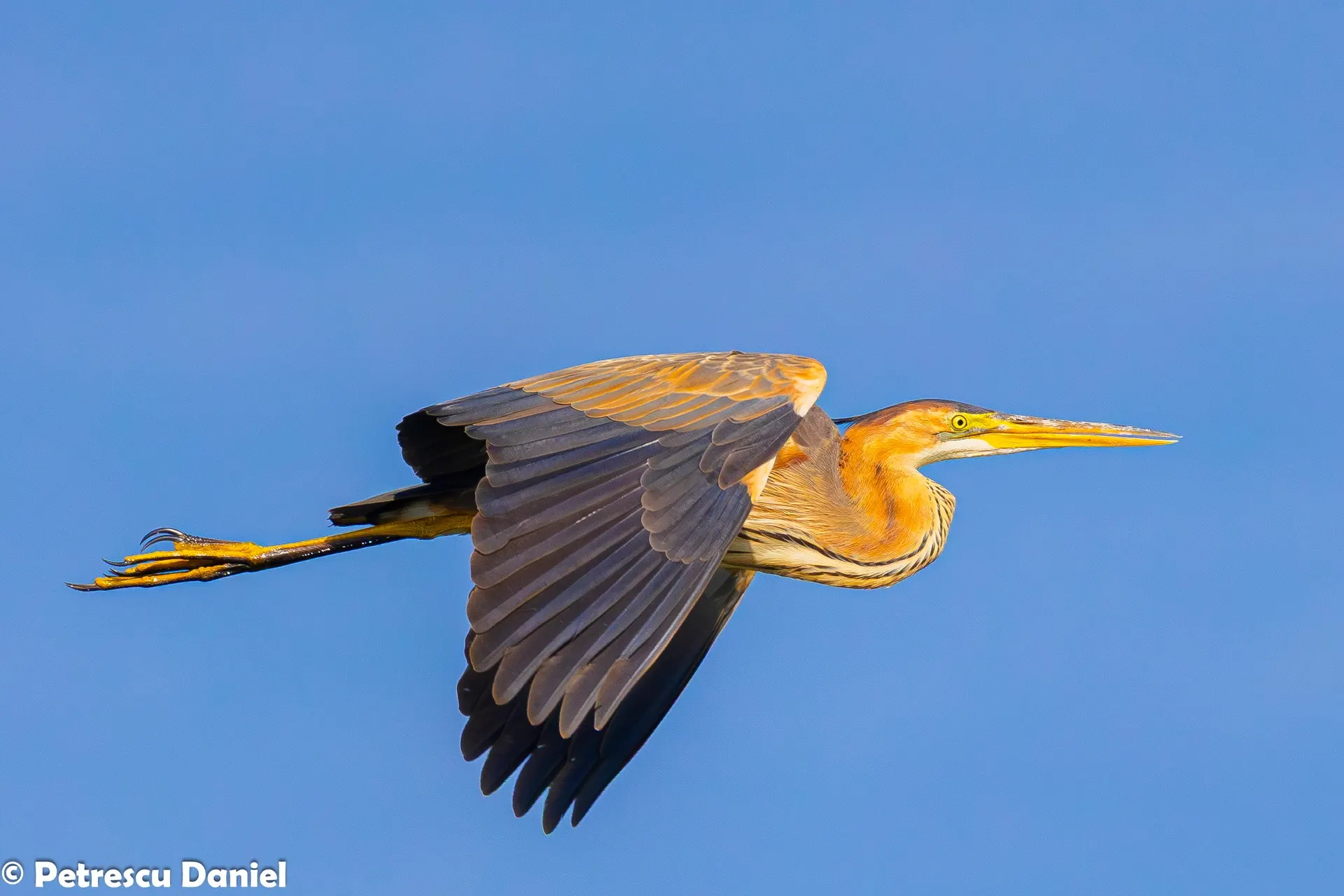
The Purple Heron (Ardea purpurea) is a reedbed species, more slender and secretive than the Grey Heron. In the Danube Delta it is present mainly from spring to autumn, using reed-lined channels and pools with emergent vegetation. Identification: neck and breast with reddish-purple and buff-streaked tones; dark crown; in flight appears lankier than Grey Heron with a more kinked neck. Significantly smaller and darker than Grey Heron. Ecology: hunts fish, frogs and large invertebrates at the edge of reedbeds; tends to hunt in denser cover than the Grey Heron. In the Danube Delta: most easily seen in the early morning when birds move to feeding areas; look along the edges of tall reedbeds and at canal margins with mixed vegetation. Conservation: dependent on extensive, undisturbed reedbeds for breeding; sensitive to drainage and disturbance during the nesting season.
Identification
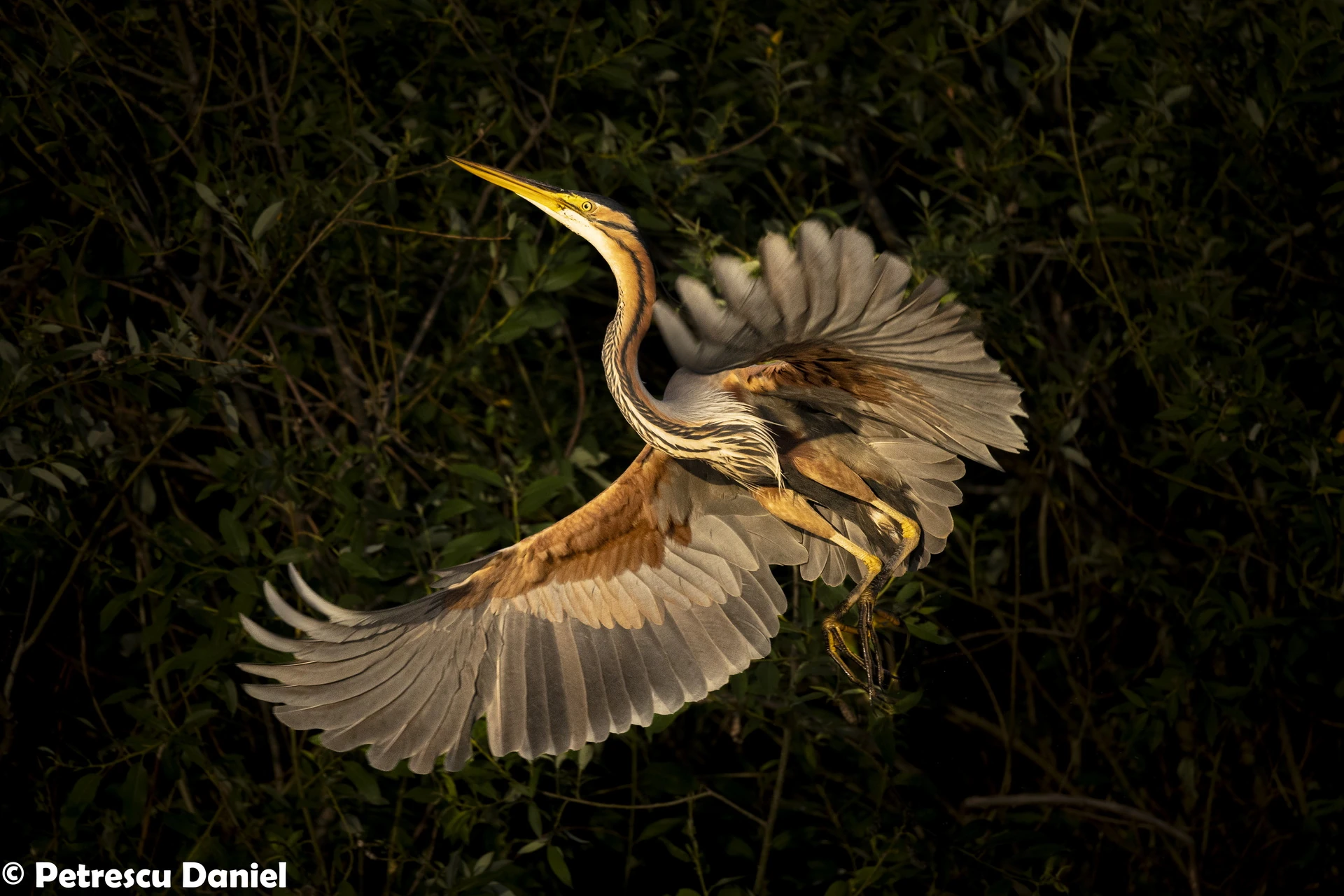
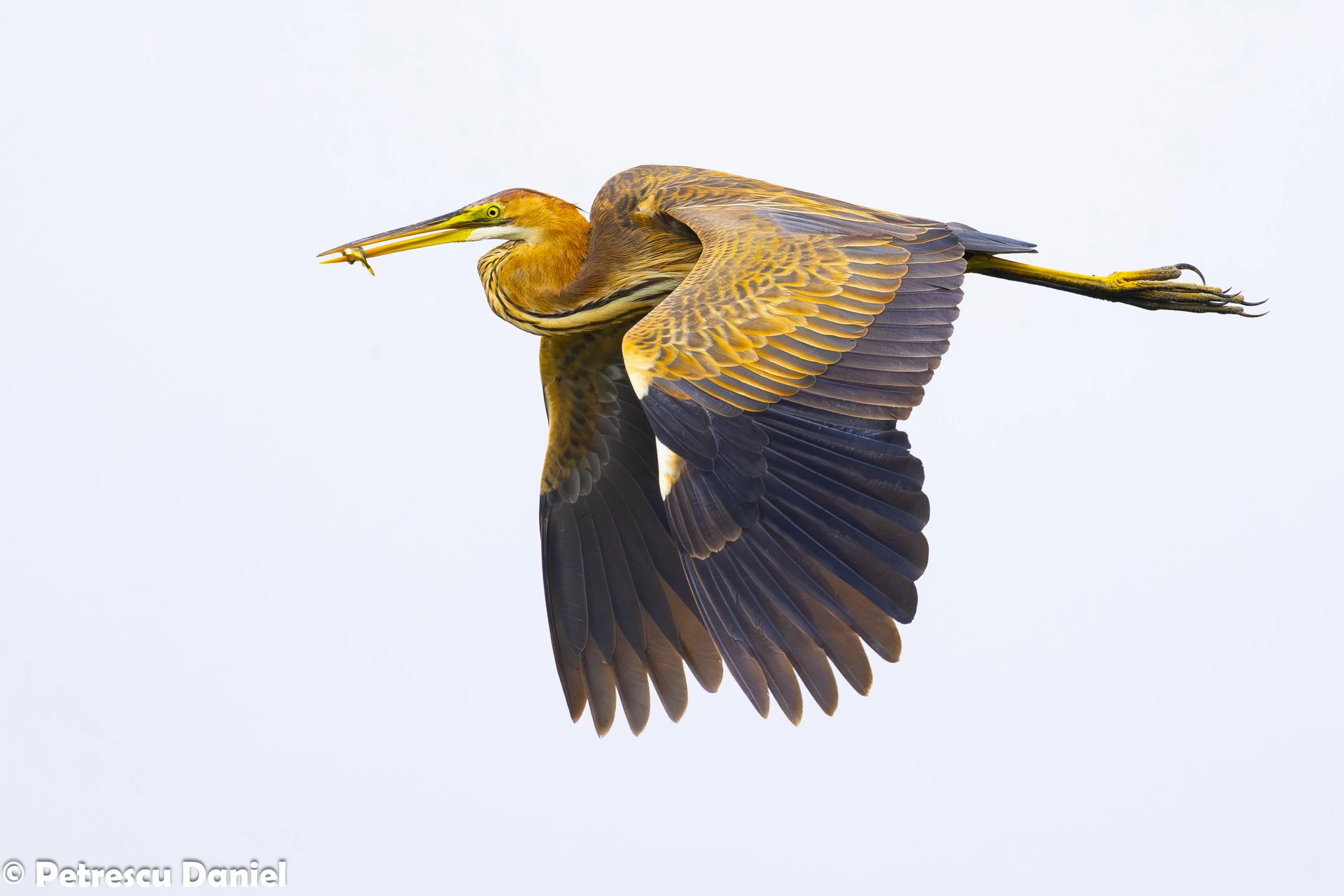
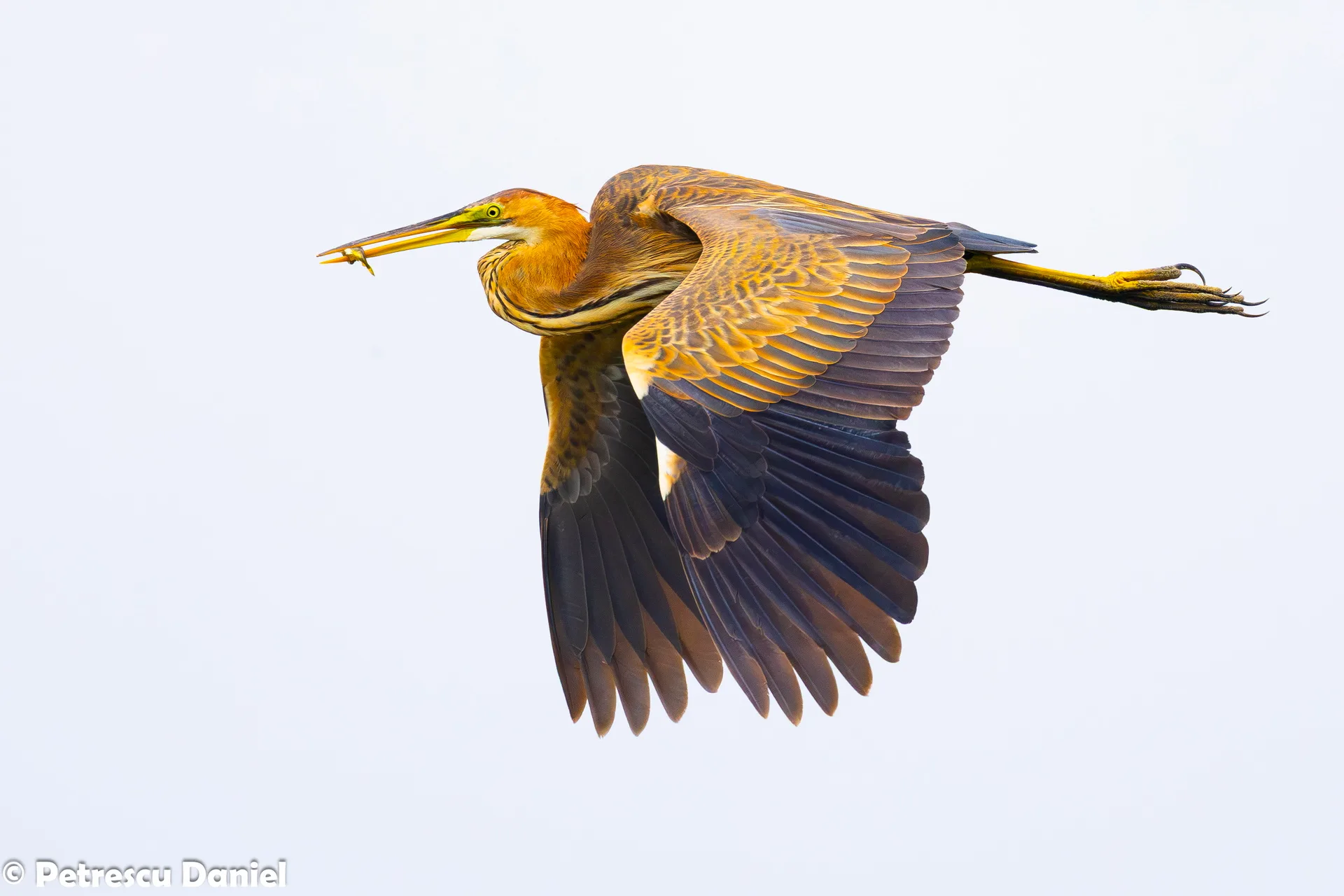
The Purple Heron is slimmer and longer-necked than the Grey Heron, with a more angular, kinked neck when standing. In flight the neck is retracted to a pronounced S-shape and the feet project further beyond the tail — giving a different overall silhouette. The reddish-brown colouring of the neck and flanks immediately separates it from the grey of the common Grey Heron.
Field Marks at a Glance
Confusion species: Grey Heron (Ardea cinerea) — larger, paler, white head with black crest. Both use the same channels but Purple Heron prefers denser vegetation. Bittern (Botaurus stellaris) is much bulkier and entirely brown-streaked; rarely seen in open water.
When to See It in Romania
The Purple Heron is a long-distance migrant wintering in sub-Saharan Africa. It arrives in the Danube Delta from late March–April and is abundant through September. Most birds have departed by October. Peak colonial breeding activity is April–June.
Monthly Presence & Abundance
Where to See It
Purple Herons nest colonially in dense reed beds and forage along the margins of channels and lakes. Unlike Grey Heron, they rarely stand in the open — preferring the cover of reed stems. Most sightings are of birds crossing channels in direct flight, or standing at the very edge of the phragmites, waiting to strike.
Phragmites margins
Primary habitat throughout the delta. Birds stand motionless at the reed edge, striking at fish and frogs in the shallows.
Mixed heron colonies
Nests in reed beds alongside Night Heron, Squacco Heron, and Little Egret. Colonies often audible before visible.
All delta channels
Regular low-level flight across channels between reed beds. Visible from the slow exploration boat throughout each excursion.
Lake edges
Post-breeding individuals and juveniles more visible around open lake margins from July onwards as water levels drop.
How to See It on Our Tours
All Ibis Tours programmes depart from Tulcea and operate within ARBDD-permitted zones.
4-Day Danube Delta Wildlife Cruise
📅 Days 1–3 — reed channels at dawnPurple Herons are typical of the narrow reed channels — they flush from ahead of the slow-moving boat at dawn. The 4-day cruise's routing through secondary channels (not main tourist routes) gives far better encounters than day-trip boats.
View tour details → Close AccessWildlife Photography Tours
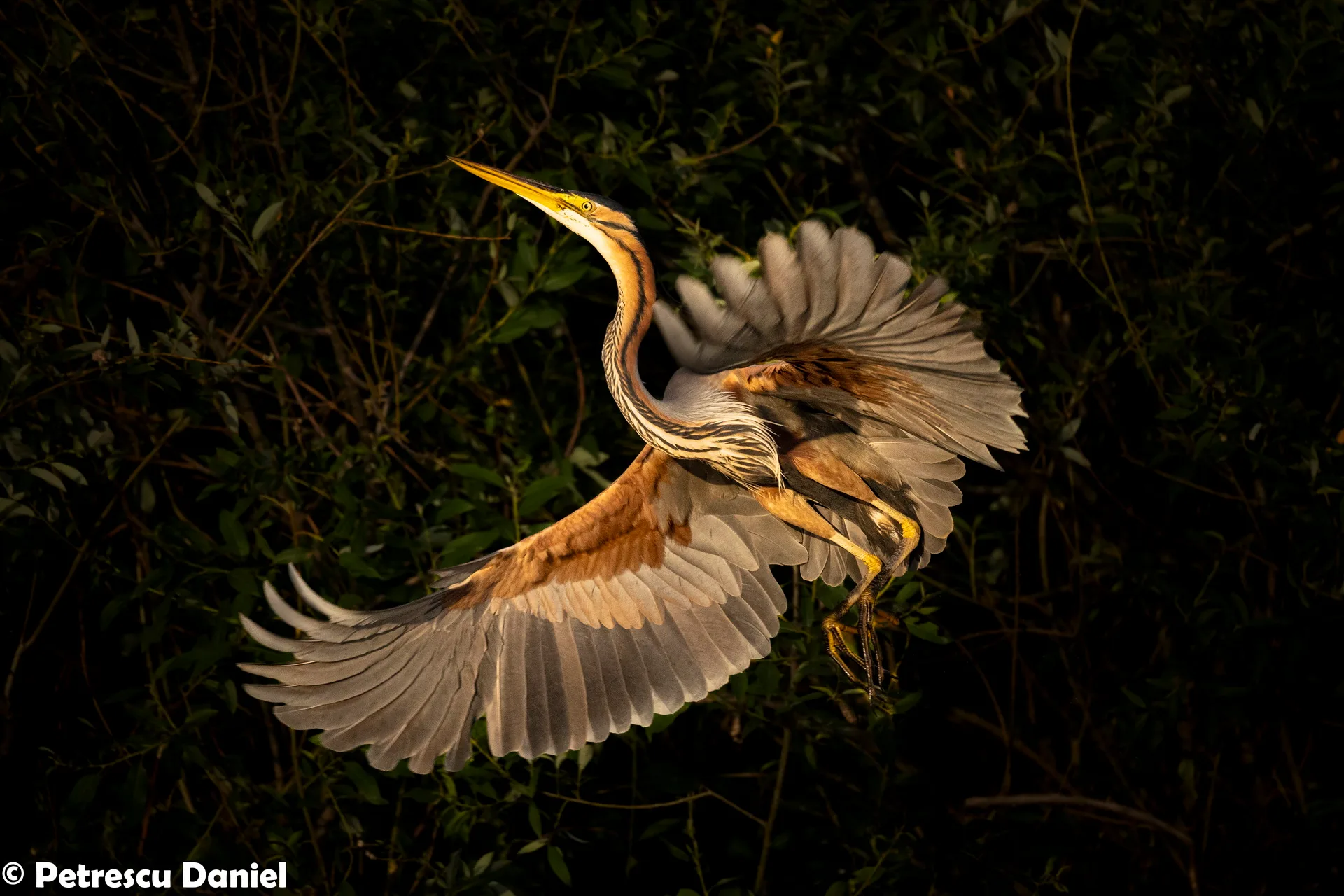
📅 Dawn channel sessionsPhoto tours stop the engine when a heron is spotted and wait for it to resume feeding — producing stationary, well-lit portrait shots.
View tour details →Behaviour & Ecology
The Purple Heron is a sit-and-wait predator, standing motionless at the reed margin for extended periods before striking rapidly downward with the dagger bill to take fish, frogs, or large invertebrates. Unlike Grey Heron, it uses the dense reed stems as cover and adopts a distinctive reed-holding pose when alarmed — stretching the neck vertically, bill pointing upward, blending almost perfectly with the surrounding phragmites. The nest is a platform of reed stems built within the phragmites, usually 50–80 cm above water level. Colonial breeding with other heron species — colonies are announced by constant harsh croaking calls from within the reed bed.
🛡 Conservation Status
Currently Least Concern (LC) globally. The European population has been recovering since the 1990s after declines caused by reed bed drainage and wetland management. The Danube Delta's extensive protected phragmites beds — the largest continuous reed bed in Europe at over 3,000 km² — represent optimal habitat and the Romanian population is one of the most important in Europe.
Photography Guide
The Purple Heron is a rewarding but challenging photography subject. The key is patience and positioning — the bird is predictable in its choice of foraging locations and will often return to the same reed-edge perch repeatedly.
📸 Photography Tips
- Approach: Drift slowly with engine cut. The Purple Heron is more tolerant of slow, quiet approach than sudden movement. Abrupt engine noise causes immediate flight.
- Lens: 400–500mm for reed-edge birds at 10–20m. The tight framing of the long neck against reeds gives dramatic results.
- Background: The contrast of the rufous neck against the vertical lines of gold-green reeds is the signature Purple Heron shot. Position for this background deliberately.
- Flight shots: Crossing flight is predictable — birds regularly cross channels between reed beds. Pre-focus on a likely crossing point and shoot continuous burst.
- Light: Early morning gives warm light on the rufous tones. Overcast light reduces contrast between bird and dark reed background.
See It With Expert Guides
Purple Heron is seen on 90%+ of April–September Ibis Tours cruises. The slow exploration motorboat allows patient positioning at reed margins for close observation and photography.