
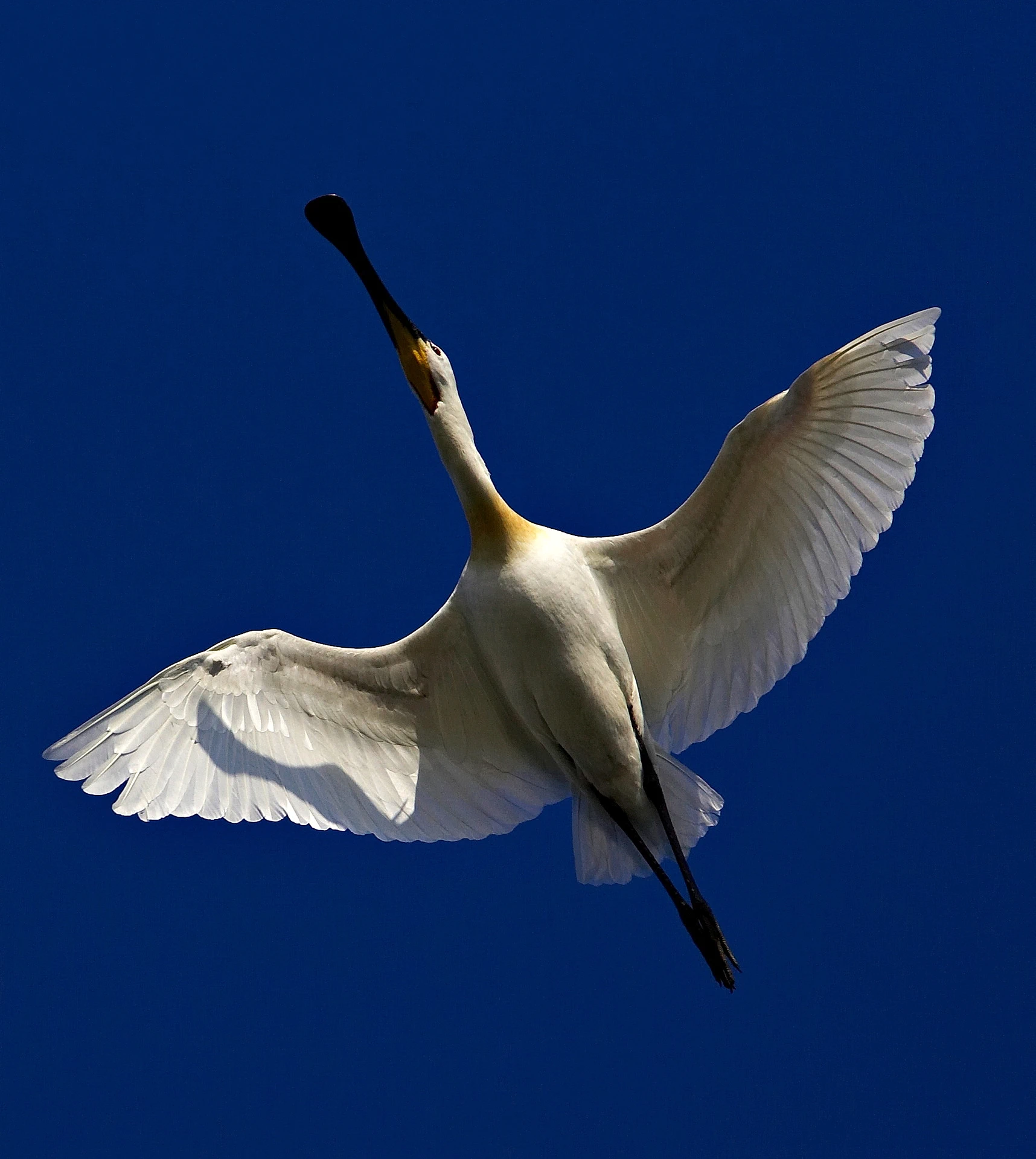
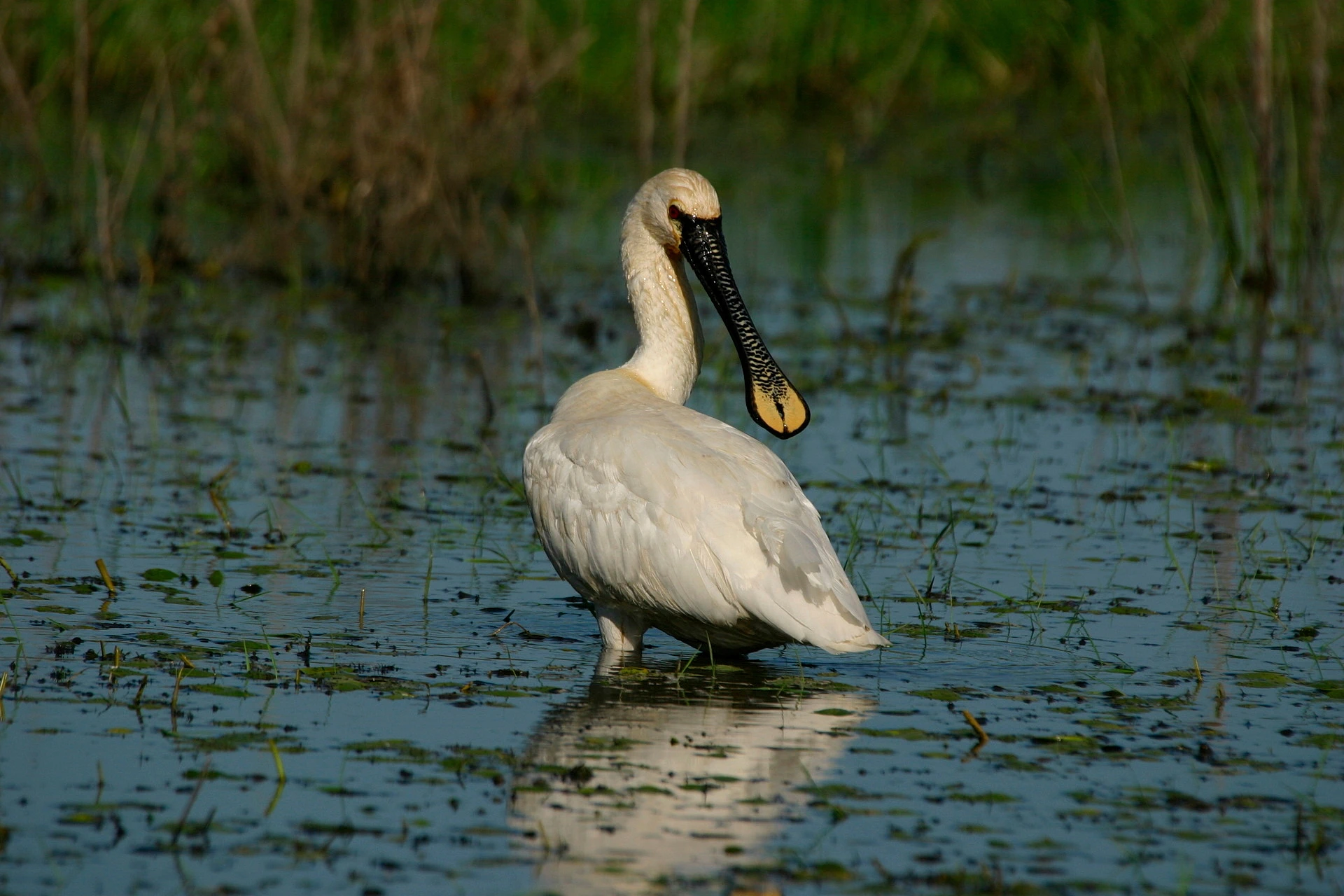
The Eurasian Spoonbill (Platalea leucorodia) is a large, white wading bird, unmistakable due to its spatula-shaped bill. In the Danube Delta it occurs during the breeding season and on migration, using shallow pools, lagoons and lake margins. Identification: all-white body; black bill with yellow spatulate tip; yellow breast patch in breeding adults; long legs; flies with neck extended (unlike herons). Feeding behaviour: sweeps bill side to side through shallow water to filter small fish and invertebrates — a highly characteristic motion. In the Danube Delta: most easily seen at dawn and dusk when groups move between feeding and roosting sites; calm, open shallows are the best search habitat. Conservation: recovering in parts of Europe but dependent on undisturbed shallow wetlands; sensitive to water-level fluctuations affecting feeding areas.
Identification
The Spoonbill is unmistakable: the only all-white, long-legged wading bird with a flat, spoon-shaped bill. In flight it stretches the neck fully forward (unlike herons which retract theirs), and the bill's silhouette is visible at long range. Breeding adults develop a yellow breast patch and pendant crest.
Field Marks at a Glance
Confusion species: No other European bird has the spatulate bill. At a distance, a white egret or the Dalmatian Pelican could be confused, but size, bill shape, and flight silhouette resolve all cases immediately.
When to See It in Romania
Eurasian Spoonbills are migratory visitors, arriving in the delta from March and present through September. Breeding activity peaks April–June. Large post-breeding groups gather at favoured foraging sites in July–August. Most depart by October.
Monthly Presence & Abundance
Where to See It
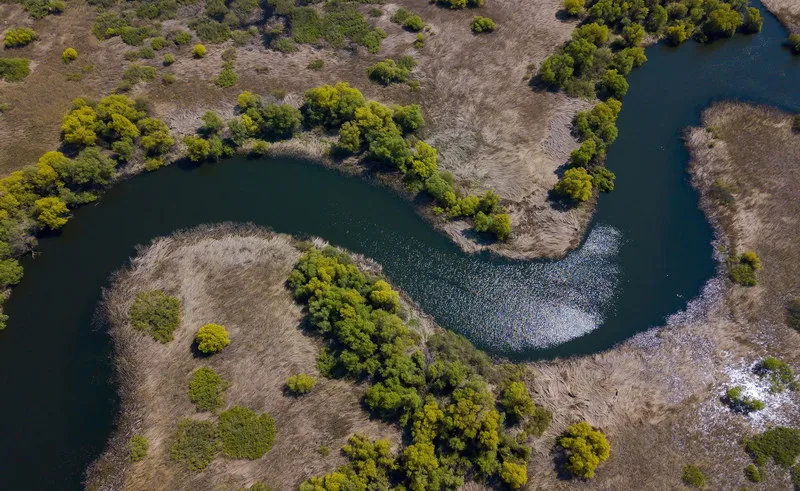
Spoonbills feed in very shallow water, ideally 10–25 cm deep, where the sweeping bill action is most effective. They nest colonially in trees and reed beds, often in the same mixed colonies as herons and cormorants.
Sireasa shallow lakes
The most reliable site. Groups of 10–30 birds wade in the shallow margins at dawn, sweeping their bills in characteristic arcs.
Mixed colonies
Nests in willows and tree canopy alongside Grey Heron and Cormorant colonies. Breeding birds identifiable by yellow breast band and pendant crest.
Lake margins
Foraging birds visible at the shallow margins of the open lakes throughout the delta. Post-breeding groups of 20–50 birds in July–August.
Sheltered bays
Small groups rest and preen on exposed sand or mud banks along the channels. Roosting birds often stand with bill tucked under wing.
How to See It on Our Tours
All Ibis Tours programmes depart from Tulcea and operate within ARBDD-permitted zones.
4-Day Danube Delta Wildlife Cruise
📅 Days 2–3 — shallow lake marginsSpoonbills concentrate on the shallow lake margins in the core zones — the same areas as the pelican lakes on Days 2–3. Sweeping bill action is frequently visible at close range from the moored boat.
View tour details → More Locations5-Day Extended Cruise
📅 Days 2–4 — multiple lake sitesThe 5-day itinerary covers additional shallow margins including feeding areas near Letea Forest, where mixed heron and spoonbill flocks are regular.
View tour details →Behaviour & Ecology
The Spoonbill's feeding technique is unique among European birds: it wades through shallow water, sweeping its open, spatulate bill side-to-side through the water column in a continuous scything motion. Sensitive receptors in the bill detect fish, invertebrates, and amphibians by touch rather than sight — this allows feeding in turbid water where visual hunting is impossible. When the bill contacts prey, it snaps shut with reflexive speed. Spoonbills are highly gregarious at foraging sites, with groups often forming lines that move through the shallows in coordinated progression. In breeding plumage, the yellow breast band, orange-yellow gular pouch, and drooping crest make this already distinctive bird even more striking.
🛡 Conservation Status
Currently Least Concern (LC) globally. The Dutch and Spanish populations have recovered significantly through nest site protection. The Danube Delta colony is one of the most important remaining in south-east Europe. Sensitive to disturbance at nest sites — Ibis Tours approaches colonies at a minimum 150m distance, engine cut, on all excursions.
Photography Guide
The Spoonbill offers multiple outstanding photographic opportunities in the delta — from the dramatic bill-sweeping feeding action to elegant flight shots and the intimate portrait of a breeding bird with crest extended.
📸 Photography Tips
- Feeding action: The sweeping bill is the signature shot. Use burst mode (10+ fps) — the sweep is continuous but the bill breaks the water surface at irregular intervals. Capture the water splash for the most dynamic images.
- Lens: 400–500mm. Groups foraging at 20–40m from the boat give frame-filling images at these focal lengths.
- Breeding plumage: May is optimal — yellow breast band, full pendant crest, and orange throat pouch visible on adults. The crest blows dramatically in wind.
- Flight shots: The fully extended neck and large size make the Spoonbill an excellent flight subject. White plumage against blue sky or golden reed beds both work.
- Resting groups: Roosting birds on sand banks hold position for extended periods — excellent for environmental shots showing the delta context.
See It With Expert Guides
Eurasian Spoonbills are seen on 70%+ of April–September Ibis Tours cruises, rising to over 85% in May–June when breeding birds are present at the colony sites in the core zone.