
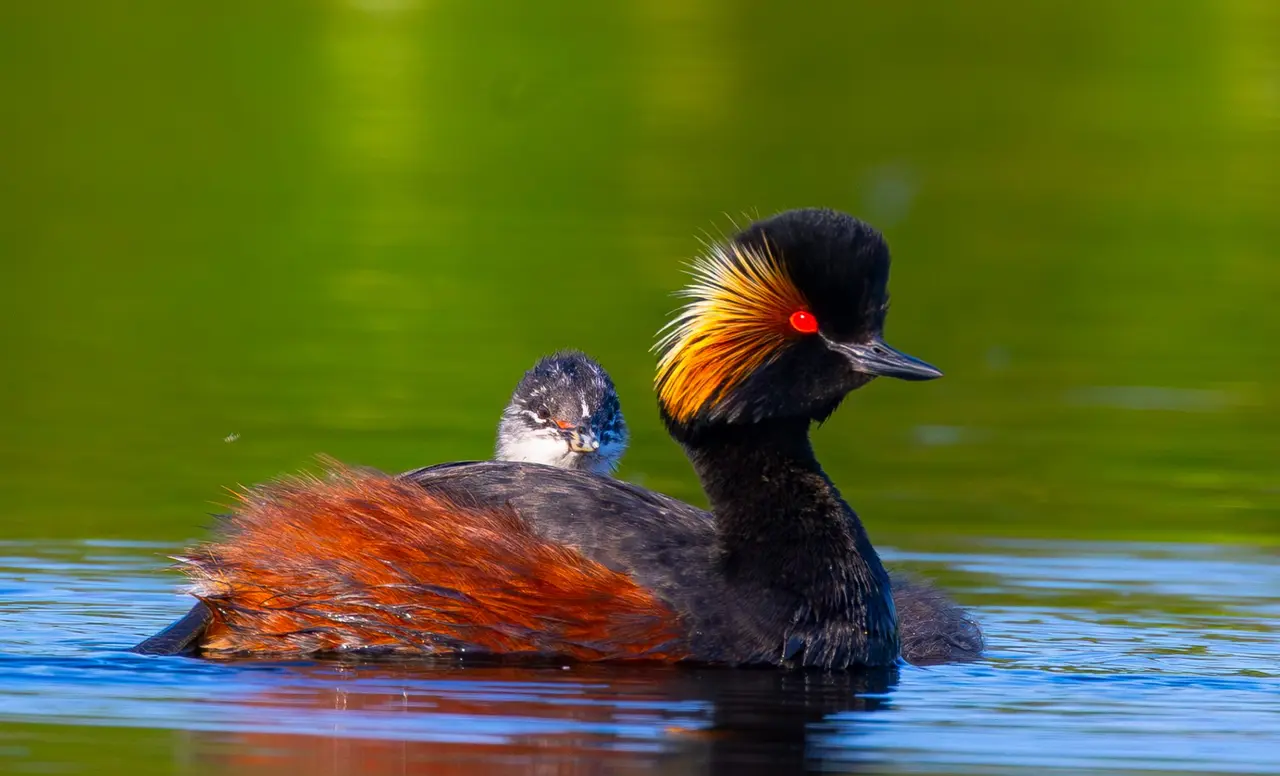
Birding in Romania
Europe's most diverse birding destination. The Danube Delta UNESCO reserve, Carpathian wilderness, and Dobrogea steppe — all in one country. Led by specialists born in the delta.
Why Romania for Birding
Romania sits at the intersection of four major biogeographical zones: continental, steppic, alpine, and Pontic. This overlap produces a bird fauna richer than anywhere else in Central or Eastern Europe — concentrated in a compact, accessible area.
The Danube Delta
Europe's second-largest river delta and best-preserved wetland. UNESCO Biosphere Reserve since 1990. Breeding site for Dalmatian Pelican, Great White Pelican, Pygmy Cormorant, Ferruginous Duck, and 250+ species.
Carpathian Wilderness
The largest undisturbed forest in the EU. Home to Europe's largest Brown Bear population, Wolf, Lynx, Capercaillie, Black Stork, Three-toed Woodpecker, and pristine montane meadows.
Dobrogea Steppe
Europe's easternmost steppe, connecting to the Black Sea coast. Breeding Roller, Bee-eater, Collared Pratincole, Lesser Kestrel, White Pelican roosting sites, and exceptional autumn raptor migration.
Migration Flyway
Romania lies on the Via Pontica — one of Europe's three major migration flyways. In spring and autumn, millions of raptors, storks, waders, and passerines funnel through the Black Sea coast.
Accessible
Direct flights to Bucharest from London, Amsterdam, Frankfurt, Vienna. EU member since 2007. English widely spoken. Ibis Tours handles all permits, boats, accommodation, and logistics.
Uncrowded
The Danube Delta sees a fraction of the visitors of the Camargue or Coto Doñana. Maximum 20 guests aboard, excursions in small groups of 5–8 per motorboat. Most channel and lake areas we visit see virtually no other boats.
Three Distinct Ecosystems
Each region offers a completely different birding experience. Most programmes focus on one; extended tours combine two or all three.
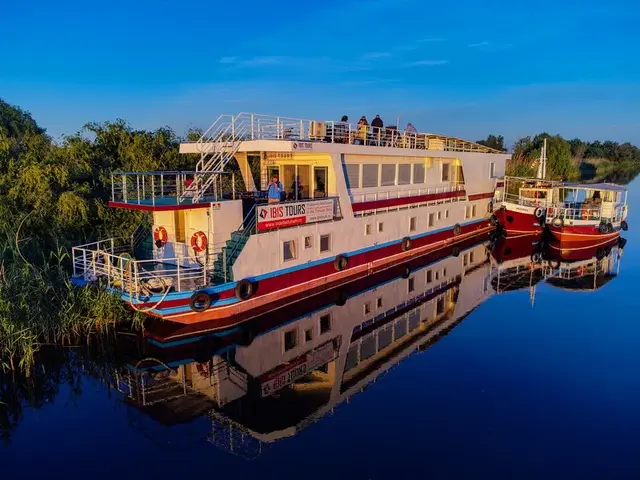
🌊 Danube Delta
5,800 km² of channels, lakes, reed beds, and floating islands. Europe's most important waterbird breeding area. Best explored by slow boat with overnight stays aboard the floating hotel.
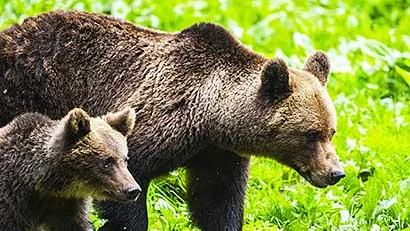
🏔 Carpathian Mountains
Ancient forests and alpine meadows with Europe's highest densities of large predators. Brown Bear, Wolf, Lynx — plus Capercaillie, Hazel Grouse, Ural Owl, Three-toed Woodpecker.
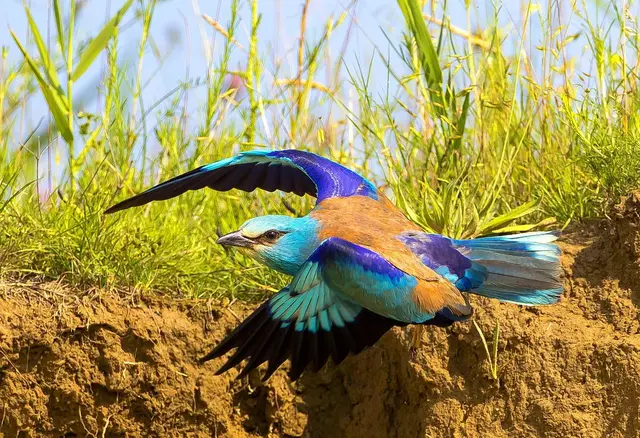
🌾 Dobrogea Plateau
Limestone steppe between the delta and the Black Sea. Europe's best site for breeding Rollers, Bee-eaters, Lesser Kestrel, and Collared Pratincole. Exceptional raptor passage in autumn.
Birds You Can See in Romania
Romania's 400+ species span waterbirds, raptors, forest species, and steppe birds. Selection of the most sought-after species by habitat.
🌊 Delta Waterbirds
- Dalmatian Pelican Pelecanus crispus
- Great White Pelican P. onocrotalus
- Pygmy Cormorant Microcarbo pygmaeus
- Squacco Heron Ardeola ralloides
- Night Heron Nycticorax nycticorax
- Purple Heron Ardea purpurea
- Glossy Ibis Plegadis falcinellus
- Ferruginous Duck Aythya nyroca
- White-tailed Eagle Haliaeetus albicilla
- Common Kingfisher Alcedo atthis
🌾 Steppe & Dobrogea
- European Roller Coracias garrulus
- European Bee-eater Merops apiaster
- Collared Pratincole Glareola pratincola
- Lesser Kestrel Falco naumanni
- Red-footed Falcon Falco vespertinus
- Long-legged Buzzard Buteo rufinus
- Calandra Lark Melanocorypha calandra
- Black-headed Bunting Emberiza melanocephala
- Pied Wheatear Oenanthe pleschanka
- Isabelline Wheatear O. isabellina
🏔 Carpathian Forest
- Capercaillie Tetrao urogallus
- Hazel Grouse Tetrastes bonasia
- Ural Owl Strix uralensis
- Tengmalm's Owl Aegolius funereus
- Three-toed Woodpecker Picoides tridactylus
- White-backed Woodpecker Dendrocopos leucotos
- Black Stork Ciconia nigra
- Saker Falcon Falco cherrug
- Wallcreeper Tichodroma muraria
- Alpine Accentor Prunella collaris
❄️ Winter Spectacle
- Red-breasted Goose Branta ruficollis
- White-fronted Goose Anser albifrons
- Rough-legged Buzzard Buteo lagopus
- Peregrine Falcon Falco peregrinus
- Merlin Falco columbarius
- Great Grey Shrike Lanius excubitor
- Penduline Tit Remiz pendulinus
- Smew Mergellus albellus
- Long-tailed Duck Clangula hyemalis
- Velvet Scoter Melanitta fusca
Best Seasons for Birding in Romania
April – June
Peak breeding season. Colonies active, passage migrants, long days. May is the single best month of the year.
July – August
Post-breeding concentrations, juveniles, early wader migration. Hot but excellent for delta species.
September – October
Migration spectacle on the Via Pontica. Raptors, storks, millions of passerines. Red-breasted Geese arrive.
December – February
Red-breasted Goose winter flocks (8,000–24,000 birds). Raptors on the steppe. Cold but uncrowded and spectacular.
Guided Birding Tours in Romania
All tours led by professional ornithologist guides. Max 20 guests aboard, excursions in groups of 5–8 per motorboat. The floating hotel gives access to delta interiors impossible from any land base.

🚢 4-Day Delta Cruise
The flagship programme. Four days aboard the floating hotel exploring remote channels, pelican colonies, Letea forest and the Black Sea mouth.
View Tour →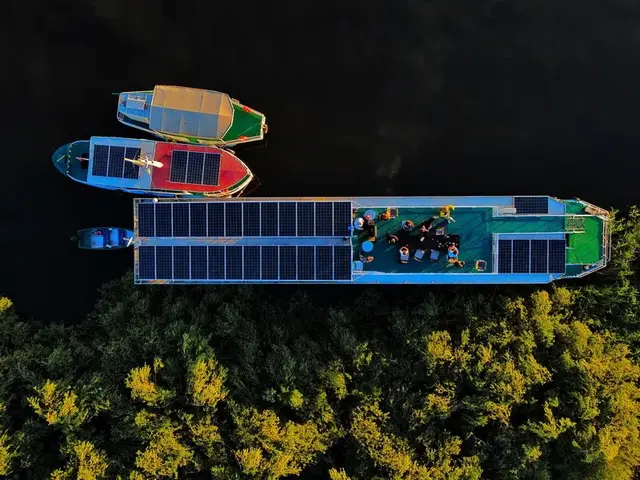
🚢 5-Day Extended Cruise
The most comprehensive programme. An extra day reaches Sulina, the Red-breasted Goose wintering grounds in Dobrogea, and a full day in the strictly protected zone.
View Tour →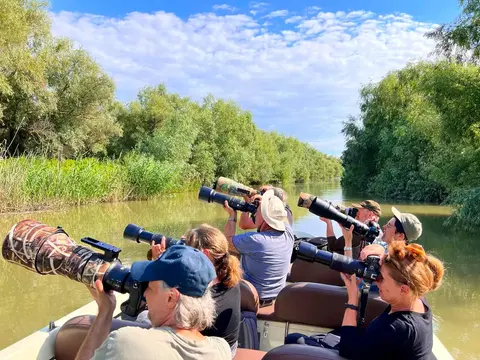
📸 Photography Tours
Bespoke 3–10 day programmes for wildlife photographers. Slow photo-boat, floating hides, dawn access to pelican colonies. Led by Daniel Petrescu (National Geographic UK 2025).
View Tours →Equipment for Birding in Romania
Romania's three habitats call for slightly different kit. The delta demands waterproof optics and distance glass; the Carpathians need warm layers even in summer; the steppe rewards a steady tripod. Here is what our guides recommend after 30 years of leading tours.
Binoculars
A 10×42 roof-prism binocular is the delta standard — the extra magnification pays off on open water, scanning distant pelican flocks and sleeping duck rafts. In Carpathian forest, 8×42 is preferred for lower-light performance. Waterproofing is essential; morning mist on the delta channels is heavy.
Popular choices among our guests: Swarovski EL 10×42, Zeiss Victory SF 8×42, Nikon Monarch 7 10×42.
Spotting Scope
On open water, a 60–80mm scope on a window clamp transforms distant pelican colonies and wader flocks. Not essential — our guides carry shared scopes on all cruises — but serious birders rarely regret bringing their own. An 80mm scope with 20–60× zoom eyepiece is the versatile choice.
A window/boat-rail clamp mount weighs almost nothing and is far more practical than a full tripod on a moving boat.
Camera & Lenses
The delta's pelicans, herons, and eagles are achievable with a 400–500mm telephoto. For serious work, a 500mm f/4 or 600mm f/5.6 resting on a boat beanbag is the standard setup. Mirrorless bodies — Sony Alpha, Nikon Z, Canon R — have largely replaced DSLRs for the weight saving and silent shutter advantage around nesting birds.
The floating hotel means you can leave heavy lenses attached and ready overnight — no packing down between sessions.
Clothing
Dawn motorboat excursions are cold even in July — river mist and wind-chill demand a warm mid-layer and windproof jacket regardless of the daytime forecast. In May and October, a packable down jacket is sensible. Rubber-soled waterproof walking shoes are sufficient; you will rarely need to wade in the delta.
Neutral colours only — olive, grey, or tan. High-visibility clothing disturbs wildlife and the birders near you.
Field Guides
Birds of Europe by Lars Svensson (Collins) is the standard single-volume reference and covers all Romanian species. The Danube Delta has a handful of specialities — Paddyfield Warbler, Savi's Warbler, Eastern Olivaceous Warbler — that benefit from prior study. Our guides carry a full onboard library.
Brush up on Acrocephalus warblers before the trip — the delta has six species and the differences are subtle but learnable.
Apps
Merlin Bird ID (Cornell Lab) covers all Romanian species with photos and sounds, and works offline. eBird shows recent hotspot records near Tulcea and Crișan. Xeno-canto is the best resource for practising Eurasian bird calls before arrival.
Download offline maps and Merlin data for Romania before travel — mobile signal is unreliable in the delta interior.
How to Reach Romania for a Birding Tour
Romania is 3 hours from London, well-connected from all European hubs, and straightforward to navigate once you land. For Danube Delta tours, the journey ends at Tulcea port.
Fly to Bucharest
Henri Coandă Airport (OTP) has direct routes from London Heathrow, Gatwick, Luton and Stansted (British Airways, Wizz Air, Ryanair), plus Frankfurt, Amsterdam, Vienna, Paris, and most European hubs. Flight time from London is approximately 3 hours. Bucharest is also the gateway for Carpathian bear watching.
Alternatively, fly direct to Constanța (CND) — closer to the delta but with fewer seasonal routes. Wizz Air operates Luton–Constanța in summer.
Bucharest to Tulcea
Private transfer is the most flexible option — approximately 3.5 hours east through the Baragan plain and across the Danube bridge at Brăila. We arrange transfers for all guests as part of the tour programme.
Intercity buses (Autogari) also run Bucharest–Tulcea several times daily (4–5 hours). The train connection exists but is slow and inconvenient for luggage-carrying birders.
Arriving in Tulcea
The floating hotel departs from Tulcea river port, a 10-minute walk from the town centre. Most guests arrive the evening before departure and stay in Tulcea overnight; we recommend this for a relaxed 7:00 AM embarkation. We can suggest accommodation for the pre-cruise night.
For bear watching programmes, the journey from Bucharest continues 2.5 hours southwest to Brașov, then 30 minutes to Zărnești.
Practical Information
Romania is an EU member. No visa required for EU/EEA/UK citizens. Currency is the Romanian Leu (RON); the exchange rate is approximately 5 RON to 1 EUR. Euros are accepted by most hotels and restaurants in tourist areas.
English is spoken by our entire team. Medical facilities in Tulcea are adequate for minor issues; travel insurance is recommended for all international trips.
Wildlife Photography in Romania
Romania has become one of Europe's most productive wildlife photography destinations. Low crowd pressure, high subject density, and extraordinary dawn and dusk light make it exceptional for photographers at every level.
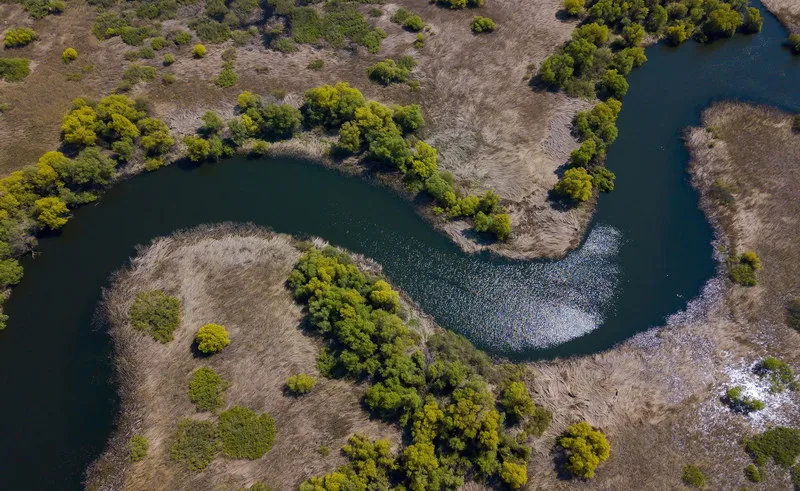
Dawn excursion from the floating hotel — the motorboat is launched before sunrise for the best light and the highest wildlife activity
Why the Delta is Special for Photography
Two qualities distinguish the Danube Delta for photography: proximity and light. The floating hotel positions overnight beside breeding colonies and feeding areas — so when the light is good, you are already in position. No driving, no setting up. The motorboat is launched before sunrise and you are shooting in golden hour light within minutes.
Pelicans in flight against a blue sky, Glossy Ibis wading in glass-calm shallows, White-tailed Eagles launching from dead willows — these are scenes you will encounter almost every day. The challenge is not finding subjects but choosing between them.
Photography Ethics
We maintain strict distance protocols near all nesting sites. We never approach within 200m of the pelican colonies at Lacul Nebunu. Boat engines are cut when drifting near feeding birds. Our guides enforce these rules without exception — the welfare of the wildlife always takes priority over the image.
Best Light Windows
Sunrise to 7:30 AM and 7:00–8:30 PM provide the warmest directional light. In mid-summer, midday is best spent on the shaded deck scanning with binoculars.
Motorboat Technique
A beanbag resting on the boat rail is the standard for 400mm+ lenses on water. Fill a large beanbag with 3–4kg of rice on arrival. A Wimberley Plamp or Joby GorillaPod also works well when anchored.
From the Sun Deck
The upper deck is 6m above water level — ideal for flight shots of pelicans and raptors circling overhead, and for scanning with a scope. A tripod is practical when anchored overnight.
Carpathian Bears
Forest hides at dusk demand high ISO performance. Bears in low forest light require ISO 3200–6400. A 300mm f/2.8 or 400mm f/4 is the practical minimum; bring a lens you trust at 6400 ISO.
Romania vs Other European Birding Destinations
Birders often ask how Romania compares to the Camargue, Coto Doñana, Extremadura, or the Norfolk coast. Here is an honest assessment from people who have birded across Europe for three decades.
Camargue, France
The Camargue is superb but heavily visited and well-managed in ways that limit the wild feel. Its flamingo colonies are world-class — Romania cannot match this. However, the Danube Delta is 7× larger, holds higher waterbird breeding densities, and receives a fraction of the tourism. Our pelican colonies alone exceed the Camargue's total pelican population by 3×.
Coto Doñana, Spain
Europe's most celebrated wetland — richly deserved. For raptors and overall species count, Doñana is probably unmatched on the continent. Romania doesn't claim to beat it. But for pelicans, the concentrated waterbird spectacle, and genuine wilderness access, the delta offers something Doñana cannot: overnighting in the middle of the reserve.
UK Reserves (Norfolk, RSPB)
UK birding offers convenience and excellent infrastructure, but cannot replicate the scale of a delta dawn. Species that are rarities in the UK — Glossy Ibis, Purple Heron, Squacco Heron, Night Heron, Penduline Tit — are routine daily sightings here. For a UK birder wanting to move from "twitcher" to "European traveller," Romania is the logical next destination.
Extremadura, Spain
Extremadura in spring is possibly the finest land-based birding in Europe — Great Bustard, Black-winged Kite, breeding raptors in abundance. Romania offers comparable steppe birding (swap Great Bustard for Collared Pratincole and Lesser Kestrel) plus a wetland experience Spain cannot match. The ideal European wildlife itinerary includes both.
The Honest Summary
Romania is not the "best" destination in every category — no single place is. But for pelicans and waterbirds specifically, for the convergence of three distinct habitats in a compact area, and for a wildlife experience that remains genuinely wild and uncrowded, Romania offers exceptional value. And one thing is unique in all of Europe: sleeping on the water, inside the Danube Delta Biosphere Reserve, on a 4-star floating hotel.
Romania's 30 Most Sought-After Bird Species
Romania's position at the intersection of three major flyways — the Via Pontica Black Sea flyway, the Central European Corridor, and the Balkan-Mediterranean route — produces a species diversity found nowhere else in Europe at comparable latitudes. The following 30 species represent the core target list for a 7–10 day Romania birding programme.
Reliability percentages based on peak season (April–June for summer species, November–February for winter species) from Ibis Tours recorded sightings 2018–2024. All except Wolf are expected on a 5-day cruise programme.
Romania on the World Stage: Why Serious Birders Choose It
Birdwatching travel has expanded dramatically in the past decade. East Africa, South America, and Southeast Asia compete for birder budgets. Why does Romania — specifically, the Danube Delta — continue to attract serious birders from the UK, Netherlands, Germany, and Scandinavia every year?
The Honest Comparison: Romania vs Other European Birding Destinations
| Destination | Species count | Flagship species | Crowds | Cost | Unique factor |
|---|---|---|---|---|---|
| Romania (Danube Delta + Carpathians) | 400+ | Dalmatian Pelican, White-tailed Eagle, Brown Bear | Very low | Low–medium | Only floating hotel birding in Europe. Bear + delta combo. |
| Camargue, France | ~350 | Greater Flamingo, Glossy Ibis | High (summer) | High | Flamingo colonies, accessible infrastructure |
| Coto Doñana, Spain | ~300 | Spanish Imperial Eagle, Marbled Duck | High (restricted access) | High | Spanish Imperial Eagle, globally rare |
| Extremadura, Spain | ~280 | Low–medium | Medium | Great Bustard leks, steppe species | |
| Lesvos, Greece | ~300 | Krueper's Nuthatch, Cinereous Bunting | Low–medium | Medium | Eastern Mediterranean endemics, spring migration |
| Norfolk, UK | ~300 | Pied-billed Grebe, rarities | High | High | RSPB reserves, accessible for UK birders |
Romania scores highest on the combination of species diversity, accommodation quality, access to UNESCO core zones, and cost. No other European destination offers the Dalmatian Pelican experience from a 4-star floating hotel at comparable price points.
Questions About Birding in Romania
Romania has recorded over 400 bird species, placing it in Europe's top 5 birdwatching destinations. The Danube Delta alone hosts 360+ species — including Europe's largest breeding colony of Dalmatian Pelicans and virtually the entire Central European population of Red-breasted Geese wintering in Dobrogea.
April to June is peak season — breeding colonies are active, passage migrants are moving, and days are long. May is consistently the best single month. September–October offers superb migration. Winter (December–February) is outstanding for Red-breasted Goose winter flocks (typically 8,000–24,000 birds, historically higher) on the Dobrogea steppe.
The Danube Delta is Europe's second-largest river delta and best-preserved wetland, covering 5,800 km² in eastern Romania. UNESCO listed it as a Biosphere Reserve in 1990. It hosts breeding colonies of Dalmatian Pelican, Great White Pelican, Pygmy Cormorant, Squacco Heron, and over 250 breeding species total.
Entry to the Danube Delta Biosphere Reserve requires an ARBDD permit, included in all Ibis Tours packages. For strictly protected core zones, a licensed guide is legally required — all our guides hold the necessary certifications. The Carpathians are freely accessible.
Yes. Combined Romania wildlife itineraries are available: Danube Delta cruise (4–5 days) plus Carpathian bear watching (2 days). The two regions are approximately 4 hours apart by car. Custom 7–10 day programmes on request — contact us.
Plan your Romania birding trip
Ibis Tours has operated wildlife tours in Romania since 1995. Own floating hotel, expert guides, small groups. Tell us your target species and we'll design your programme.
Romania Wildlife Species Guides
In-depth field guides for Romania's most sought-after species — identification, when and where to find them, photography tips.
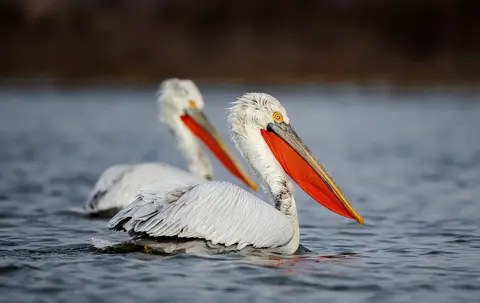 Dalmatian PelicanVU — Danube Delta
 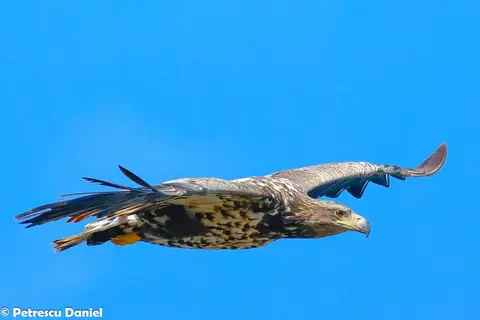 White-tailed EagleLC — year-round
 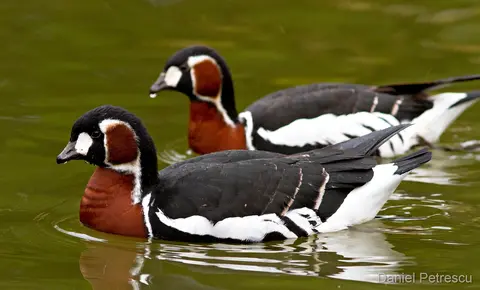 Red-breasted GooseVU — winter Dobrogea
 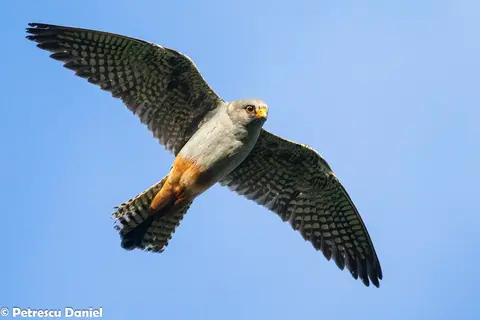 Red-footed FalconNT — spring steppe
 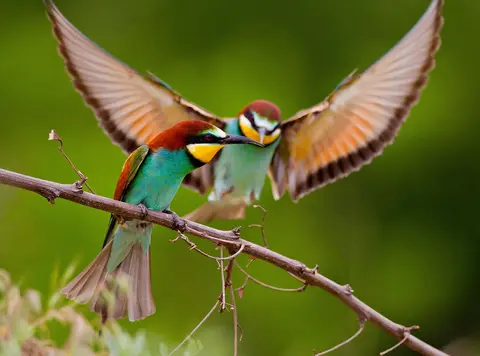 European Bee-eaterLC — summer colonies
 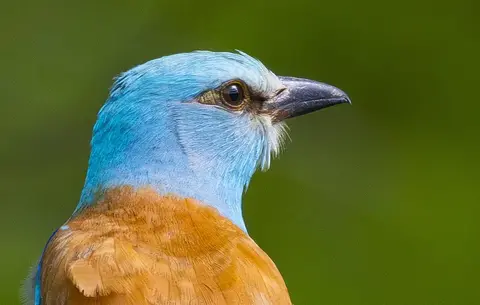 European RollerLC — electric blue
 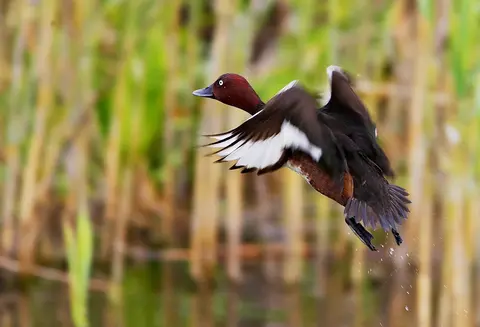 Ferruginous DuckNT — delta marshes
 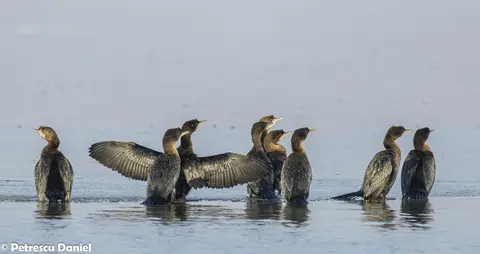 Pygmy CormorantLC — Europe's largest colony
 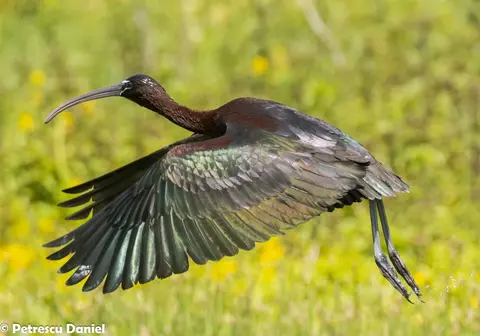 Glossy IbisLC — iridescent plumage
 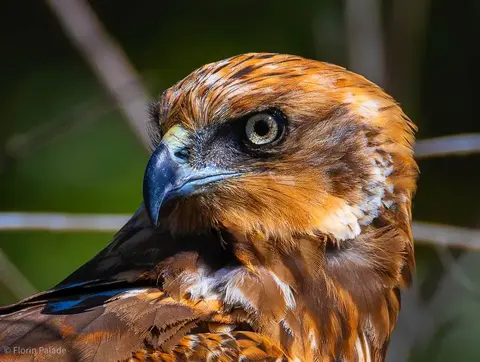 Marsh HarrierLC — delta raptor