
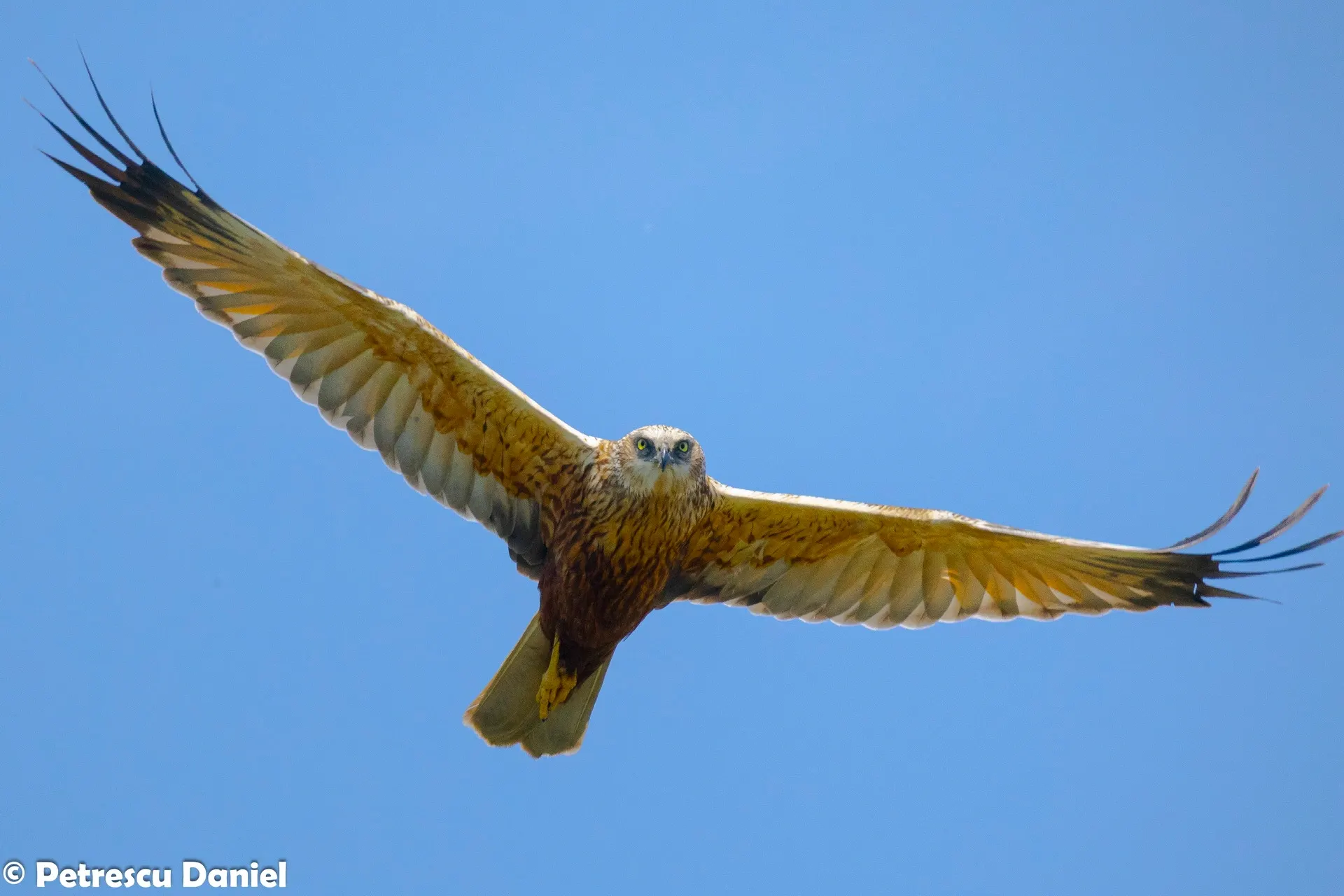
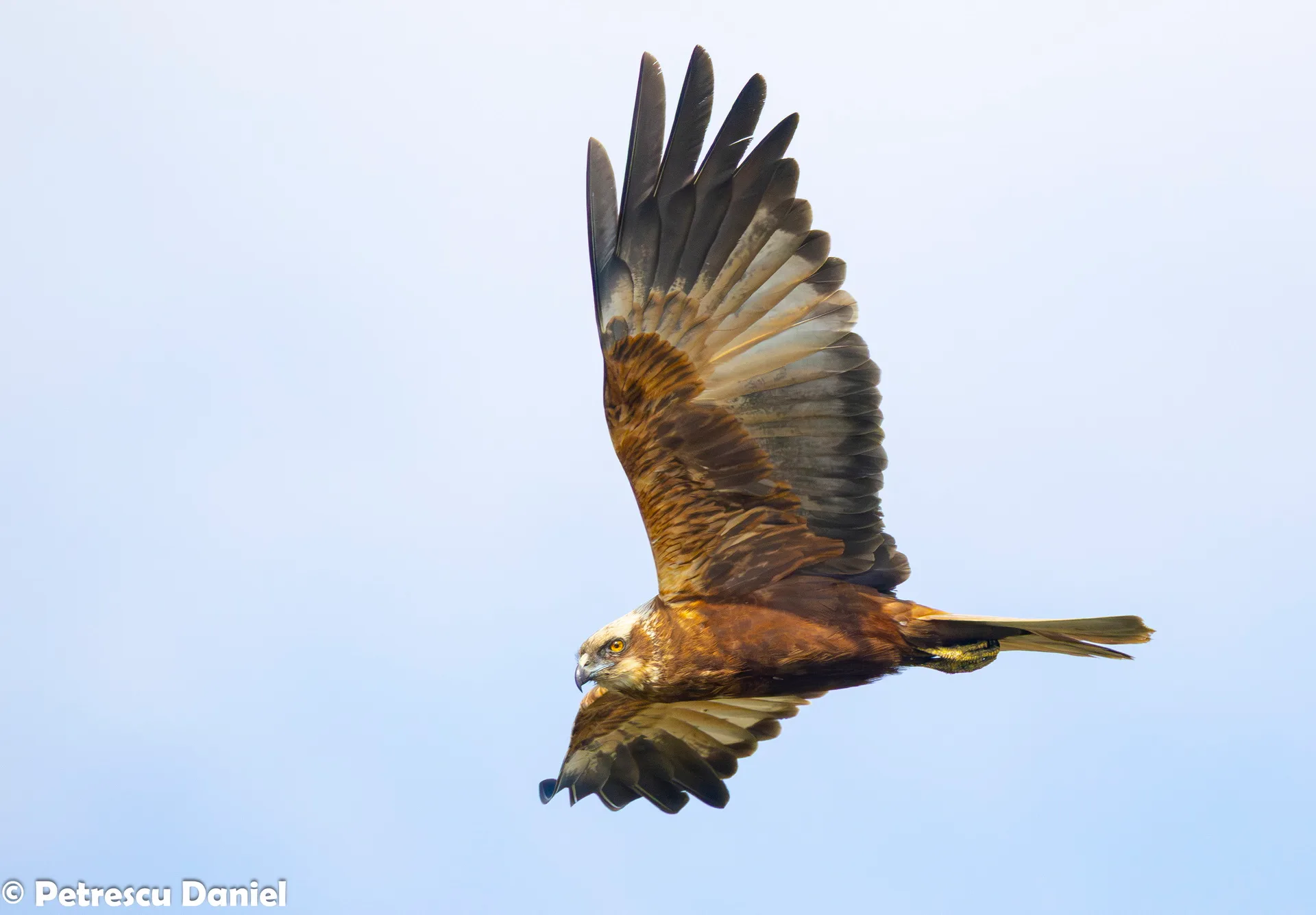
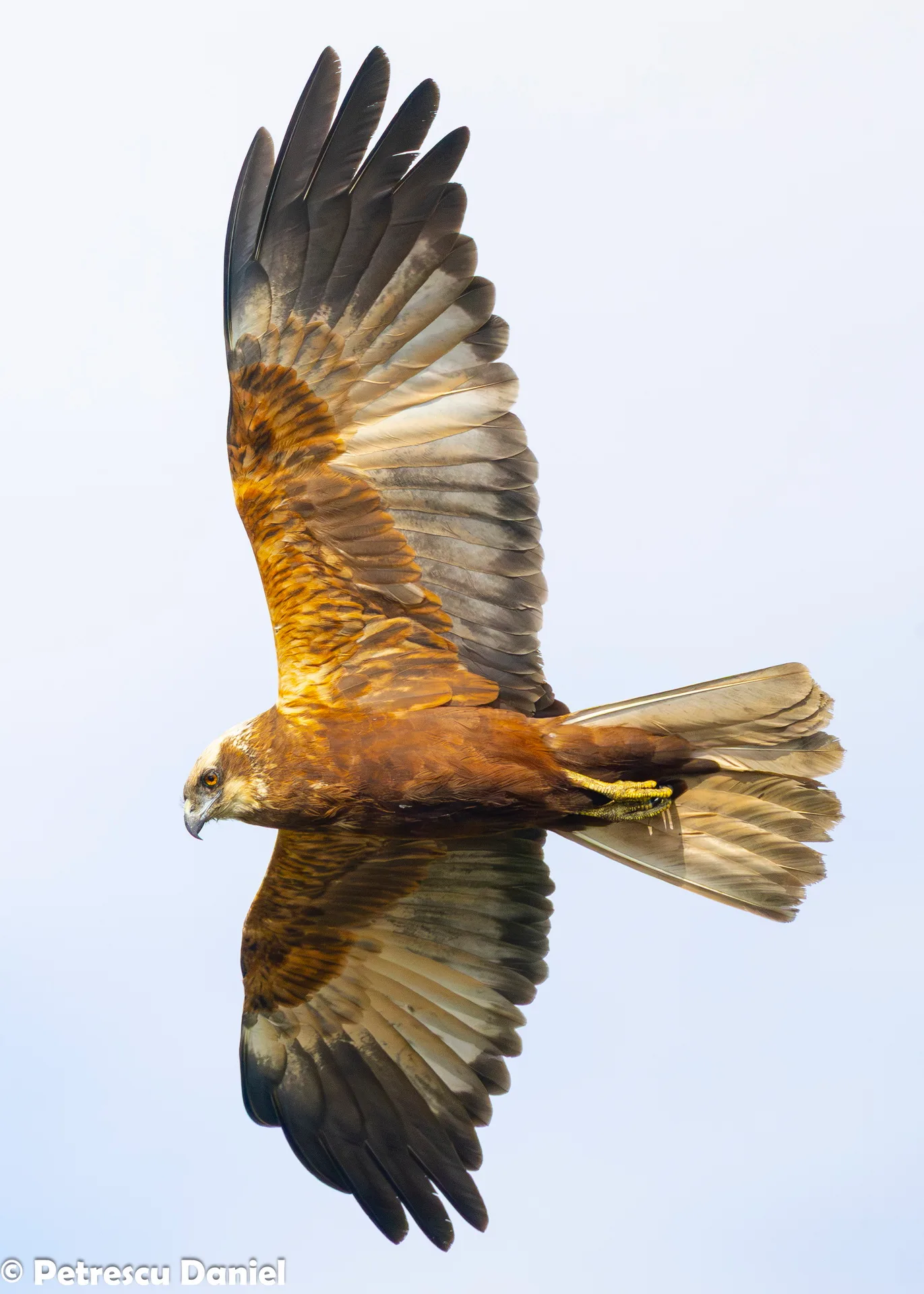
The Western Marsh Harrier (Circus aeruginosus) is the emblematic raptor of reedbeds, recognised by its low, buoyant, quartering flight over vegetation. In the Danube Delta it is common during the warm season, and some individuals may overwinter in mild years. Identification: long wings held in a shallow V; the male is tricoloured — chestnut body, grey wings and tail; the female and immature are dark brown with a pale cream crown. Gliding flight with tilting action is diagnostic over reedbeds. Ecology: hunts small mammals, birds, frogs and large insects over reed and marsh. Nests within dense reedbed. Observation: present on almost every excursion in the delta; most active in the morning and evening; males are particularly conspicuous during display. Conservation: dependent on extensive, undisturbed reedbeds; sensitive to drainage and intensive reed management.
Identification
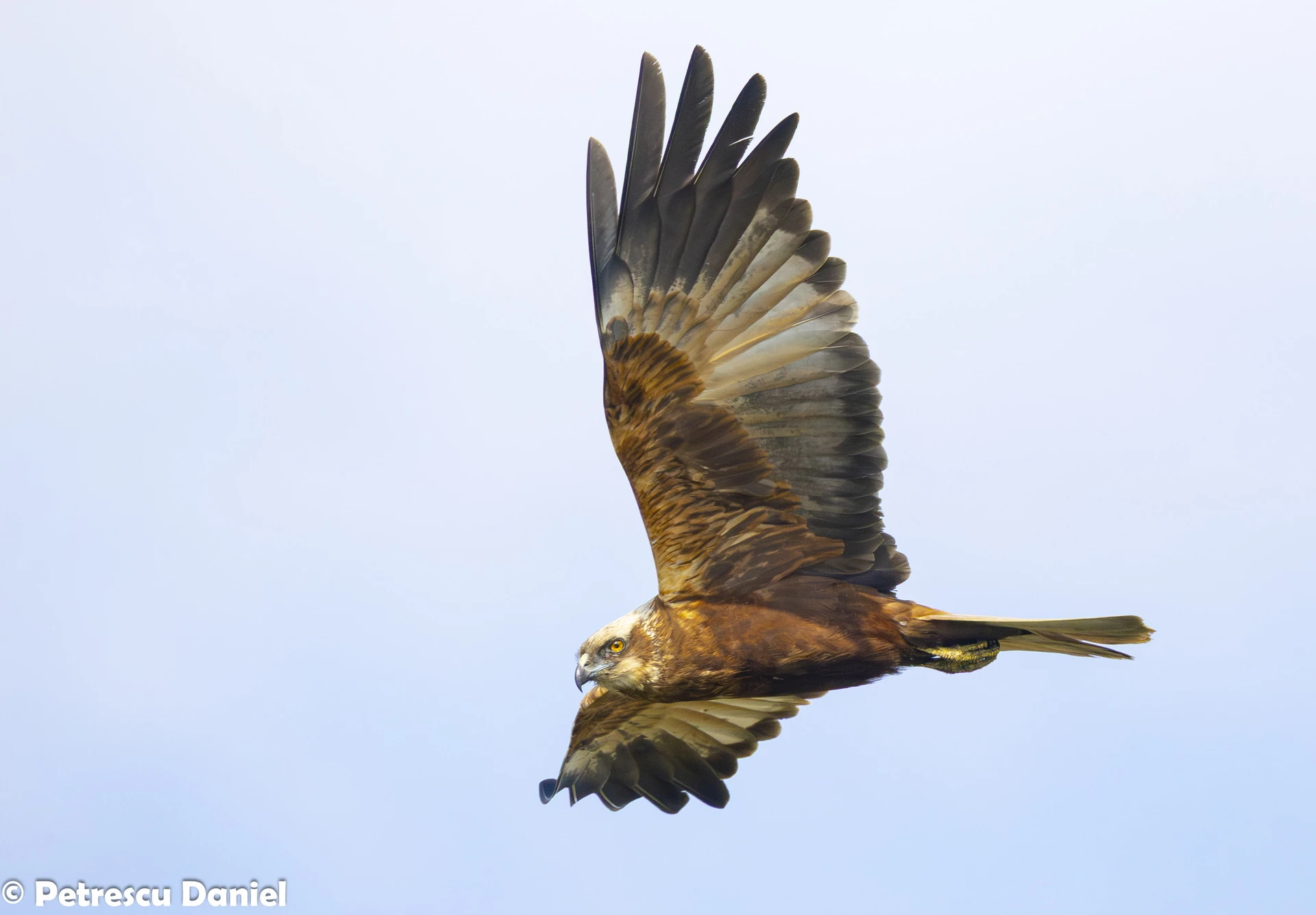
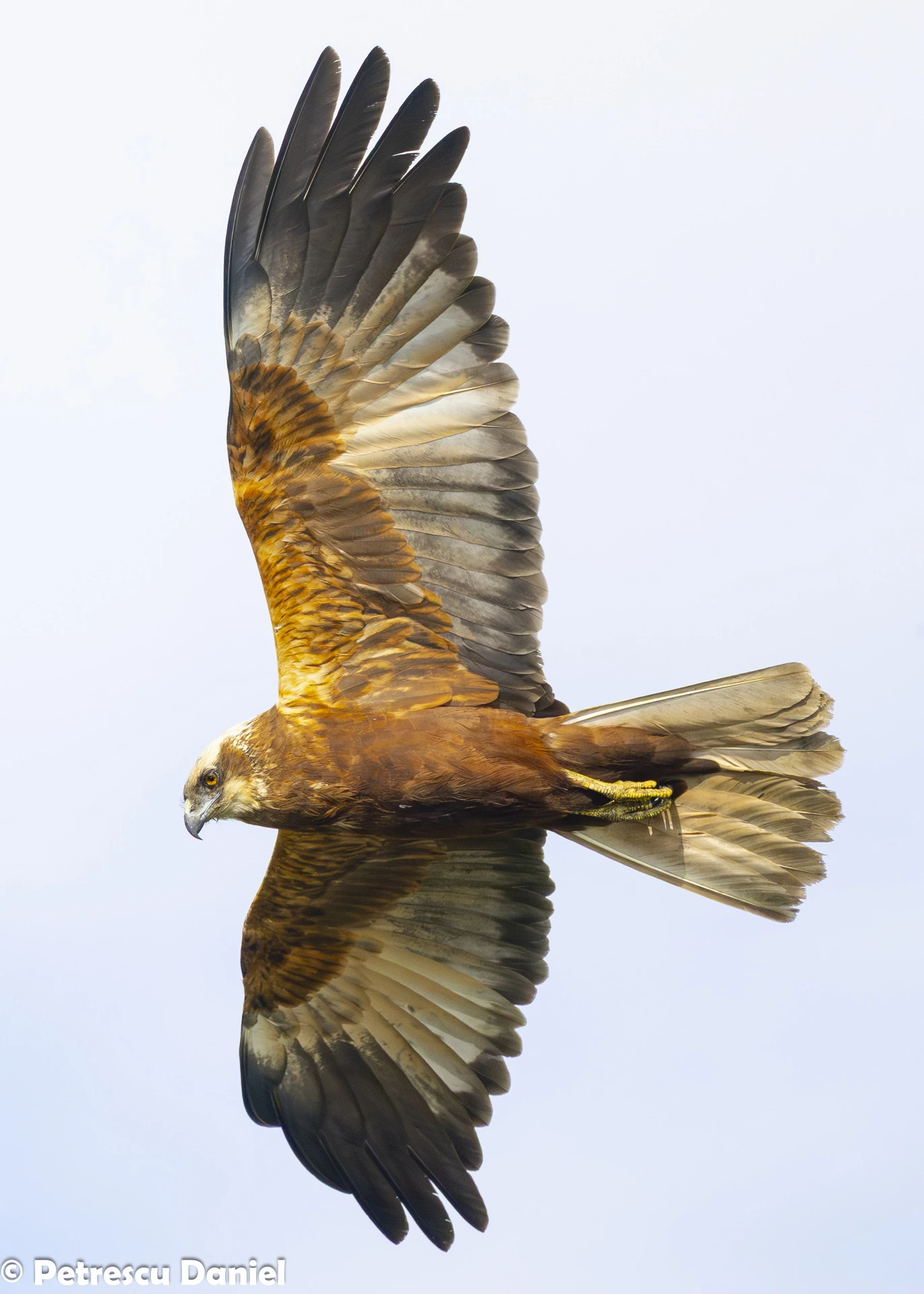
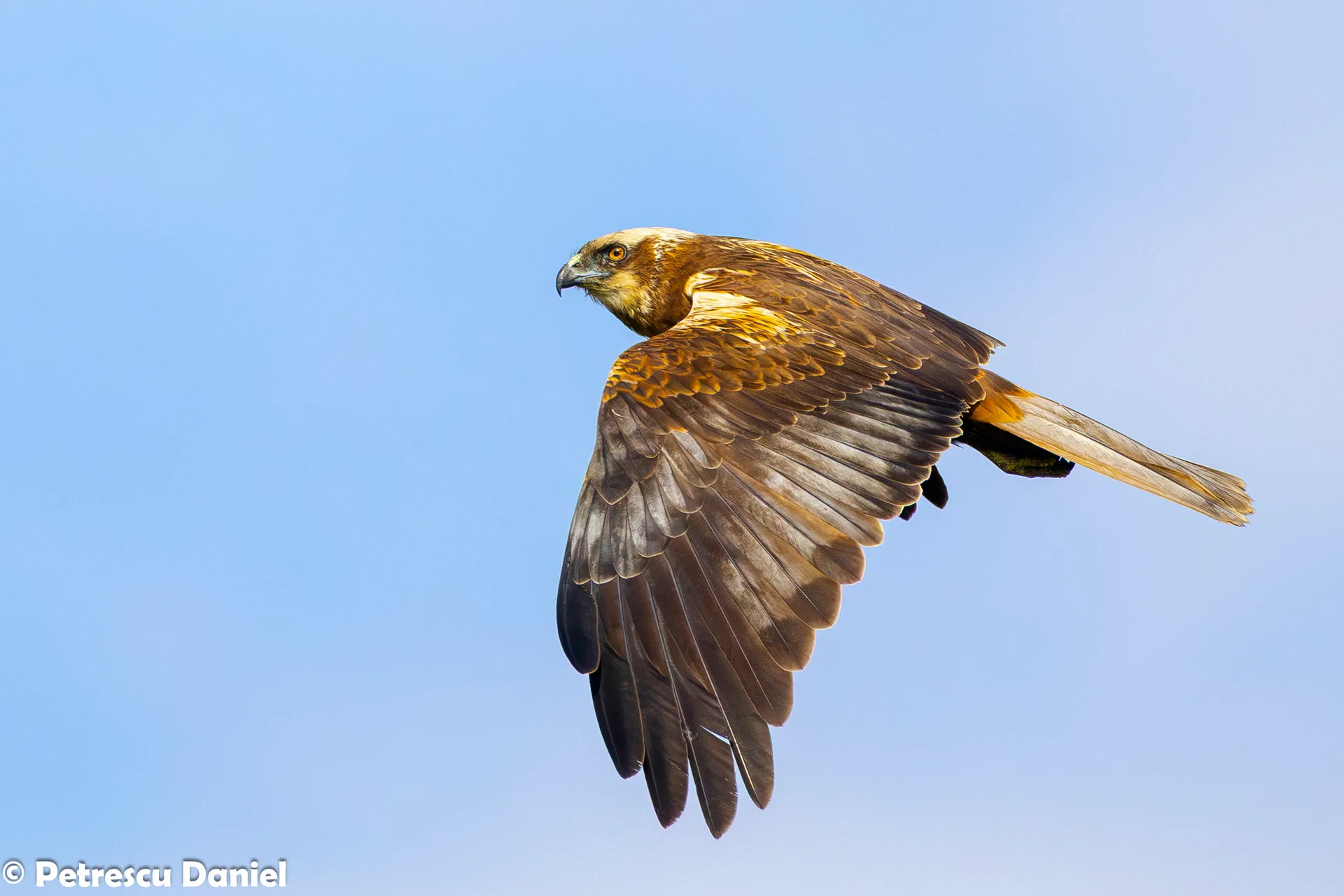
Marsh Harriers show strong sexual dimorphism. Males are tri-coloured: chestnut body, pale grey head and secondaries, and black wingtips — unmistakable in good light. Females and immatures are dark chocolate-brown with a distinctive cream or buff cap and throat. Both sexes fly with wings in a shallow V (dihedral) — the harrier's diagnostic posture.
Field Marks at a Glance
Confusion species: Hen Harrier (Circus cyaneus) — male is overall grey without chestnut. Montagu's Harrier (C. pygargus) — smaller, more buoyant flight. Both are occasional migrants in the delta; Marsh Harrier is overwhelmingly the most common harrier species in the delta from April–October.
When to See It in Romania
The Marsh Harrier is a migratory breeder in the delta, present from March through October. Breeding activity peaks April–June. A small number of birds are resident year-round in mild winters, but the delta population is predominantly migratory. Autumn sees high numbers as birds from across the European range move south.
Monthly Presence & Abundance
Where to See It
Marsh Harriers are found wherever there are extensive reed beds — which means throughout the entire Danube Delta. Males defend large territories encompassing multiple channels and reed bed sections, quartering the same routes repeatedly throughout the day.
All phragmites areas
The primary hunting habitat. Any open reed bed will have 1–3 harriers hunting simultaneously, visible from the excursion boat.
Lake margins
Harriers hunt waterbirds at lake margins, diving into groups of coots and diving ducks. Dramatic hunting sequences visible from the anchored vessel.
Over channels
Males frequently cross channels in low, direct flight. Often pass within 20–30m of the stationary motorboat.
Forest-reed interface
Particularly high densities near Letea Forest, where the reed bed meets open sand clearings — diverse prey availability.
How to See It on Our Tours
All Ibis Tours programmes depart from Tulcea and operate within ARBDD-permitted zones.
4-Day Danube Delta Wildlife Cruise
📅 All days — reed bed channelsMarsh Harriers are the most frequently seen raptor on every delta cruise. Low quartering flights over reeds on departure from canal side moorings and all channel transits. Multiple sightings per day are typical.
View tour details → Close AccessWildlife Photography Tours
📅 Dawn reed bed sessionsPhotography-focused trips position the boat at reed edges in predawn light — ideal for Marsh Harrier flight sequences with clean backgrounds.
View tour details →Behaviour & Ecology
The Marsh Harrier hunts by low quartering flight — gliding slowly on raised wings just above the reed tops, using the element of surprise to flush and catch prey. When prey is detected below, the bird drops suddenly into the vegetation, feet first, with wings held up. Prey includes Coot, moorhen, small ducks, frogs, voles, and large insects. The male is a spectacular sight in sky-dancing display in April–May — alternating steep climbs with tumbling dives over the nest site. Food is transferred from male to female in dramatic aerial passes: the male drops prey from height and the female rolls and catches it in mid-air. Females are site-faithful, returning to the same territory for multiple years.
🛡 Conservation Status
Currently Least Concern (LC). The Marsh Harrier recovered strongly across Europe following the ban on organochlorine pesticides (DDT, dieldrin) in the 1970s and 1980s. Romanian populations benefited enormously from the delta's protected status. The ARBDD management regime, which limits disturbance of reed bed habitats, has maintained optimal breeding conditions.
Photography Guide
The Marsh Harrier is one of the most photogenic raptors in Europe and one of the easiest to photograph in the delta, combining frequent close approaches with dramatic behaviour.
📸 Photography Tips
- Male tri-colour: The chestnut/grey/black male in May morning light is exceptional. Position the boat broadside to the harrier's regular quartering route and wait — the bird will return on the same flight line..
- Quartering flight: Pre-focus on the reed top level where the bird hunts. Birds quarter slowly and predictably — you have time to compose and expose correctly.
- Hunting strikes: Unpredictable but frequent. Keep burst mode active whenever a bird is directly overhead with wings held high — the strike drops vertically into the reeds.
- Lens: 400–500mm for close-range quartering shots. 300mm for overhead birds.
- Sky dancing: In April–May, the male's display flight above the nest area is predictable — it occurs repeatedly through the morning. Wide-angle shots with reed bed background place the bird in its habitat.
See It With Expert Guides
Marsh Harrier is seen on 95%+ of April–September Ibis Tours cruises — one of the most reliable raptor sightings in Europe. Male display flights visible April–May from the floating hotel anchorage.