
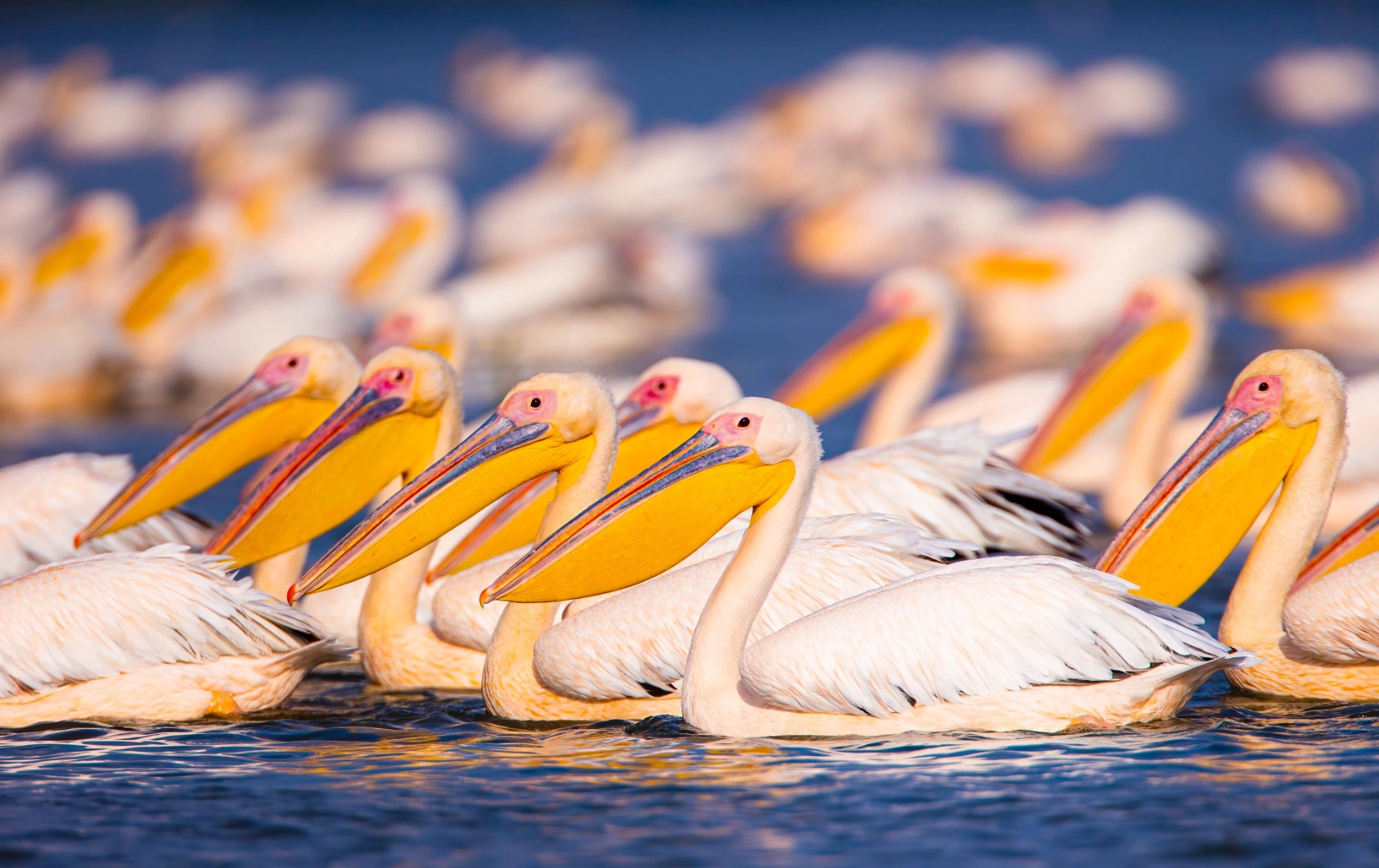
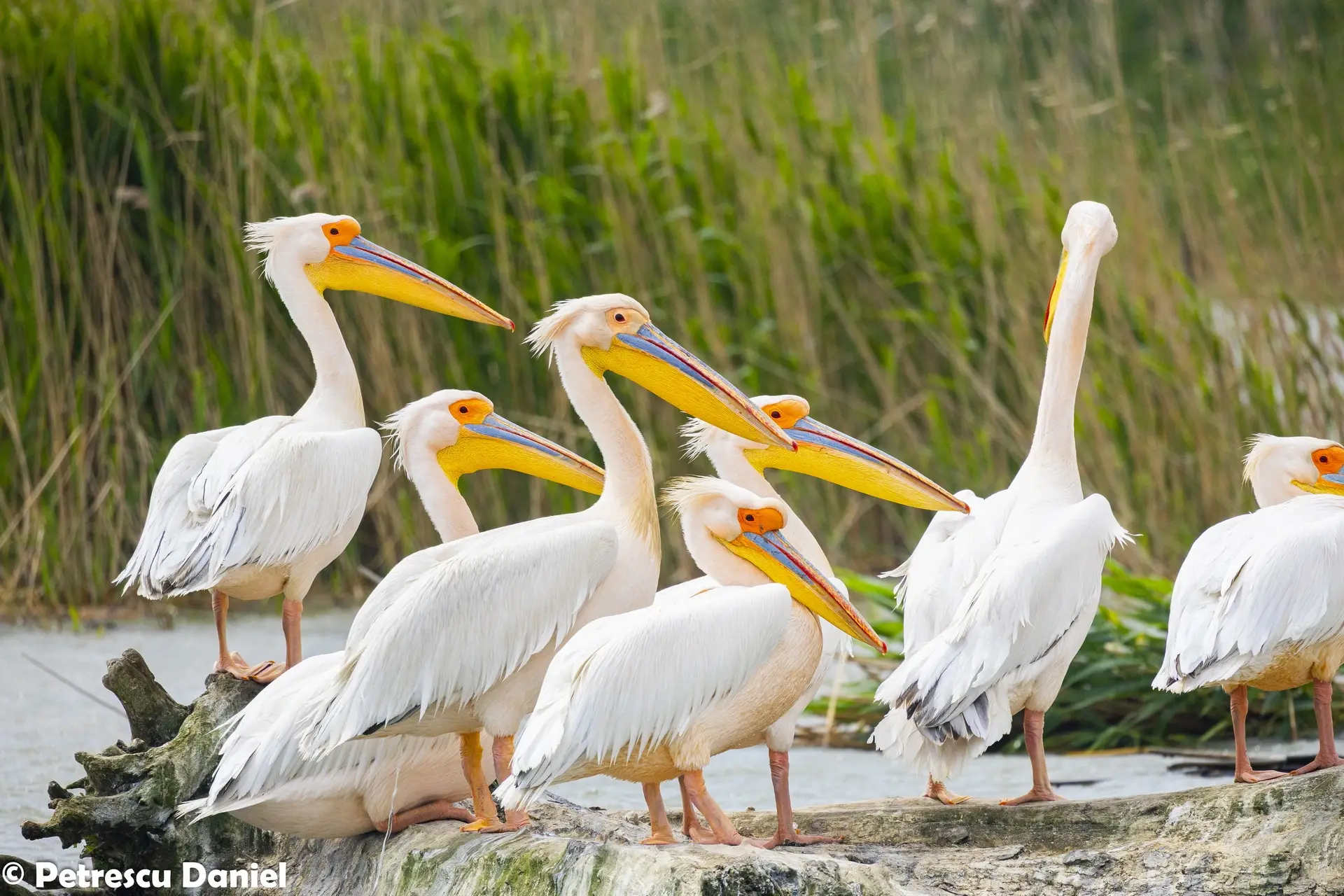
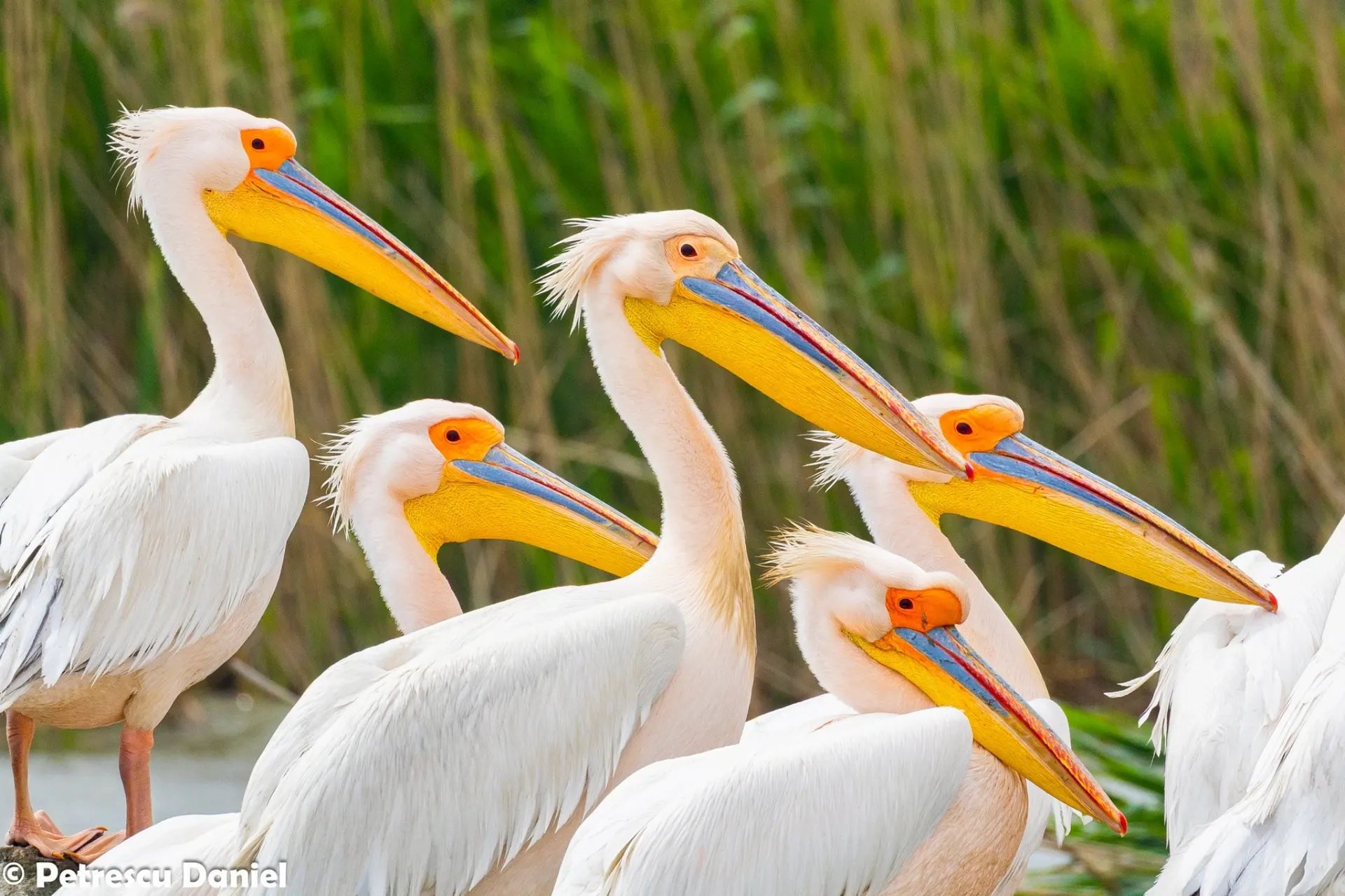
The Great White Pelican (Pelecanus onocrotalus) is one of the emblematic species of the Danube Delta, known for its large flocks and cooperative fishing behaviour. It is predominantly a warm-season species in Romania, using shallow lakes, floating reed mats and open areas with abundant food. Identification: very large white pelican with black flight feathers visible in flight; long yellow-orange bill with gular pouch; flies in linear formations or V-shape, with broad soaring glides. Behaviour: often fishes in groups, herding fish into shallows. This behaviour provides excellent opportunities for photography and behavioural observation. In the Danube Delta: best observations are in the early morning or towards evening on open lakes; low-angle light highlights plumage texture and group dynamics. Conservation: dependent on wetland quality and undisturbed feeding and resting areas; responsible management of boat traffic and colonies is essential.
Identification
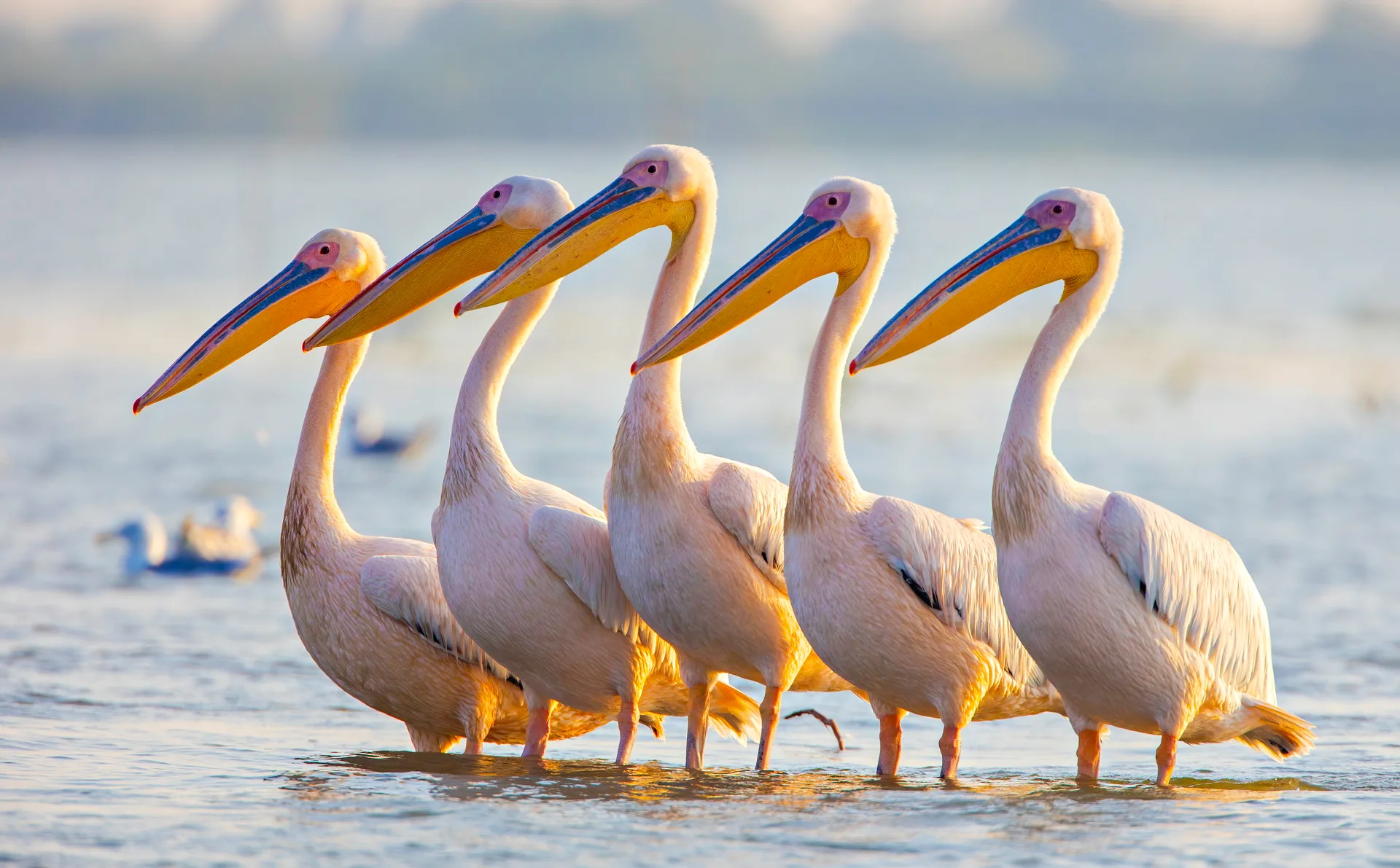
Adults are unmistakable in breeding plumage — entirely white except for the black primaries and the vivid yellow-orange pouch. The white wing coverts contrast strongly with the jet-black flight feathers, creating a bold pattern in flight. At rest, the large size, massive pink-orange bill, and bare facial skin are distinctive.
Field Marks at a Glance
Confusion species: Dalmatian Pelican — the key distinction is the wing pattern in flight (white vs grey primaries) and head shape (smooth vs curly-crested). Both breed in the delta and often flock together.
When to See It in Romania
Great White Pelicans arrive in the delta from late February–March. Breeding activity peaks April–June. Post-breeding concentrations build July–August. Most depart by October–November. A handful of non-breeding immatures may linger year-round.
Monthly Presence & Abundance
Where to See It
Great White Pelicans are visible throughout the delta wherever there are open lakes and channels. The highest concentrations are in and around the UNESCO core zones, but unlike the Dalmatian, individuals and small groups can be seen even from the main Sulina arm.
Lac Furtuna & Lac Roșu
Large roost and feeding aggregations — rafts of 200–500+ birds visible from a distance at dawn.
Sireasa — Sontea
Main breeding and cooperative fishing area. Requires ARBDD permit and licensed guide — included in all Ibis Tours programmes.
Sulina arm
Small groups and individuals visible from the floating hotel as it moves between anchorages — no permit required.
Open marshes
Foraging birds in shallow flooded areas at the delta edge, particularly July–August as water levels drop.
How to See It on Our Tours
All Ibis Tours programmes depart from Tulcea and operate within ARBDD-permitted zones.
4-Day Danube Delta Wildlife Cruise
📅 Days 2–3 — core zone lakesGreat White and Dalmatian Pelicans are frequently seen together at cooperative fishing sites. The 4-day cruise includes the core-zone lakes where both species breed — often 200+ birds visible from one position.
View tour details → More Time5-Day Extended Cruise
📅 Days 2–4 — repeated core zone accessExtended itinerary allows multiple visits to the best lakes at different times of day. Consistently excellent for both pelican species throughout the trip.
View tour details →Behaviour & Ecology
Great White Pelicans are the most social pelican in the delta, forming larger flocks and more tightly coordinated cooperative fishing groups than Dalmatian. A typical cooperative hunt involves 20–100 birds forming a crescent formation, driving fish toward shallows, then simultaneously plunging their bills. The yellow throat pouch — used as a scoop, not a storage organ — can hold three times more than the bird's stomach. In hot weather, adults flutter the throat pouch rapidly to cool themselves — a distinctive and frequently photographed behaviour visible from the boat.
🛡 Conservation Status
Listed as Least Concern (LC) globally. European population has grown significantly since the 1990s following protection measures in Romania, Bulgaria, and Greece. The Danube Delta colony is one of the three largest in Europe alongside the Prespa Lakes (Greece/Albania/North Macedonia). Threats include water level management, fishing net entanglement, and human disturbance at colonies.
Photography Guide
The Great White Pelican's bold black-and-white wing pattern makes it one of the most graphically striking subjects in European wildlife photography. Flight shots showing the full wing pattern are the most sought-after images.
📸 Photography Tips
- Flight shots: The black primaries on white wings create a graphic pattern best captured in clean morning light. Shoot from a low angle looking up or across the water.
- Pouch-flutter: In hot weather (July–August), pelicans cool by vibrating the pouch. A predictable and unusual behaviour — watch for it on rafts in afternoon sun.
- Cooperative fishing: Pre-focus on the feeding flock and shoot continuous bursts during the bill-plunge sequence. 10fps minimum recommended.
- Mixed species: Great White and Dalmatian feeding together gives excellent comparison shots showing the size difference and wing pattern contrast.
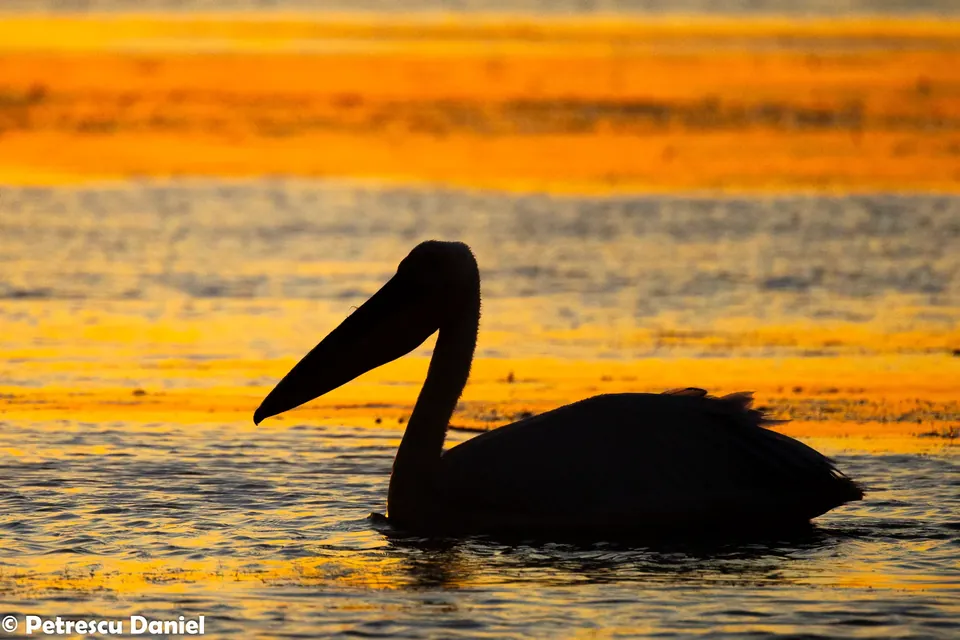
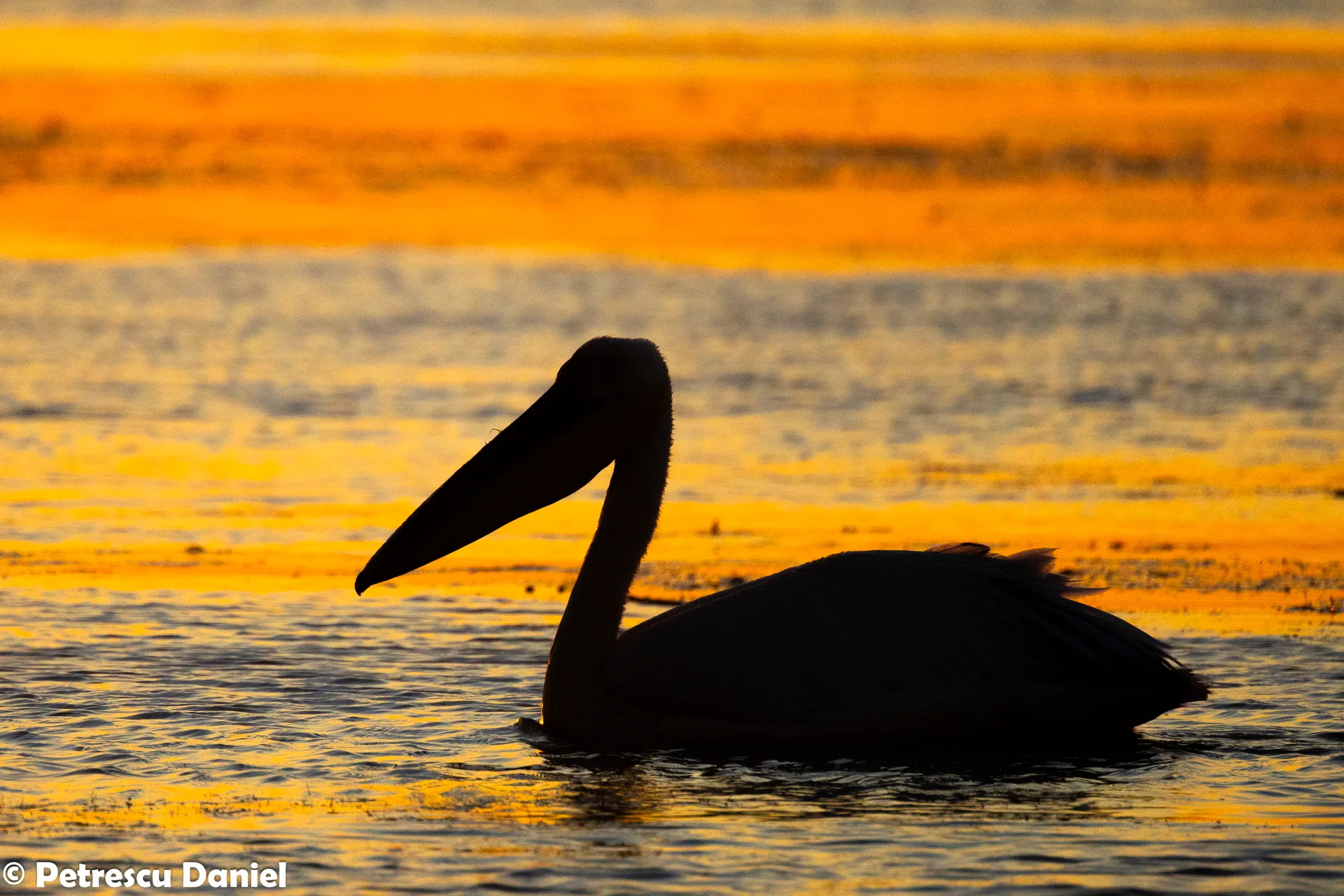
- Golden hour: White plumage picks up the warm orange of sunrise and sunset light beautifully — the first and last 30 minutes of daylight produce the most atmospheric images.
See It With Expert Guides
Both pelican species are reliably seen on every April–September cruise. Ibis Tours has operated the only floating hotel in the delta with overnight core-zone permits since 1995.