
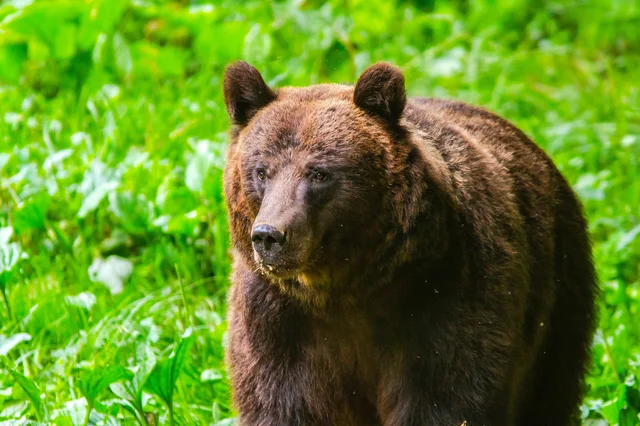
Carpathian Mountains Romania –
Bears, Wolves & 200+ Bird Species
Ancient forests, limestone gorges, and alpine meadows. Home to the EU's largest populations of brown bear, wolf and lynx — alongside Wallcreeper, Ural Owl, 8 species of woodpecker, and 50+ orchid species.
The Romanian Carpathians form a 910 km arc through the heart of the country, encircling Transylvania and covering one-third of Romania's territory. They are the most biodiverse mountain range in the European Union — holding 60% of Europe's brown bears, 30% of its wolves, and the continent's most significant populations of Eurasian lynx. For birders, the old-growth beech and spruce forests support species that have vanished from most of western Europe: Wallcreeper on limestone cliffs, Ural and Pygmy Owls in virgin forest, Three-toed Woodpecker on standing deadwood, and Capercaillie on remote alpine ridges. Piatra Craiului National Park, near the town of Zărnești, is the most accessible gateway to this wilderness.
Romanian Carpathians — Key Facts
Carpathian Mountain Ecosystems
The Romanian Carpathians rise from 400 m foothills to 2,544 m (Moldoveanu Peak) across distinct altitudinal zones — each with its own characteristic species assemblage.
Old-Growth Spruce Forest
Virgin and near-virgin spruce and fir forest at 1,200–1,700 m. Three-toed Woodpecker, Nutcracker, Pygmy Owl, Tengmalm's Owl, Capercaillie and Crossbill. Standing deadwood is key habitat — Romania holds some of Europe's last tracts.
Beech & Mixed Deciduous Forest
Magnificent beech forest at 500–1,200 m with White-backed and Middle Spotted Woodpecker, Ural Owl, Collared Flycatcher, Red-breasted Flycatcher and Hawfinch. Brown bear, wolf and lynx use these forests for denning and hunting.
Limestone Gorges & Cliffs
Dramatic canyons at Zărnești, Turda and Bicaz. Wallcreeper, Alpine Swift, Crag Martin, Peregrine Falcon and Rock Bunting on vertical limestone faces. Eagle Owl in deep gorge shadows.
Alpine Meadows
Above the treeline at 1,700–2,500 m. Alpine Accentor, Water Pipit, Ring Ouzel, Chamois on rocky ridges. Mid-June to mid-July brings 50+ orchid species and an extraordinary alpine flora.
Bear Country — Piatra Craiului
The 22 km limestone ridge of Piatra Craiului National Park is Romania's premier bear-watching area. Bears, wolves, red and roe deer in mixed forest. Wallcreeper in the Zărnești Gorge and Black Woodpecker drumming at dawn.
Wood Pastures & Forest Edge
Traditional grazed meadows below the forest line. Lesser Spotted Eagle hunting over grassland, Bee-eater colonies in sandy banks, Corncrake in tall hay meadows, Red-backed Shrike on hedgerows, and Storks on village rooftops.
Ibis Tours operates bear-watching and birding programmes from Zărnești in the Piatra Craiului area — easily combined with a Danube Delta floating hotel cruise. View all departures →
Key SpeciesWhat You'll See in the Carpathians
The Carpathians reward patience. Many target species are forest or cliff dwellers that require local knowledge to locate — the value of an expert guide is nowhere more apparent than here.
🪨 Mountain Specialities
- Wallcreeper Tichodroma muraria — Zărnești Gorge
- Alpine Accentor Prunella collaris — above treeline
- Alpine Swift Tachymarptis melba — limestone cliffs
- Crag Martin Ptyonoprogne rupestris — gorges
- Ring Ouzel Turdus torquatus — mountain pastures
- Rock Bunting Emberiza cia — rocky slopes
- White-throated Dipper Cinclus cinclus — mountain streams
- Water Pipit Anthus spinoletta — alpine meadows
🪶 Owls & Gamebirds
- Ural Owl Strix uralensis — old beech forest
- Eurasian Pygmy Owl Glaucidium passerinum — spruce
- Tengmalm's Owl Aegolius funereus — nestbox sites
- Eagle Owl Bubo bubo — deep gorges
- Capercaillie Tetrao urogallus — remote ridges
- Hazel Grouse Tetrastes bonasia — mixed forest
- Long-eared Owl Asio otus — forest edge
- Tawny Owl Strix aluco — common in deciduous
🪵 Woodpeckers (8 Species)
- Black Woodpecker Dryocopus martius — dawn drummer
- White-backed Woodpecker Dendrocopos leucotos — beech
- Three-toed Woodpecker Picoides tridactylus — spruce
- Grey-headed Woodpecker Picus canus — mixed forest
- Middle Spotted Woodpecker Dendrocoptes medius — oak
- Lesser Spotted Woodpecker Dryobates minor
- Great Spotted Woodpecker Dendrocopos major
- Green Woodpecker Picus viridis — forest edge
🦅 Raptors & Forest Birds
- Golden Eagle Aquila chrysaetos — mountain crests
- Lesser Spotted Eagle Aquila pomarina — meadows
- Honey Buzzard Pernis apivorus — forest canopy
- Goshawk Accipiter gentilis — deep forest
- Peregrine Falcon Falco peregrinus — cliffs
- Nutcracker Nucifraga caryocatactes — conifer zone
- Collared Flycatcher Ficedula albicollis — 90%+
- Red-breasted Flycatcher Ficedula parva — beech
For detailed identification notes and seasonal charts, browse our species field guides →
Where to WatchKey Wildlife Areas in the Carpathians
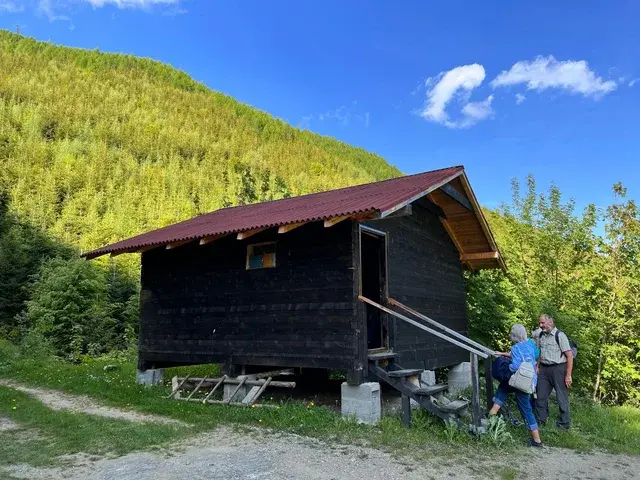
Piatra Craiului National Park — Bear Watching
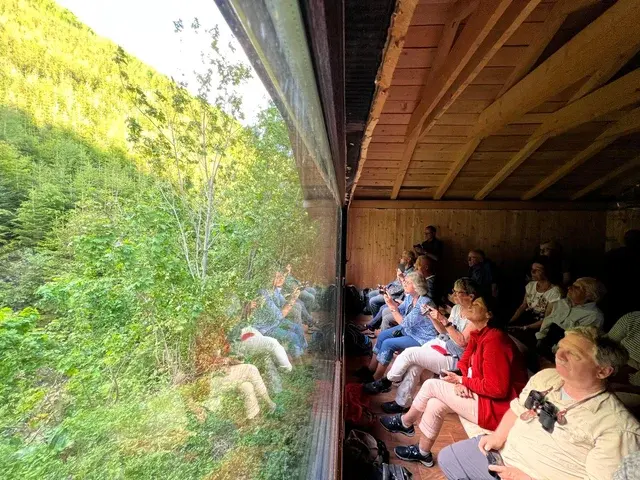
Romania's premier wildlife-watching area. The 22 km limestone ridge dominates the skyline. Purpose-built hides in mixed beech-spruce forest offer evening bear-watching sessions — 90%+ success rate, with animals at 30–80 metres in natural settings. Wolf, red deer, roe deer, fox and wild boar are also recorded from the hides. By day, the Zărnești Gorge holds Wallcreeper, Alpine Swift and Crag Martin on its 80-metre limestone walls.
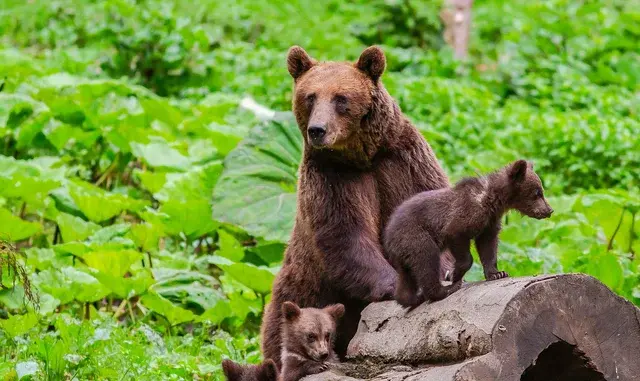
Zărnești & Strâmba Valley
The forested valleys below Piatra Craiului. Strâmba Valley in particular is outstanding for forest birds: Lesser Spotted Eagle over meadows, Honey Buzzard above the canopy, Black Woodpecker in mature beech stands, Collared and Red-breasted Flycatcher, Eurasian Golden Oriole, Red-backed Shrike on hedgerows, and Bee-eater colonies in sandy banks along the stream. Traditional hay meadows still managed by hand — an increasingly rare landscape in Europe.
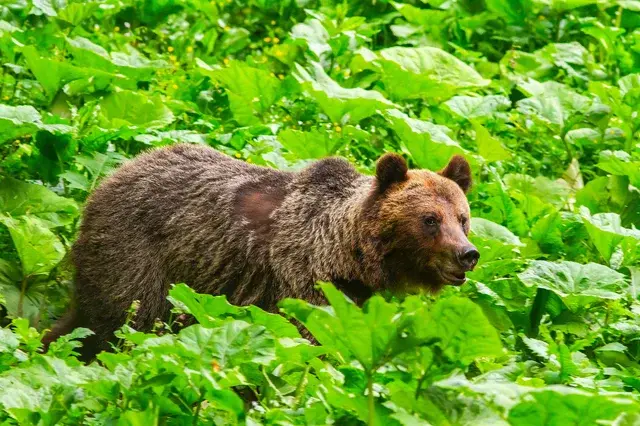
Old-Growth Forest — Owl & Woodpecker Habitat
Romania holds some of Europe's last tracts of virgin forest — old beech and spruce stands with abundant standing deadwood. These are the stronghold of Ural Owl, White-backed Woodpecker, Three-toed Woodpecker and Pygmy Owl. Guided night excursions target Ural Owl and Tengmalm's Owl by voice. Dawn in the old-growth forest, with Black Woodpecker drumming and Nutcracker calling from spruce tops, is one of Europe's great birding experiences.
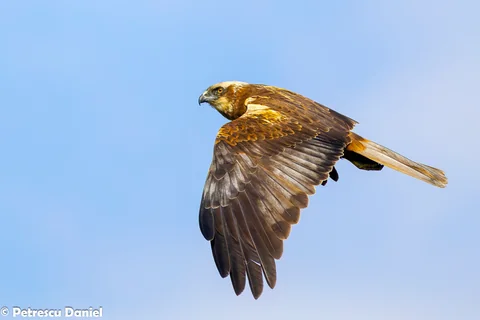
Făgăraș Mountains & Alpine Zone
The highest range in Romania (Moldoveanu, 2,544 m). Above the treeline: Alpine Accentor, Water Pipit, Ring Ouzel, and Chamois on rocky ridges. Recently reintroduced European Bison roam the lower forests — over 75 animals released since 2020 by Foundation Conservation Carpathia. Golden Eagle patrols the ridgeline. Alpine meadows in June–July hold 50+ orchid species and one of Europe's richest alpine floras.
Carpathian Wildlife Calendar
| Season | Months | Highlights | Key Species |
|---|---|---|---|
| Spring | Apr–May | Forest birds at peak song. Woodpeckers drumming. Owls vocal. Bears emerging from hibernation — high hide success rates. Wildflowers in meadows. | Black Woodpecker, Ural Owl, Brown Bear, Collared Flycatcher |
| Peak Season | May–Jun | Best overall period. Wallcreeper on nest. Maximum species diversity. Bear cubs appearing. Long days for photography. | Wallcreeper, Nutcracker, Three-toed Woodpecker, Bear cubs |
| Alpine Summer | Jun–Jul | Alpine meadows accessible. 50+ orchid species. Chamois with kids. Marmot above treeline. Alpine Accentor singing. | Alpine Accentor, Ring Ouzel, Water Pipit, Chamois |
| Autumn | Sep–Oct | Bears fattening before hibernation — best viewing period. Red deer rut. Spectacular autumn foliage. Raptor migration overhead. | Brown Bear, Red Deer, Golden Eagle, migrating raptors |
Wildlife Beyond Birds: Europe's Big Three
The Romanian Carpathians hold viable populations of all three European large carnivores — a distinction shared with no other EU mountain range at comparable density.
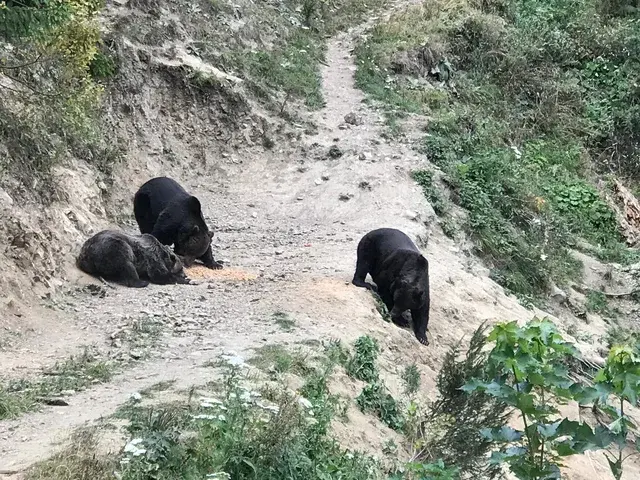
Brown Bear
Romania hosts the EU's largest bear population — estimated at 6,000–8,000 individuals. Ibis Tours offers evening hide sessions near Zărnești with 90%+ success. Bears are observed at 30–80 m in undisturbed forest. Mothers with cubs frequently appear in May–June.
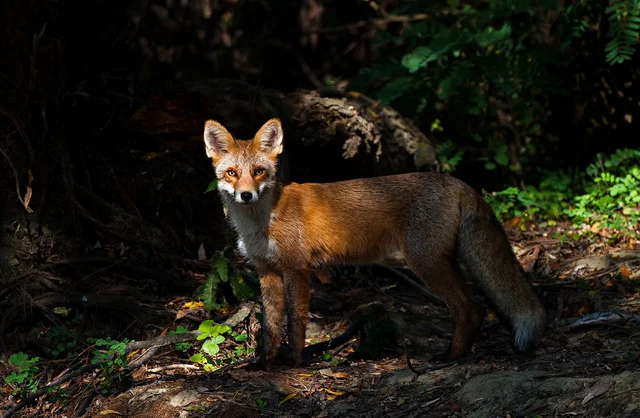
Wolf & Lynx
An estimated 3,000 wolves and 2,000 Eurasian lynx inhabit the Carpathians — 30–45% of all European populations (excluding Russia). Sightings from hides are occasional but not guaranteed. Wolf tracks and vocalisations are regularly encountered on forest walks.
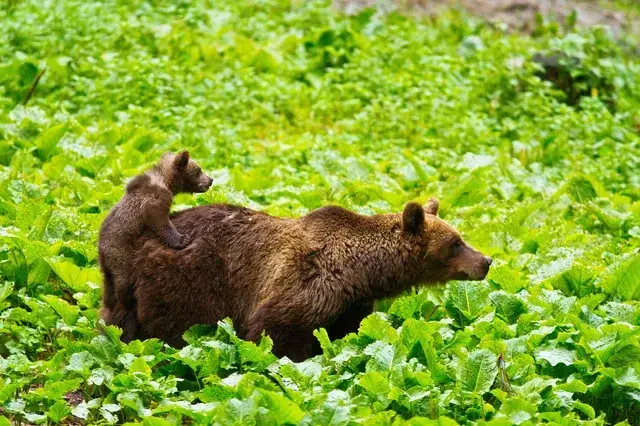
Other Mammals
Red deer, roe deer, wild boar, chamois, red fox, pine marten and European badger are all regularly observed. European Bison — reintroduced to the Făgăraș Mountains since 2020 — now number 75+ free-roaming individuals, with the herd growing annually.
Romania's Carpathians also support rich invertebrate communities. Over 200 butterfly species inhabit the mountain meadows, alongside dozens of dragonfly and damselfly species along forest streams. For a comprehensive overview of Romania's terrestrial wildlife, see our mammals of Romania guide.
Our ProgrammesIbis Tours in the Carpathians
Bear Watching Weekend
2–3 days based near Zărnești. Evening bear-watching hide sessions, morning birding in the Zărnești Gorge (Wallcreeper, Alpine Swift), and forest walks for woodpeckers and owls. Easily combined with a delta cruise.
Enquire →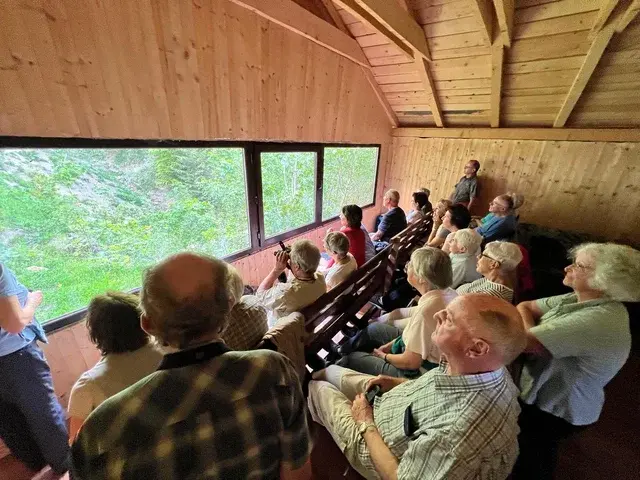
Carpathians + Danube Delta Combined
The complete Romanian wildlife programme. 2–3 days in the Carpathians for bears, Wallcreeper, and forest birds, followed by the Danube Delta floating hotel cruise for waterbirds. Mountain, steppe and wetland in a single trip.
View all departures →Frequently Asked Questions
Our bear-watching hides near Zărnești have a 90%+ success rate. Sessions typically last 2–3 hours from late afternoon. Bears usually appear at 30–80 metres in natural forest settings. Multiple bears are common, and mothers with cubs frequently visit in May–June. Wolf, fox, red deer and wild boar are also recorded from the same hides.
May–June offers the highest chances — the birds are on breeding territory in the Zărnești Gorge and Bicaz Gorge. They are elusive even in the right habitat: the bird's pink-and-grey plumage blends with limestone at a distance, then the crimson wing-flash in flight is unmistakable. An experienced local guide dramatically improves your chances.
Most key sites involve moderate walking on forest trails and gorge paths — typically 3–8 km per day on uneven ground. Bear hides require a short forest walk. Alpine excursions above the treeline are optional and more demanding. We match the programme to group fitness levels.
Yes — this is our recommended approach. Zărnești is approximately 4 hours from Tulcea (the delta gateway). We typically begin with 2–3 days in the Carpathians, drive to Tulcea via Bucharest or the Dobrogea steppe, then board the floating hotel for the delta cruise. This covers mountain, steppe and wetland habitats in a single trip.
Experience the Carpathians with Ibis Tours
30 years of specialist expertise. Purpose-built bear hides. Expert naturalist guides who know every Wallcreeper site and owl territory. Small groups, authentic Transylvanian guesthouses.