
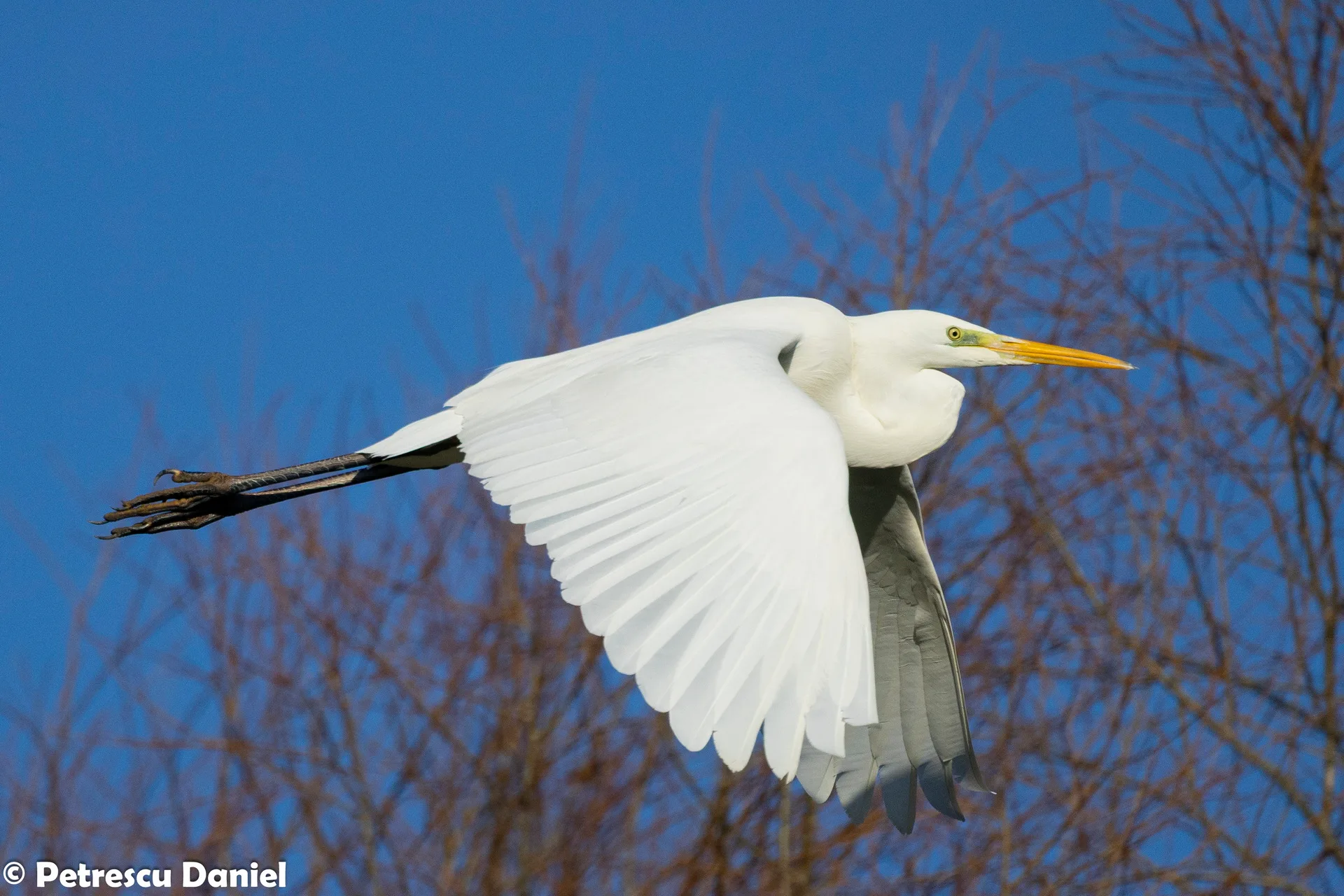
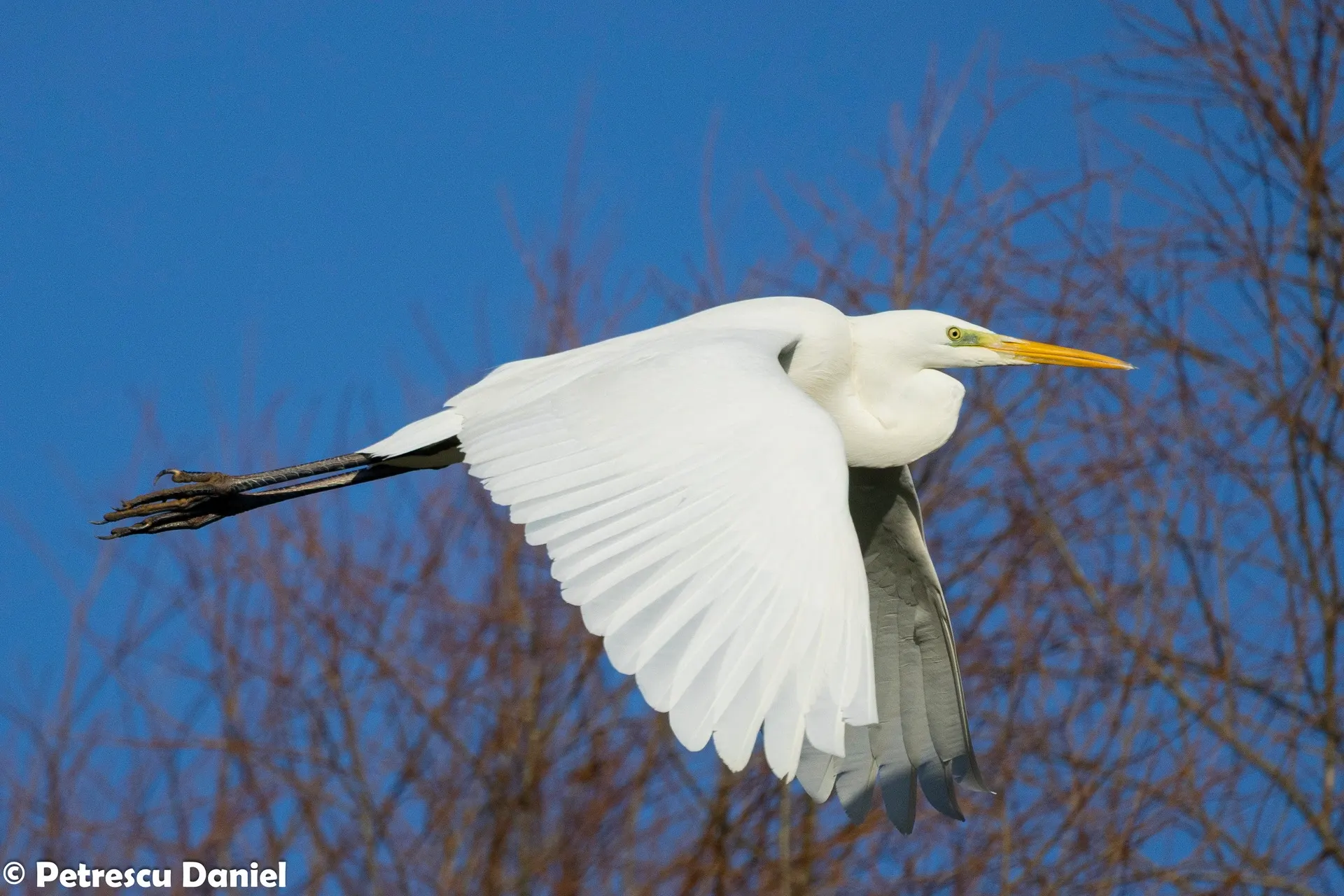
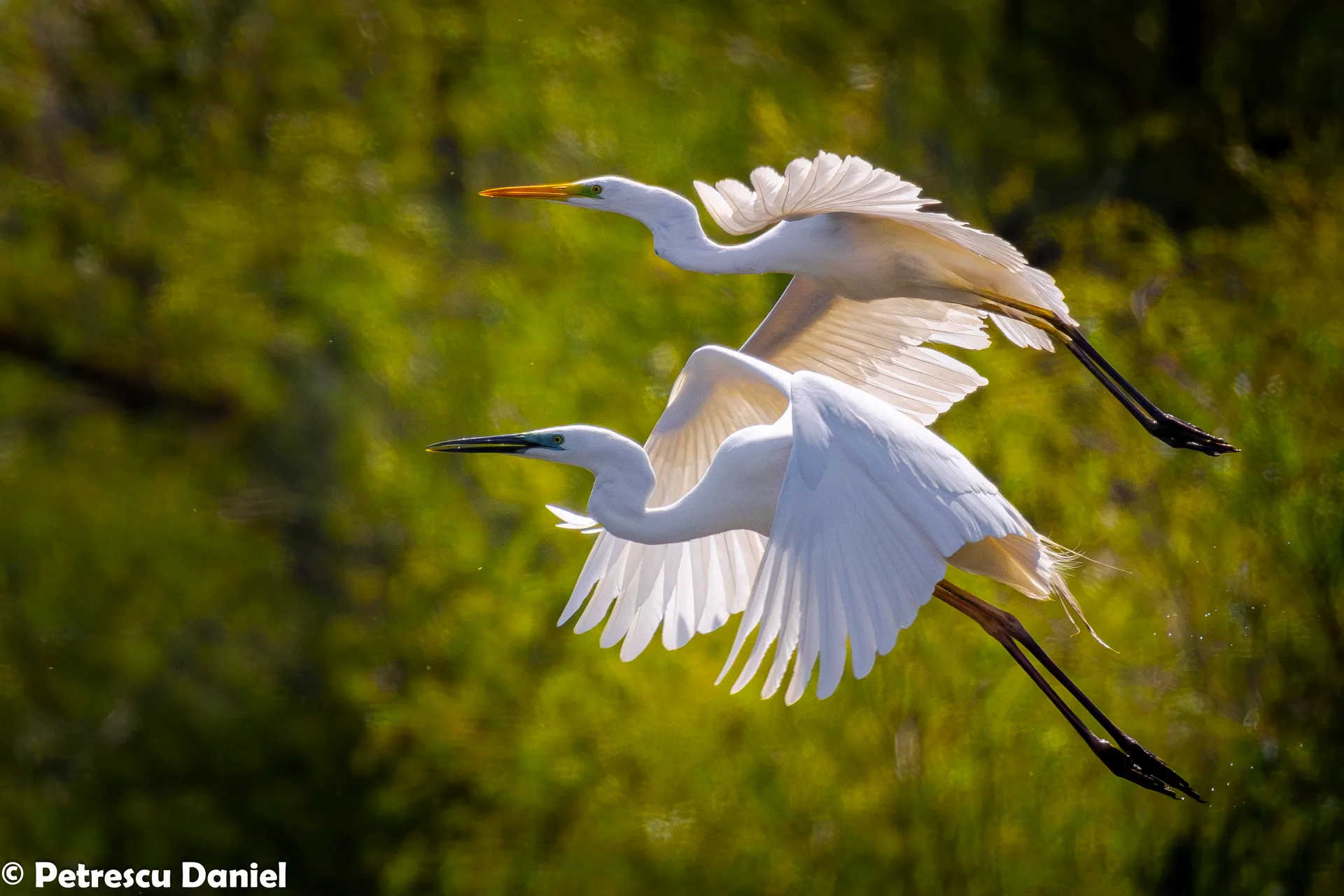
The Great Egret (Ardea alba) is a common species in the Danube Delta, easily recognised by its large size, all-white plumage and long S-curved neck. It prefers shallow lakes, channels and pool margins. Identification: all-white body; long yellow bill (can darken during breeding); very long neck; long black legs. In breeding season develops long lacy plumes on the back. In flight tucks neck into S-shape — useful distinction from other white herons. Ecology: stands motionless in shallow water before striking at fish with lightning speed; also takes frogs, large insects and small mammals. In the Danube Delta: one of the most consistently observed species — present year-round; numbers peak in summer and autumn as post-breeding dispersal concentrates birds. Conservation: once hunted almost to extinction for the plume trade; now widespread and stable thanks to protection.
Identification
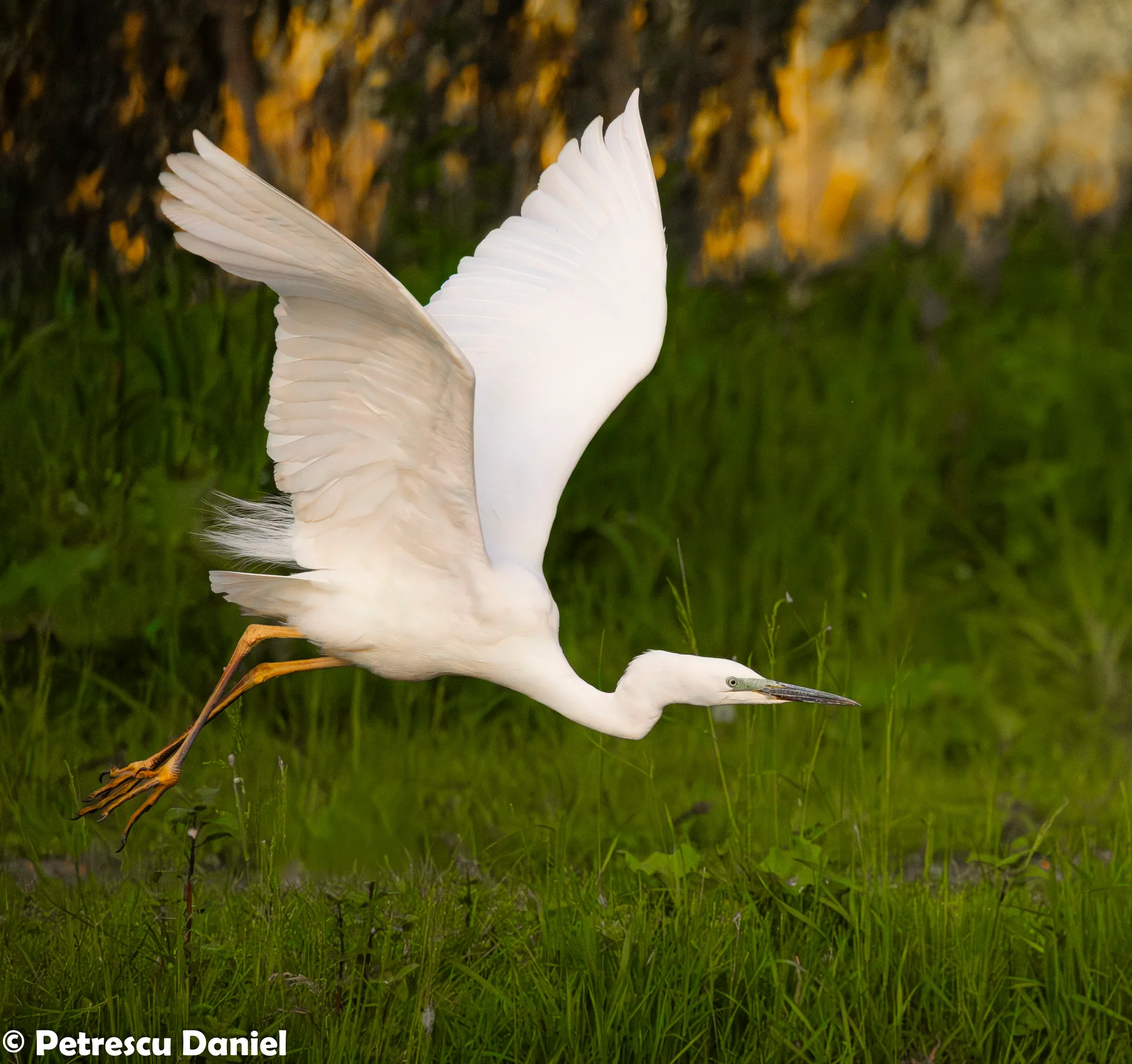
The Great Egret is the largest all-white heron in Europe. The key distinction from Little Egret (Egretta garzetta) is size — Great Egret is nearly as large as Grey Heron — and the yellow bill (Little Egret has a black bill). The long, kinked neck and entirely yellow bill are the immediate field marks.
Field Marks at a Glance
Confusion species: Little Egret (Egretta garzetta) — smaller, black bill, yellow feet. Spoonbill — similar size but distinctive spatulate bill and different feeding behaviour. Intermediate Egret (Ardea intermedia) — not recorded in Romania.
When to See It in Romania
The Great Egret is present year-round in the Danube Delta. Breeding birds arrive from wintering areas in February–March, building to peak numbers by May. In autumn and winter, numbers are augmented by birds from further north. A small resident population overwinters annually in the delta and adjacent Dobrogea.
Monthly Presence & Abundance
Where to See It
Great Egrets are found throughout the entire Danube Delta wherever there is shallow water — channels, lake margins, flooded meadows, and reed bed edges. They are the most ubiquitous large wading bird in the delta and impossible to miss on any excursion.
All channels and waterways
The most reliably visible bird in the delta. Standing at channel edges, perched in willows, or flying overhead on virtually every excursion.
Mixed heron colonies
Breeds colonially with Grey Heron, Purple Heron, Night Heron, and cormorants. Full breeding plumage — aigrette feathers and coloured bare parts — visible from the boat.
Lake margins
Groups of 10–50 birds foraging in the shallow margins of the open lakes. Most visible at dawn and dusk.
Flooded meadows
In July–August when water levels drop, large groups of post-breeding and juvenile birds gather on exposed mudflats and flooded meadows.
How to See It on Our Tours
All Ibis Tours programmes depart from Tulcea and operate within ARBDD-permitted zones.
4-Day Danube Delta Wildlife Cruise
📅 All days — lake margins and channelsGreat Egrets are present throughout the delta and visible every day of every cruise. Roosting groups in lakeside trees and solitary feeding birds at channel edges provide constant photographic opportunities.
View tour details → Photography FocusWildlife Photography Tours
📅 Dawn sessionsPhoto tours use wide-angle 'environment' shots of egrets in the delta landscape — particularly effective at dawn with mist over the water.
View tour details →Behaviour & Ecology
The Great Egret is a versatile predator, hunting fish by standing motionless and striking rapidly, or by slow wading through shallows. Unlike the more specialist Purple Heron, it uses a wide variety of habitats and hunting techniques. In breeding season, the aigrette display is spectacular: birds raise the long lacy back feathers vertically in fan-shaped displays at the nest site, with the orange-red bill and bright green facial skin at maximum colour. These plumes — once the most prized accessory in Victorian ladies' hats — led to the slaughter of millions of birds and near-extinction in the late 19th century. The modern conservation movement effectively began with campaigns against the egret plume trade. The species' full recovery is one of conservation's greatest successes.
🛡 Conservation Status
Currently Least Concern (LC). The Great Egret's recovery from near-extinction in the early 20th century — driven entirely by legal protection of breeding colonies — is one of the most important conservation success stories in European ornithology. Romanian populations have expanded significantly since the 1970s. The Danube Delta colony of 5,000–8,000 pairs is among the largest in Europe.
Photography Guide
The Great Egret is an excellent subject for photographers at all skill levels — reliably present, tolerant of slow approach, and offering both static portrait and dynamic action opportunities.
📸 Photography Tips
- Breeding plumage: May is optimal for aigrette display photography. The lacy feathers extend dramatically from the back and are shown off in display postures at the colony. Morning light on a displaying bird in full plumage is exceptional.
- Hunting strikes: Position near an actively foraging bird and shoot burst mode. Strikes are fast (0.3 seconds) and unpredictable — keep the shutter pressed whenever the bird's neck begins to coil.
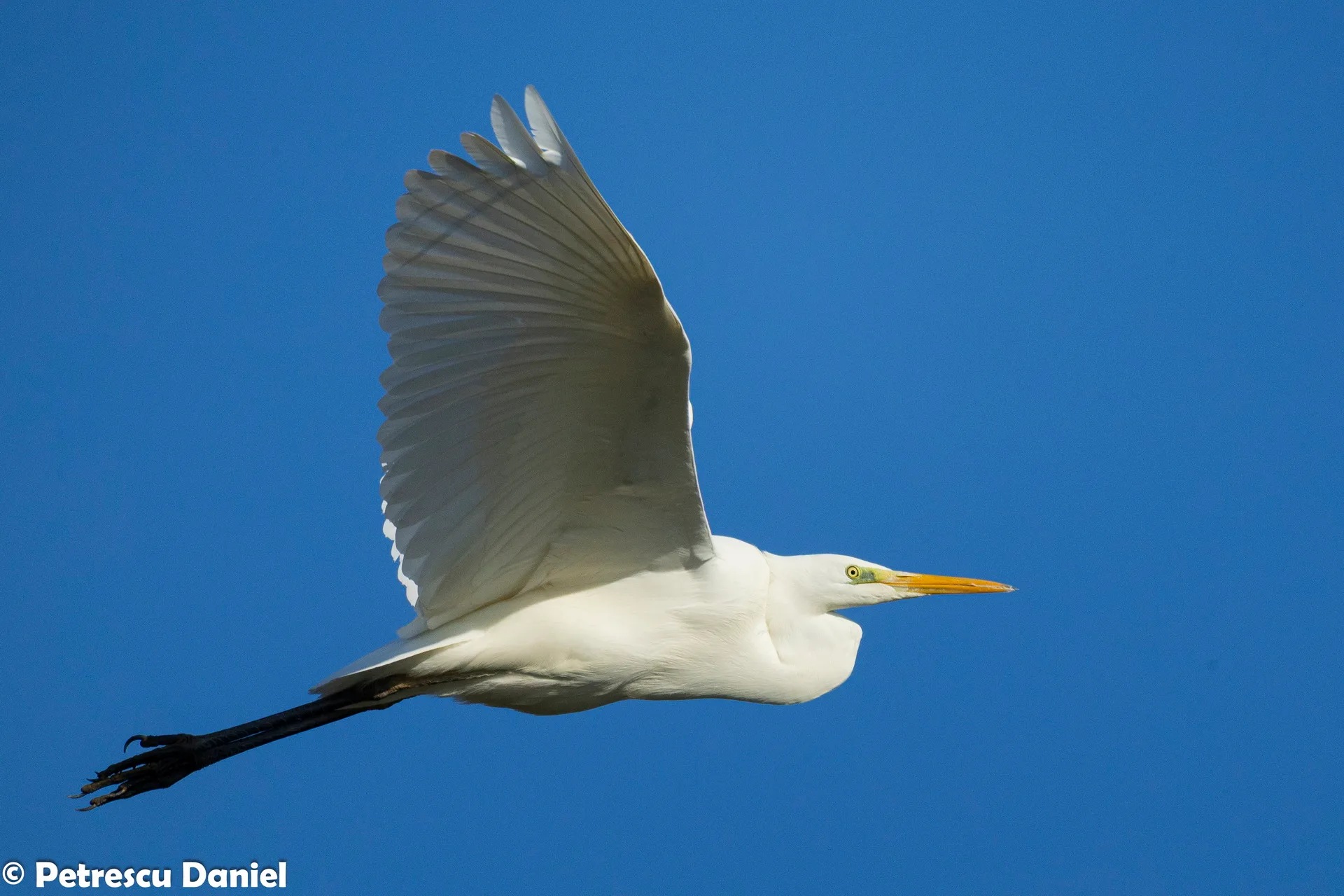
- Flight shots: The slow wingbeat of the Great Egret makes it easier to photograph in flight than faster species. The contrast of white plumage against reed beds, open water, or dawn sky all give excellent results.
- Lens: 300–400mm is sufficient for channel birds at 10–30m. Longer (500mm+) for distant open-water shots.
- Reflection shots: On calm mornings, perfect reflections in glassy channel water give dramatic results. Compose with equal weight above and below the water line.
See It With Expert Guides
The Great Egret is the one bird you will definitely see on every Ibis Tours excursion, regardless of season. Year-round presence, 98%+ sighting rate, and breeding plumage available April–June.