
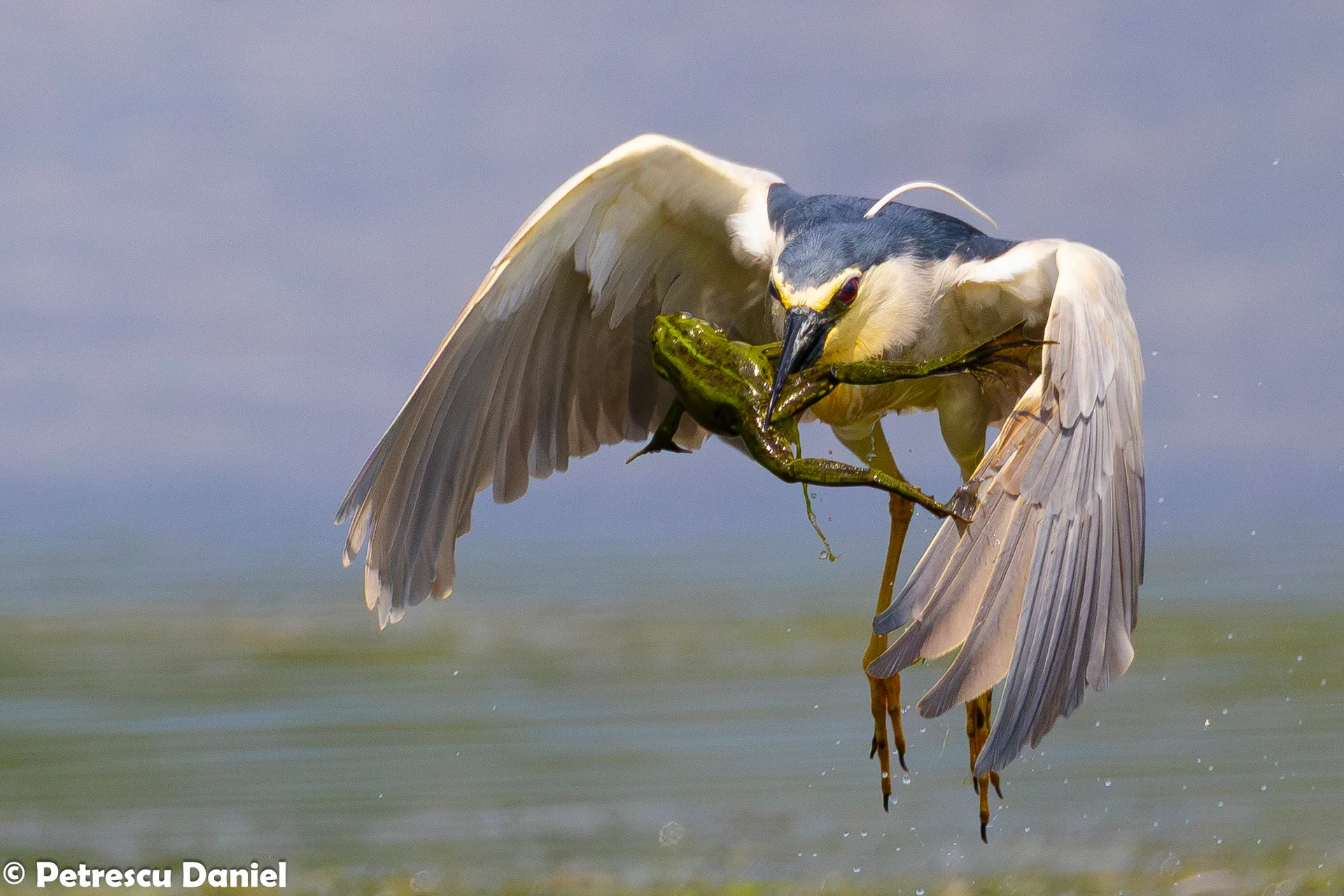
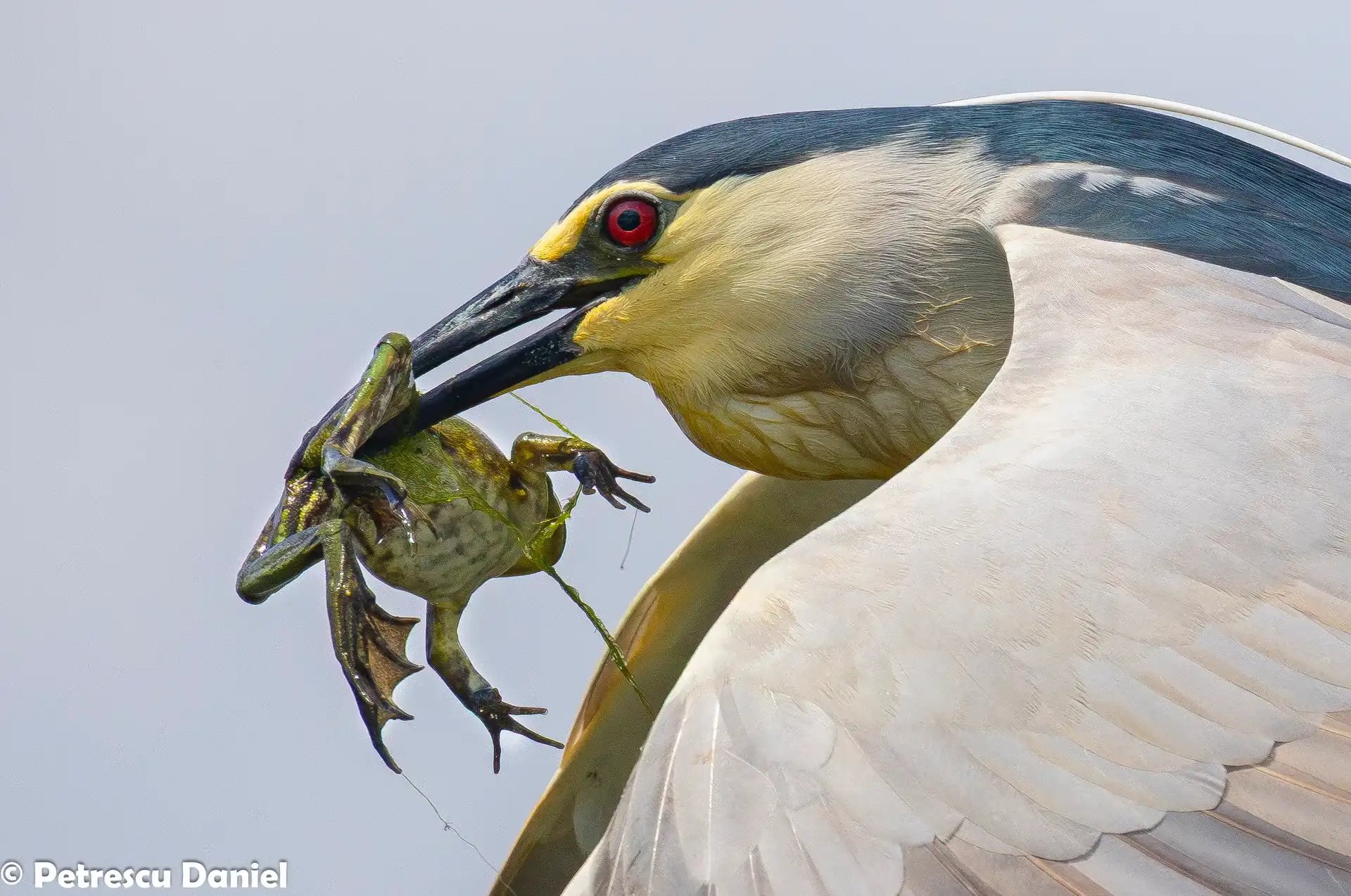
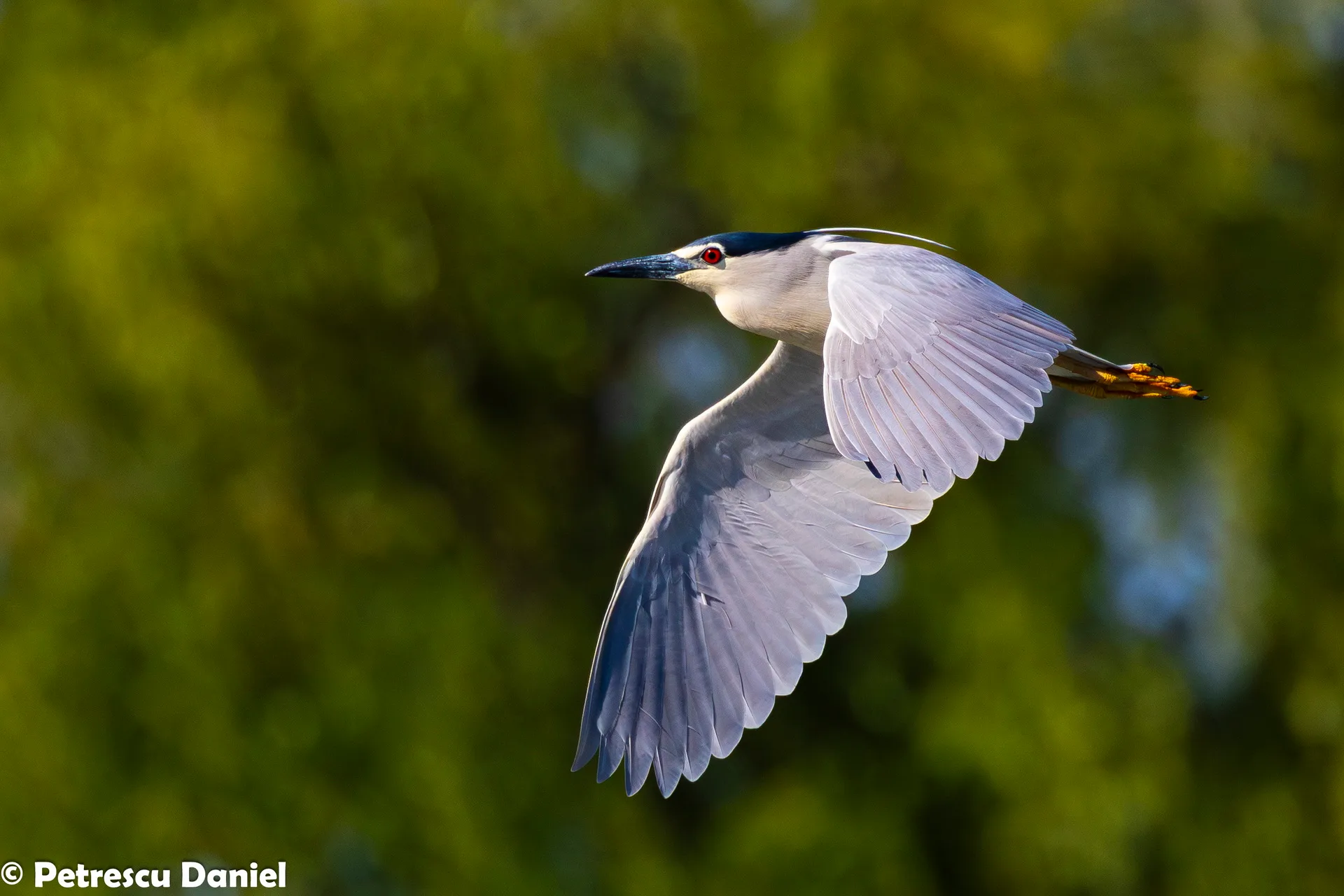
The Black-crowned Night Heron (Nycticorax nycticorax) is a crepuscular and nocturnal species, common in mixed colonies in the Danube Delta. During the day it roosts in vegetation; in the evening it emerges to feed at water margins. Identification: adult has black crown and back, grey wings, white underparts, red eyes and long white head plumes in breeding season; juveniles are brown with pale spots — quite different from adults. Stocky build with short neck. Ecology: feeds on fish, frogs, invertebrates and occasionally small birds; most active from dusk to dawn. In the Danube Delta: anchoring overnight in the channels brings memorable views as birds fly to feeding areas at last light; large roost colonies are visible in willows near nesting sites. Conservation: dependent on undisturbed colonial nesting sites, typically in mixed heron-egret colonies in trees or reedbeds.
Identification
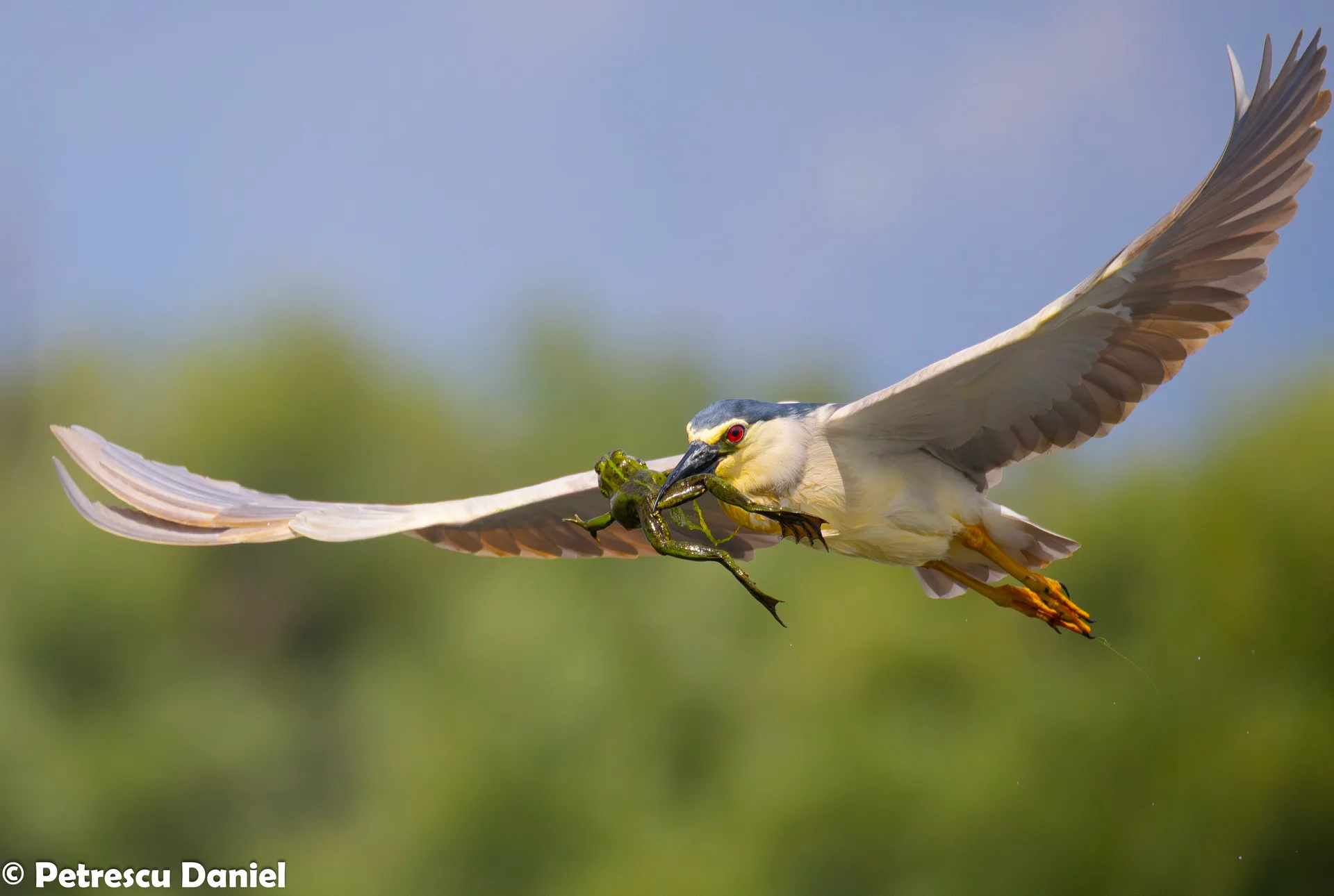
The Night Heron is a compact, short-necked heron with a distinctive crouched posture. Adults are striking: a black crown and back contrast with grey wings and white underparts. Two or three long white head plumes hang from the nape in breeding plumage. Juveniles are completely different — streaky brown, with large pale spots on the wing coverts, and easily confused with a bittern at first glance.
Field Marks at a Glance
Confusion species: Juvenile Night Heron (Nycticorax nycticorax) can be confused with the Bittern (Botaurus stellaris), which is larger and with different stripe pattern. The Squacco Heron is much smaller with an entirely different colour pattern.
When to See It in Romania
The Night Heron is migratory, arriving from wintering grounds in Africa from late March. Breeding activity peaks April–July. Most depart by October. Activity is strictly crepuscular and nocturnal — the species is rarely seen during daylight hours except when flushed from dense vegetation.
Monthly Presence & Abundance
Where to See It
Night Herons roost by day in dense willow and poplar vegetation, often in mixed colonies with Squacco Heron, Little Egret, and other heron species. They emerge at dusk to feed in the shallow channels and lake margins throughout the night.
Channel-side willows
Dense willow stands along the gârle channels are day roost sites. Birds emerge from 19:00–20:00 (May) — the dusk excursion from the floating hotel specifically targets this.
Mixed heron colonies
Breeds in the same colonies as Squacco Heron, Glossy Ibis, and Little Egret. Juveniles visible at colony edges from July.
Shallow channel margins
From dusk to dawn, individuals stand motionless at the water's edge waiting for fish and frogs — the classic Night Heron hunting posture.
Dense reed stands
Daytime roost in reed and willow — occasional glimpses of birds shuffling in vegetation, but proper views only at dusk from an anchored vessel.
How to See It on Our Tours
All Ibis Tours programmes depart from Tulcea and operate within ARBDD-permitted zones.
4-Day Danube Delta Wildlife Cruise
📅 Dawn and dusk — colony areas and channelsNight Herons are encountered at dawn and dusk on all delta cruises. The floating hotel's overnight position in the delta means you experience the pre-dawn departure flights from roost — a spectacular sight when 50–100 birds cross the open water in low light.
View tour details → Overnight AccessFloating Hotel Birdwatching Guide
📅 Pre-dawn from hotel deckThe floating hotel deck is the best platform for Night Heron observation — the birds cross the water surface at head height in the first light, unconcerned by the stationary vessel.
View tour details →Behaviour & Ecology
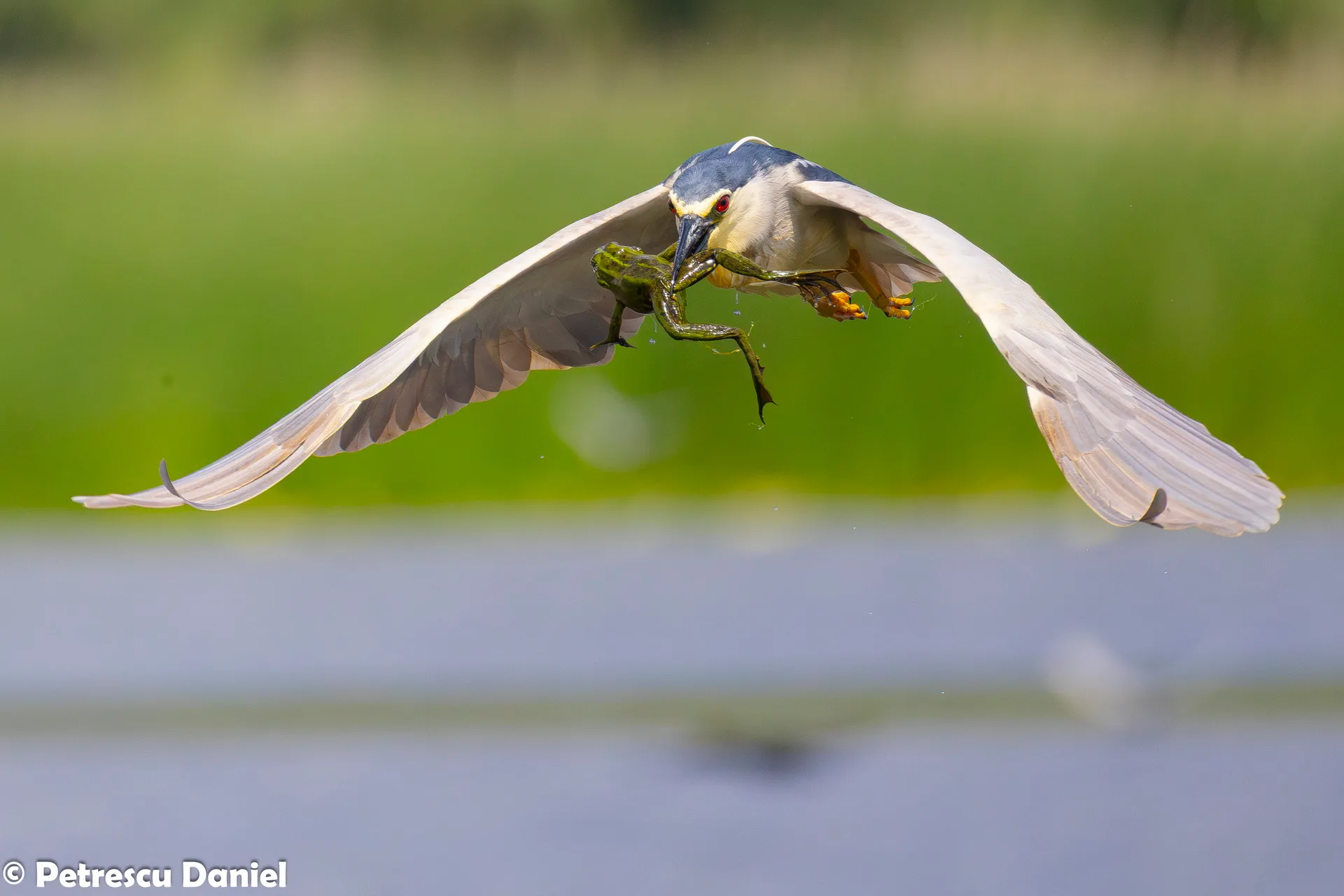
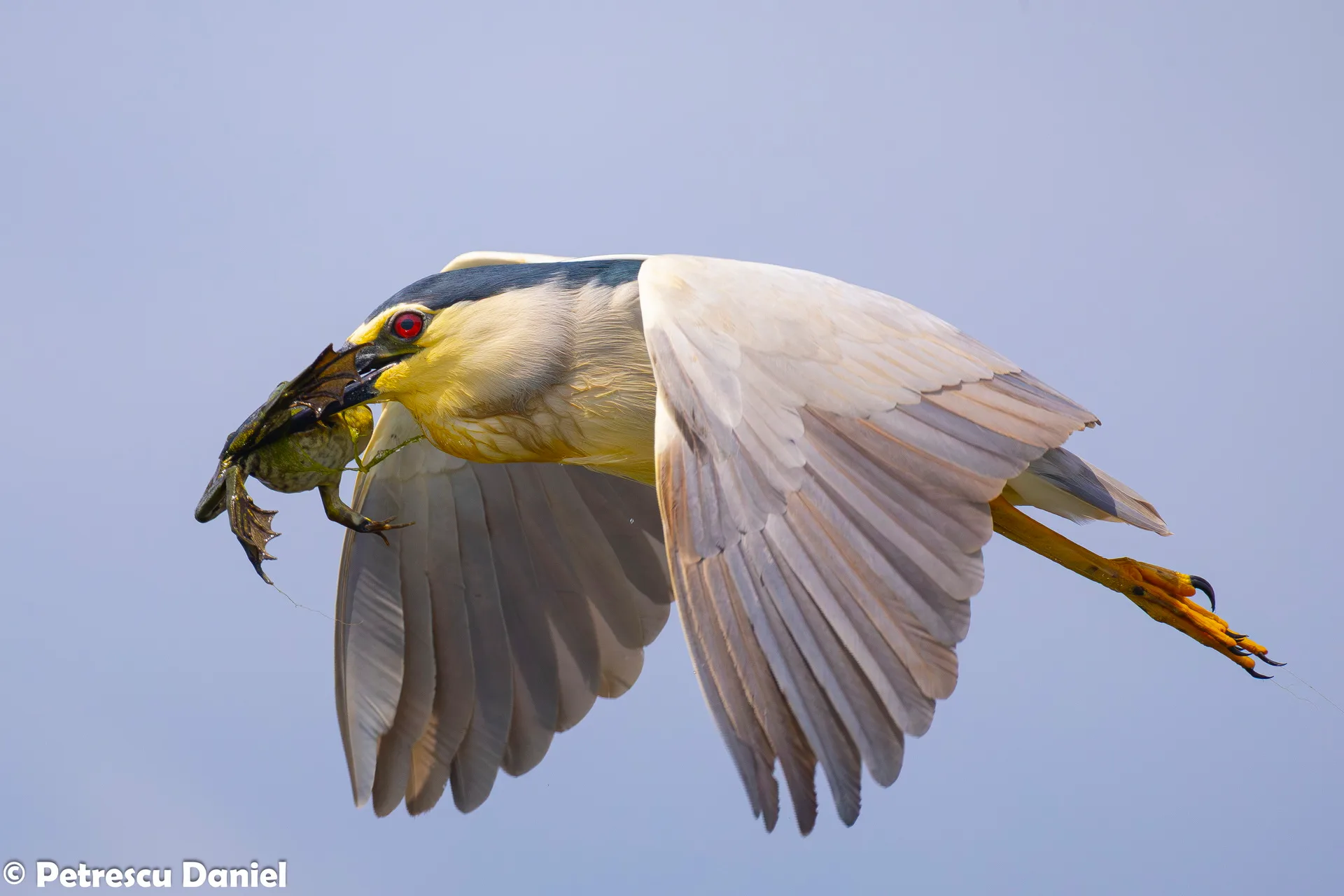
The Night Heron is a patient, wait-and-strike predator, hunting fish, frogs, aquatic invertebrates, and small reptiles from a standing position at the water's edge. Its large eyes are adapted for low-light hunting — it sees effectively in near-darkness and continues feeding well into the night when diurnal herons have long since roosted. The characteristic call — a rough, far-carrying bark — is given in flight at dusk and is one of the defining sounds of a delta evening. Immature birds (first and second year) are frequently seen alongside adults at roost sites and are reliably identified by their spotted plumage and yellow (not red) eyes.
🛡 Conservation Status
Listed as Least Concern (LC) globally. Romanian populations are stable within the broadly positive Eastern European trend. The Danube Delta colony system — where Night Herons nest alongside multiple other heron species — is one of the largest mixed waterbird colony complexes in Europe.
Photography Guide
Photographing Night Herons properly requires the dusk excursion from the floating hotel. Daytime views of roosting birds are too obscured by vegetation; the real images come at emergence, when the light is dramatic and the birds are active.
📸 Photography Tips
- Timing: The dusk excursion (approximately 19:00–20:30 in May) is the key window. Birds begin emerging and flying 30–45 minutes before dark.
- ISO: Light levels drop quickly. Be prepared to push ISO to 6400 or higher for flight shots at dusk — modern mirrorless cameras handle this well.
- Silhouettes: Night Herons flying against a pink-orange sunset sky produce some of the most atmospheric images of the delta. Use exposure compensation to prevent silhouettes from going completely black.
- Portrait shots: Before the light fades, individuals at the roost edge — perched in willows, preening — are good portrait subjects at ISO 1600–3200.
- Call tracking: The guide can locate individuals by call in low light. Listen for the 'quok' call and look toward the sound — birds often perch on exposed branches just after calling.
See It With Expert Guides
Night Herons are best observed from a vessel anchored overnight inside the delta — precisely the access that the Ibis Tours floating hotel provides. The dusk excursion specifically targets emerging Night Herons, Ferruginous Duck, and Little Bittern.