
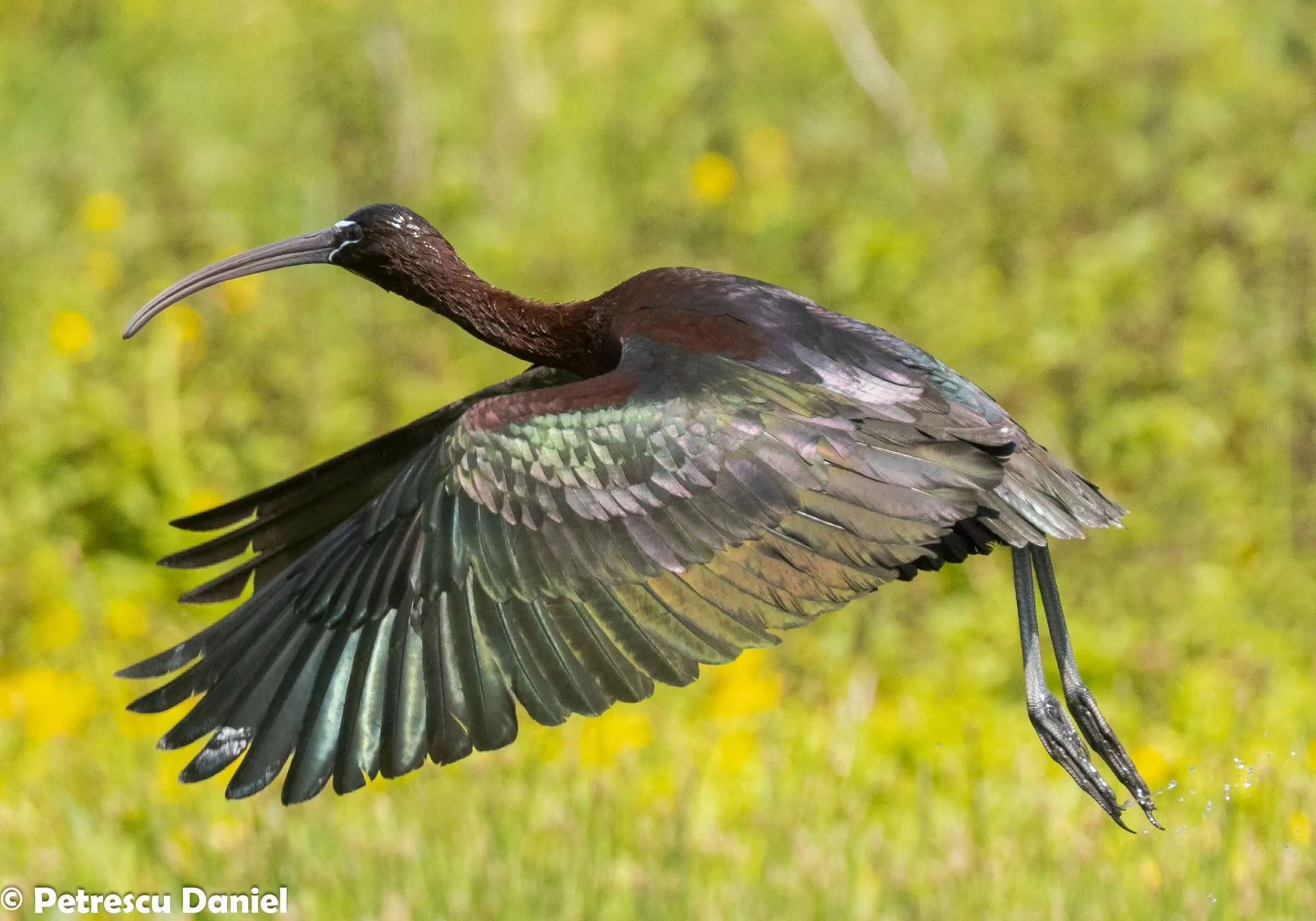
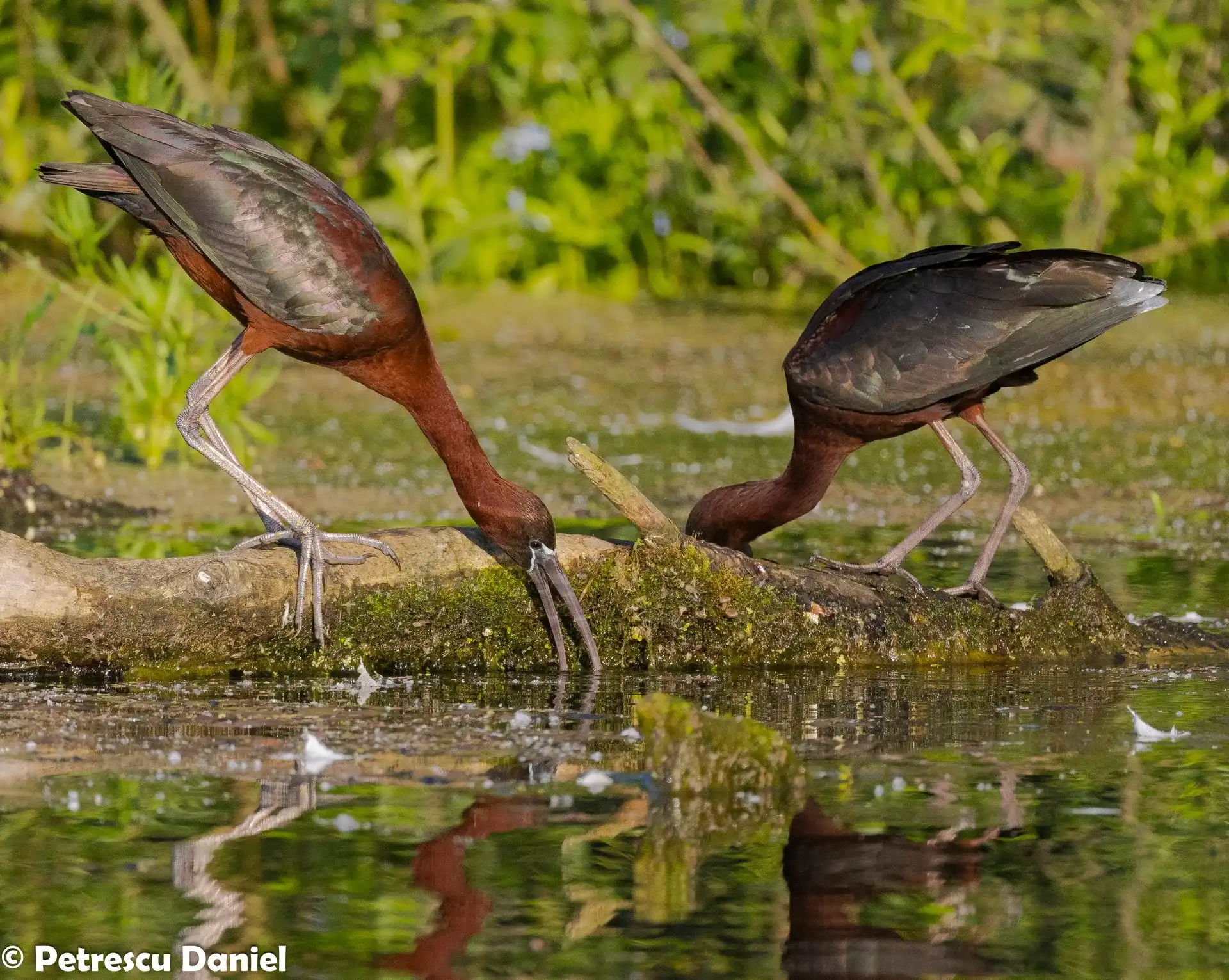
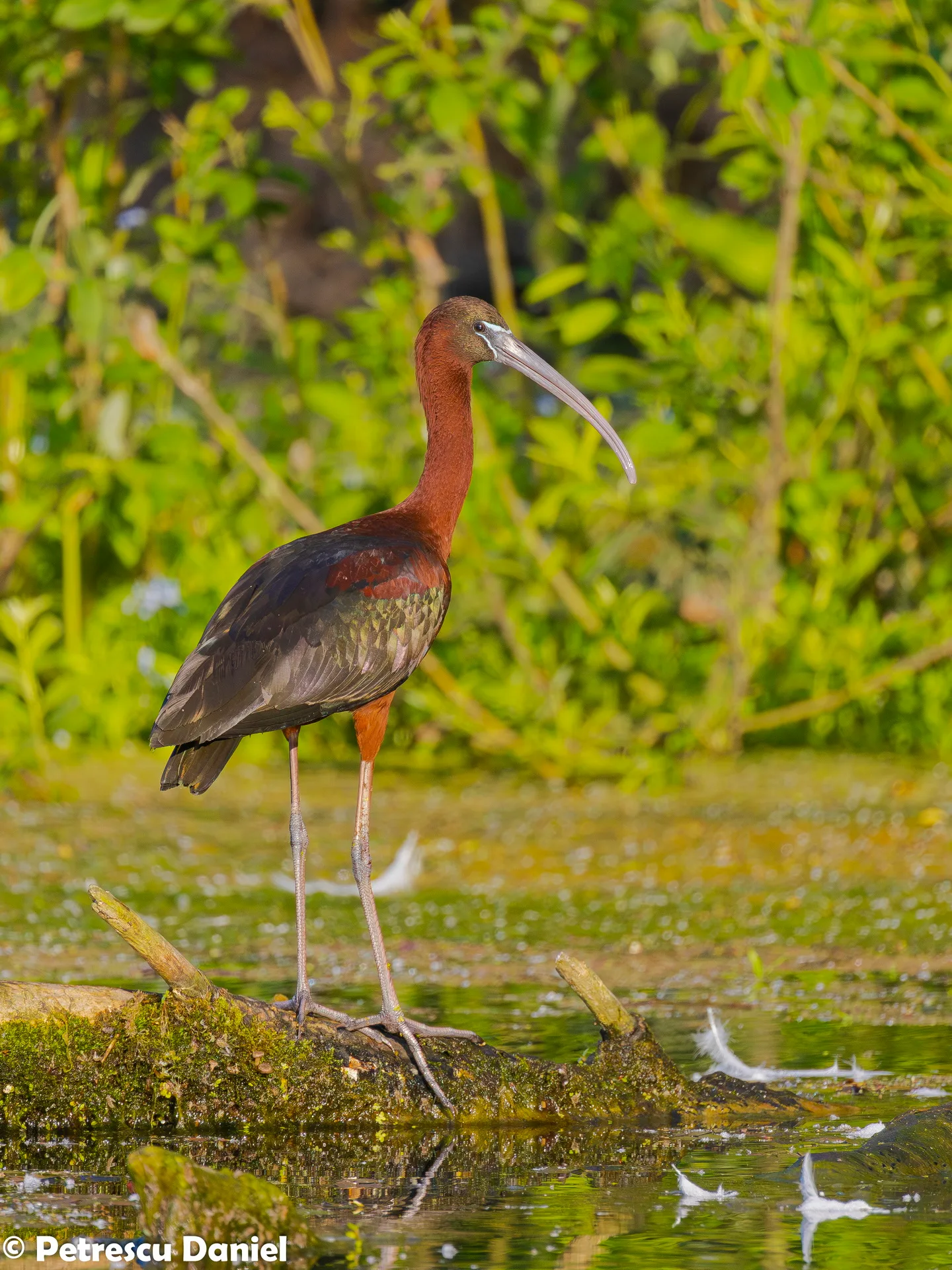
The Glossy Ibis (Plegadis falcinellus) is a wetland species with iridescent bronze-chestnut plumage that shimmers green and purple in good light. In the Danube Delta it is present during the warm season, particularly in shallow pools and seasonally flooded meadows. Identification: slender silhouette, relatively long neck; long, decurved bill; at rest the plumage appears dark brown, but in sunshine reveals extraordinary iridescence. Flies with rapid wingbeats and short glides in lines. Ecology: feeds by probing soft mud and shallow water for invertebrates, small fish and frogs. In the Danube Delta: often seen in mixed flocks with herons and egrets; early morning light brings out the full iridescence — ideal for photography. Conservation: dependent on shallow, productive wetlands; sensitive to drainage and degradation of feeding habitat.
Identification
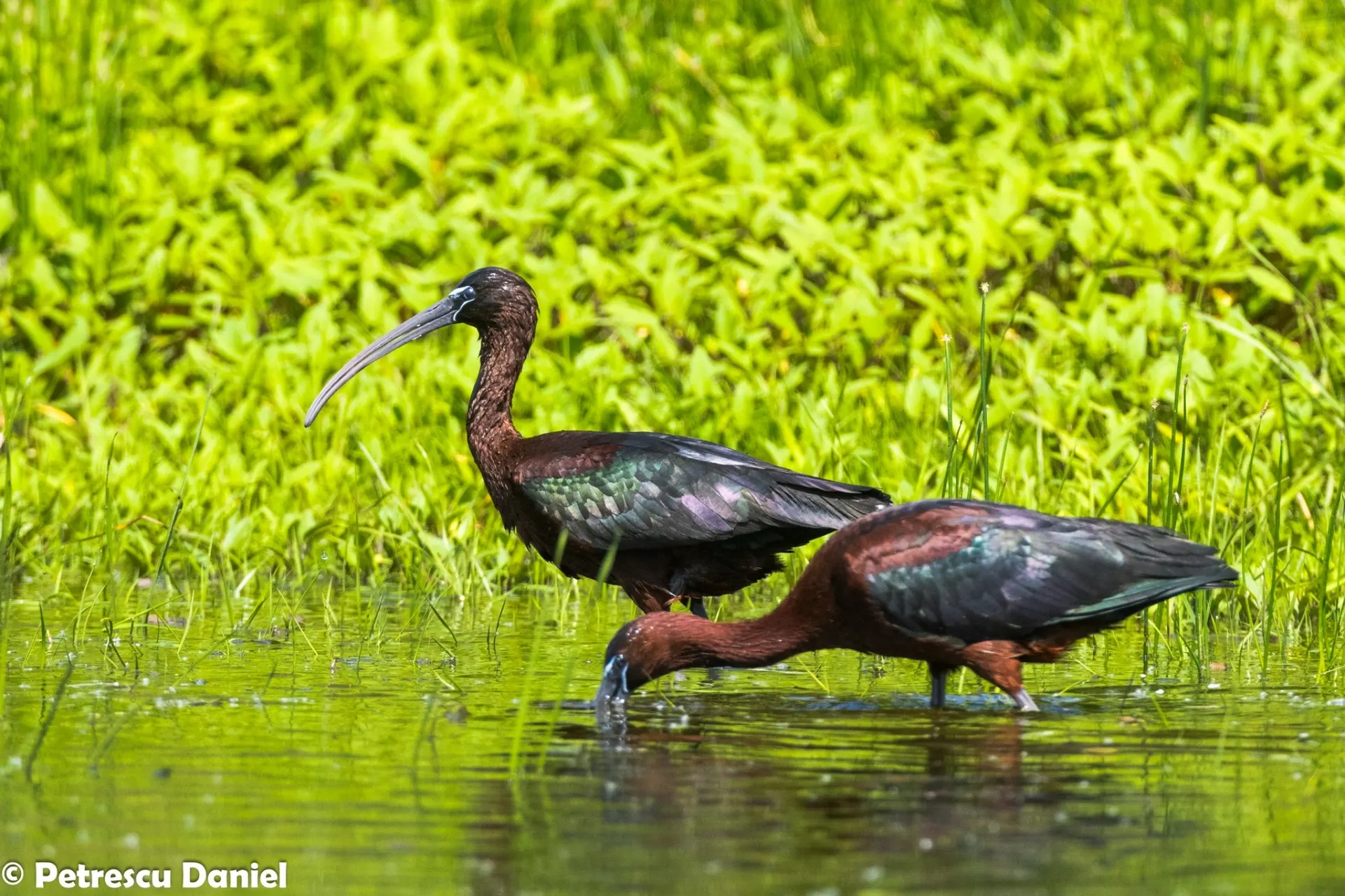
In poor light the Glossy Ibis appears entirely dark, almost black, with a long curved bill. This leads to confusion with the much larger Black Stork. In good light — especially bright sunlight — the plumage reveals rich chestnut on the neck and underparts, and metallic green-purple iridescence on the wings and back.
Field Marks at a Glance
Confusion species: Black Stork (Ciconia nigra) from a distance in poor light. Bill shape (decurved vs straight) and size (Ibis is much smaller) resolve it immediately.
When to See It in Romania
The Glossy Ibis is a long-distance migrant, wintering in sub-Saharan Africa and returning to the delta from late March. Breeding colonies are established by April; the species remains abundant through September, departing by October.
Monthly Presence & Abundance
Where to See It
Glossy Ibis forages in shallow wetlands at the delta margin and breeds colonially in mixed heron and egret colonies. It feeds by probing soft mud and shallow water for invertebrates, aquatic insects, worms, crayfish, and small frogs.
Delta margin marshes
Shallow flooded meadows and marsh edges adjacent to main channels. Flocks of 10–50 birds probe the mud at low water in early morning.
Mixed heron colonies
Nests in willows and reed beds alongside herons, egrets and Night Herons — established by late April.
Aerial movement
Loose straggling flocks of 5–30 birds fly between foraging and colony sites — morning flight lines visible from the floating hotel.
Lake shallows
Shallow-water areas around lake margins, especially as water levels drop in July–August exposing mud.
How to See It on Our Tours
All Ibis Tours programmes depart from Tulcea and operate within ARBDD-permitted zones.
4-Day Danube Delta Wildlife Cruise
📅 Days 2–3 — mixed colony areasGlossy Ibis nest in mixed heronries alongside Night Herons and Little Egrets in the delta. The 4-day cruise passes active colony trees where the iridescent plumage is visible as birds return to roost.
View tour details → Colony Access5-Day Extended Cruise
📅 Days 2–4 — colony areas + LeteaAdditional colony sites accessible on the 5-day itinerary increase encounter frequency. Pre-dawn colony approaches are possible with overnight positioning.
View tour details →Behaviour & Ecology
The Glossy Ibis is a tactile feeder, using its long curved bill to probe soft substrates in a sewing-machine action, feeling for prey rather than seeing it. This allows feeding in murky water where visual hunting is impossible. Flocks are often found feeding alongside Little Egret and Squacco Heron in the same shallow margins. Dusk flights of loose straggling flocks returning to roost are one of the atmospheric spectacles of a delta evening. When alarmed, flocks take flight with rapid wingbeats before settling in a long glide back toward the water.
🛡 Conservation Status
The Glossy Ibis has expanded its European range significantly since the 1990s, colonising new wetlands in Spain, France, and the Netherlands. Currently Least Concern (LC) globally. Local populations are sensitive to wetland water-level management. The Danube Delta population has remained stable within the broadly positive European trend.
Photography Guide
Photographing Glossy Ibis requires understanding the light. The iridescent plumage is only visible in direct sun at certain angles — flat overcast light makes the bird appear dull brown.
📸 Photography Tips
- Light angle: Shoot with the sun behind and to the side of you. Iridescence shows best when direct sunlight hits the bird's back and wing coverts.
- Best time: Morning and afternoon light (not midday). The magic window is roughly 07:00–09:30 and 17:00–19:30 in May.
- Flight shots: Glossy Ibis in flight in good light can show extraordinary colour. Pre-focus on a flight line and wait for the flocks to pass.
- Lens: 400–500mm for lone birds at distance. At colony approaches, 200–300mm may be sufficient.
- Background: Dark water or reed background frames the bird well. Avoid shooting against bright sky which flattens the plumage colour.
See It With Expert Guides
Glossy Ibis is reliably seen on all April–September Ibis Tours cruises. Best encounters at foraging marshes at dawn and on the return flight to colony sites in late afternoon.