
Wildlife guide · Romania
Dragonflies of Romania –
Interactive Checklist
Romania hosts a remarkably diverse dragonfly fauna thanks to its wide range of freshwater habitats. From alpine bogs in the Carpathian Mountains to coastal lagoons in Dobrogea and the vast wetlands of the Danube Delta, each region supports distinct Odonata communities.
The interactive checklist below presents species confirmed in Romania based on modern ecological research and faunistic studies. Filters allow users to explore dragonflies by habitat, region and flight season, offering a clear overview of the country’s dragonfly diversity.
Habitats and regional diversity
Most species are associated with standing waters such as lakes, ponds and marshes, where aquatic vegetation provides breeding areas. Others depend on fast-flowing mountain streams, while several rare species are restricted to alpine peat bogs or coastal saline habitats.
Representative species
A specialist of brackish and coastal lagoons, this striking damselfly is one of Dobrogea's most characteristic Odonata. Found near saline and temporary wetlands along the Black Sea coast, it is considered rare across much of its European range.
Commonly observed dragonflies in Romania include:
One of the most recognisable damselflies in Romania, the male displays striking metallic blue wing patches during courtship flight over clean rivers and streams. The Balkan subspecies (C. s. balcanica) is found throughout the country’s lowland and foothill waterways.
A slender, pale damselfly of temporary and seasonal wetlands. Unlike most Odonata, this species lays its eggs in plant stems above the waterline, allowing them to survive dry periods. Common in lowland Romania from May through September.
A large and powerful dragonfly of shaded forest streams in the Carpathians and hill regions. The female oviposits by plunging her abdomen vertically into sandy or gravelly stream beds. A strong indicator of unpolluted, well-oxygenated running water.
A medium-sized dragonfly with a characteristic powder-blue pruinose abdomen in mature males. Prefers warm, shallow waters with sparse vegetation — seeps, spring-fed pools and slow streams. Common in southern and eastern Romania, particularly in Dobrogea.
Distribution Code Legend
How to use the interactive checklist
The checklist allows filtering by habitat type (lakes, rivers, alpine bogs, coastal wetlands), geographic region and conservation or rarity status. This structure helps wildlife enthusiasts and photographers quickly identify species likely to be encountered in different parts of Romania.
Interactive Dragonfly Checklist of Romania
Complete checklist of 64 species (Odonata) confirmed in Romania — filter by family, habitat, region or rarity status.
Showing 64 of 64 species
| ✓ | # | Scientific Name | English Name | Family | Habitat | Distribution |
|---|---|---|---|---|---|---|
| 1 | Calopteryx splendens | Banded Demoiselle | Calopterygidae | Rivers & streams | ALL | |
| 2 | Calopteryx virgo | Beautiful Demoiselle | Calopterygidae | Rivers & streams | WCSCrpECrp | |
| 3 | Epallage fatime | Eastern Demoiselle | Euphaeidae | Coastal / saline | DoDD | |
| 4 | Lestes barbarus | Southern Emerald Damselfly | Lestidae | Lakes & ponds | ALL | |
| 5 | Lestes dryas | Scarce Emerald Damselfly | Lestidae | Lakes & ponds | CECrp | |
| 6 | Lestes macrostigma | Dark Spreadwing | Lestidae | Coastal / saline | DoDD | |
| 7 | Lestes sponsa | Emerald Damselfly | Lestidae | Lakes & ponds | ALL | |
| 8 | Lestes virens | Small Spreadwing | Lestidae | Lakes & ponds | SEDo | |
| 9 | Lestes viridis | Willow Emerald Damselfly | Lestidae | Lakes & ponds | ALL | |
| 10 | Sympecma fusca | Winter Damselfly | Lestidae | Lakes & ponds | ALL | |
| 11 | Coenagrion puella | Azure Damselfly | Coenagrionidae | Lakes & ponds | ALL | |
| 12 | Coenagrion pulchellum | Variable Damselfly | Coenagrionidae | Lakes & ponds | WC | |
| 13 | Coenagrion scitulum | Dainty Damselfly | Coenagrionidae | Lakes & ponds | DoDD | |
| 14 | Enallagma cyathigerum | Common Blue Damselfly | Coenagrionidae | Lakes & ponds | ALL | |
| 15 | Erythromma najas | Red-eyed Damselfly | Coenagrionidae | Lakes & ponds | ALL | |
| 16 | Erythromma viridulum | Small Red-eyed Damselfly | Coenagrionidae | Lakes & ponds | DoDD | |
| 17 | Ischnura elegans | Blue-tailed Damselfly | Coenagrionidae | Lakes & ponds | ALL | |
| 18 | Ischnura pumilio | Scarce Blue-tailed Damselfly | Coenagrionidae | Lakes & ponds | SEDo | |
| 19 | Nehalennia speciosa ★ | Pigmy Damselfly | Coenagrionidae | Alpine bogs | CECrp | |
| 20 | Pyrrhosoma nymphula | Large Red Damselfly | Coenagrionidae | Rivers & streams | WCSCrp | |
| 21 | Platycnemis pennipes | White-legged Damselfly | Platycnemididae | Rivers & streams | ALL | |
| 22 | Aeshna affinis | Southern Migrant Hawker | Aeshnidae | Lakes & ponds | SEDo | |
| 23 | Aeshna cyanea | Southern Hawker | Aeshnidae | Lakes & ponds | ALL | |
| 24 | Aeshna grandis | Brown Hawker | Aeshnidae | Lakes & ponds | ALL | |
| 25 | Aeshna isoceles | Green-eyed Hawker | Aeshnidae | Lakes & ponds | ALL | |
| 26 | Aeshna juncea | Common Hawker | Aeshnidae | Alpine bogs | SCrpECrp | |
| 27 | Aeshna mixta | Migrant Hawker | Aeshnidae | Lakes & ponds | ALL | |
| 28 | Aeshna subarctica ★ | Bog Hawker | Aeshnidae | Alpine bogs | SCrpECrp | |
| 29 | Anax imperator | Emperor Dragonfly | Aeshnidae | Lakes & ponds | ALL | |
| 30 | Anax parthenope | Lesser Emperor | Aeshnidae | Lakes & ponds | SEDo | |
| 31 | Brachytron pratense | Hairy Dragonfly | Aeshnidae | Lakes & ponds | WC | |
| 32 | Gomphus flavipes | Yellow-legged Clubtail | Gomphidae | Rivers & streams | DDE | |
| 33 | Gomphus vulgatissimus | Common Clubtail | Gomphidae | Rivers & streams | WC | |
| 34 | Onychogomphus forcipatus | Small Pincertail | Gomphidae | Rivers & streams | WCS | |
| 35 | Ophiogomphus cecilia | Green Snaketail | Gomphidae | Rivers & streams | WC | |
| 36 | Cordulegaster bidentata | Sombre Goldenring | Cordulegastridae | Rivers & streams | SCrpECrp | |
| 37 | Cordulegaster heros | Balkan Goldenring | Cordulegastridae | Rivers & streams | SCrpECrp | |
| 38 | Cordulegaster insignis | Caucasian Goldenring | Cordulegastridae | Rivers & streams | SCrp | |
| 39 | Cordulia aenea | Downy Emerald | Corduliidae | Lakes & ponds | ALL | |
| 40 | Epitheca bimaculata | Balkan Emerald | Corduliidae | Lakes & ponds | ALL | |
| 41 | Somatochlora alpestris ★ | Alpine Emerald | Corduliidae | Alpine bogs | SCrpECrp | |
| 42 | Somatochlora arctica ★ | Northern Emerald | Corduliidae | Alpine bogs | SCrpECrp | |
| 43 | Somatochlora flavomaculata | Yellow-spotted Emerald | Corduliidae | Lakes & ponds | ALL | |
| 44 | Somatochlora meridionalis | Balkan Emerald | Corduliidae | Lakes & ponds | CECrp | |
| 45 | Somatochlora metallica | Brilliant Emerald | Corduliidae | Lakes & ponds | ALL | |
| 46 | Crocothemis erythraea | Scarlet Darter | Libellulidae | Lakes & ponds | SDoDD | |
| 47 | Leucorrhinia dubia | Small Whiteface | Libellulidae | Alpine bogs | SCrpECrp | |
| 48 | Leucorrhinia pectoralis ◇ | Large White-faced Darter | Libellulidae | Lakes & ponds | WC | |
| 49 | Libellula depressa | Broad-bodied Chaser | Libellulidae | Lakes & ponds | ALL | |
| 50 | Libellula fulva | Scarce Chaser | Libellulidae | Rivers & streams | WC | |
| 51 | Libellula quadrimaculata | Four-spotted Chaser | Libellulidae | Lakes & ponds | ALL | |
| 52 | Orthetrum albistylum | Eastern Skimmer | Libellulidae | Lakes & ponds | ESDo | |
| 53 | Orthetrum brunneum | Southern Skimmer | Libellulidae | Lakes & ponds | SDo | |
| 54 | Orthetrum cancellatum | Black-tailed Skimmer | Libellulidae | Lakes & ponds | ALL | |
| 55 | Orthetrum coerulescens | Keeled Skimmer | Libellulidae | Lakes & ponds | ALL | |
| 56 | Sympetrum danae | Black Darter | Libellulidae | Alpine bogs | SCrpECrp | |
| 57 | Sympetrum depressiusculum | Spotted Darter | Libellulidae | Lakes & ponds | DD | |
| 58 | Sympetrum flaveolum | Yellow-winged Darter | Libellulidae | Lakes & ponds | ALL | |
| 59 | Sympetrum fonscolombii | Red-veined Darter | Libellulidae | Lakes & ponds | SDo | |
| 60 | Sympetrum meridionale | Southern Darter | Libellulidae | Lakes & ponds | SDo | |
| 61 | Sympetrum pedemontanum | Banded Darter | Libellulidae | Lakes & ponds | ALL | |
| 62 | Sympetrum sanguineum | Ruddy Darter | Libellulidae | Lakes & ponds | ALL | |
| 63 | Sympetrum striolatum | Common Darter | Libellulidae | Lakes & ponds | ALL | |
| 64 | Sympetrum vulgatum | Vagrant Darter | Libellulidae | Lakes & ponds | ALL |
No species match your current filters. Try broadening your search.
Alpine habitat · Romania
Alpine dragonflies of the Romanian Carpathians
The Carpathians are a key refuge for cold-adapted dragonfly species associated with alpine peat bogs and mountain streams. These habitats host some of Romania’s rarest Odonata:
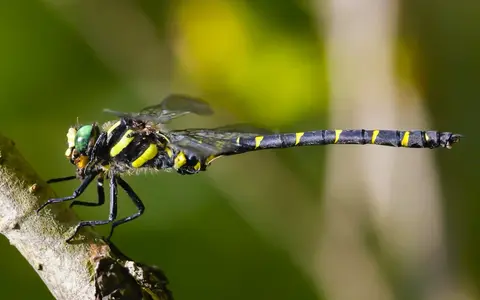
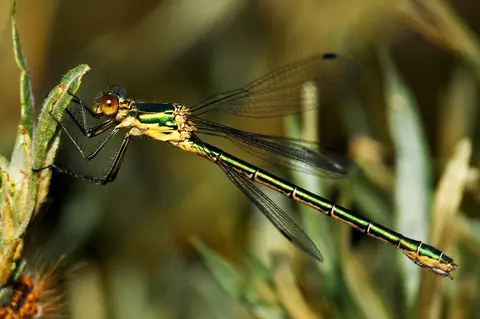
- Somatochlora alpestrisAlpine Emerald ★
- Somatochlora arcticaNorthern Emerald ★
- Aeshna junceaCommon Hawker
- Aeshna subarcticaBog Hawker ★
- Nehalennia speciosaPigmy Damselfly ★
- Leucorrhinia dubiaSmall Whiteface
These dragonflies often indicate healthy alpine ecosystems and are sensitive to climate change.
Peak season: June – August in alpine bogs above 1,200 m
Coastal habitat · southeastern Romania
Dobrogea – coastal lagoons and saline dragonflies
Dobrogea’s coastal lagoons and saline lakes host specialised dragonfly species that are rarely found elsewhere in Romania. The region’s unique microclimate supports several thermophilous species:
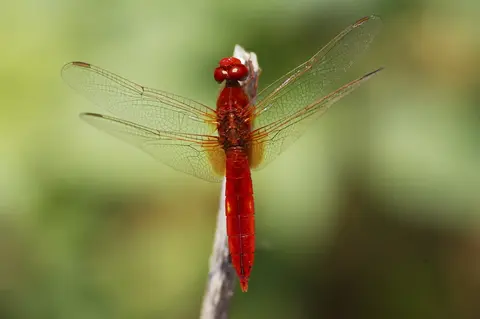
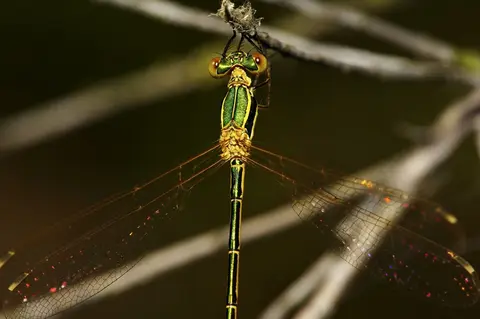
- Lestes macrostigmaDark Spreadwing
- Epallage fatimeEastern Demoiselle
- Coenagrion scitulumDainty Damselfly
Peak season: May – July on coastal lagoons and saline lakes
Wetland habitat · Danube Delta
Danube Delta – wetland dragonfly diversity
The Danube Delta’s extensive network of lakes, channels and marshes supports the highest dragonfly diversity in Romania. The lentic ecosystems are particularly rich:
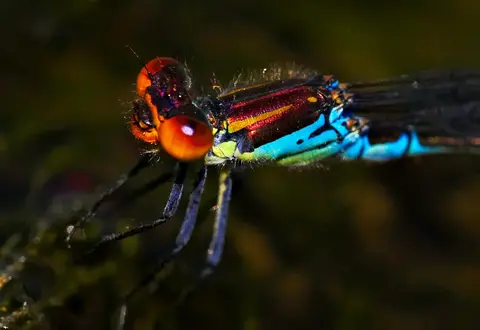
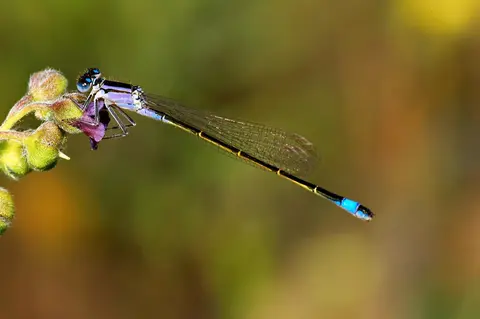
- Anax imperatorEmperor Dragonfly
- Libellula depressaBroad-bodied Chaser
- Orthetrum cancellatumBlack-tailed Skimmer
- Sympetrum depressiusculumSpotted Darter
- Gomphus flavipesYellow-legged Clubtail
The Delta’s dragonfly communities are important indicators of wetland ecosystem health and water quality.
Peak season: June – August across delta lakes and channels
Conservation · Romania
Dragonflies as ecological indicators
Dragonflies are widely regarded as sensitive indicators of freshwater ecosystem health. Alpine and bog-associated species often signal well-preserved habitats, while changes in climate and land use may alter their distribution. Monitoring dragonflies therefore contributes to understanding broader biodiversity trends across Romania.
Frequently Asked Questions
How many dragonfly species are found in Romania?
Romania hosts at least 64 confirmed species of dragonflies and damselflies (order Odonata), spanning 10 families. The actual number may be higher as new records continue to be added from under-surveyed areas like the Eastern Carpathians and the Danube Delta.
Where is the best place to see dragonflies in Romania?
The Danube Delta is the richest area for dragonfly diversity in Romania, supporting numerous lentic species in its lakes, channels and marshes. The Carpathian alpine bogs host rare species like Somatochlora alpestris and Aeshna subarctica. Dobrogea’s coastal lagoons are home to specialised species such as Lestes macrostigma.
When is the best time to observe dragonflies in Romania?
The main dragonfly flight season in Romania runs from May to September. Peak diversity occurs in June and July when most species are on the wing. Alpine species in the Carpathians fly mainly in July and August, while early species like Sympecma fusca can be seen from March onward.
Is Romania a good destination for dragonfly watching?
Yes. Romania supports one of the most diverse dragonfly faunas in Central and Eastern Europe, thanks to its wide range of freshwater habitats — from alpine peat bogs in the Carpathians to coastal lagoons in Dobrogea and the vast wetlands of the Danube Delta. Each region supports distinct Odonata communities including several rare and declining species.