
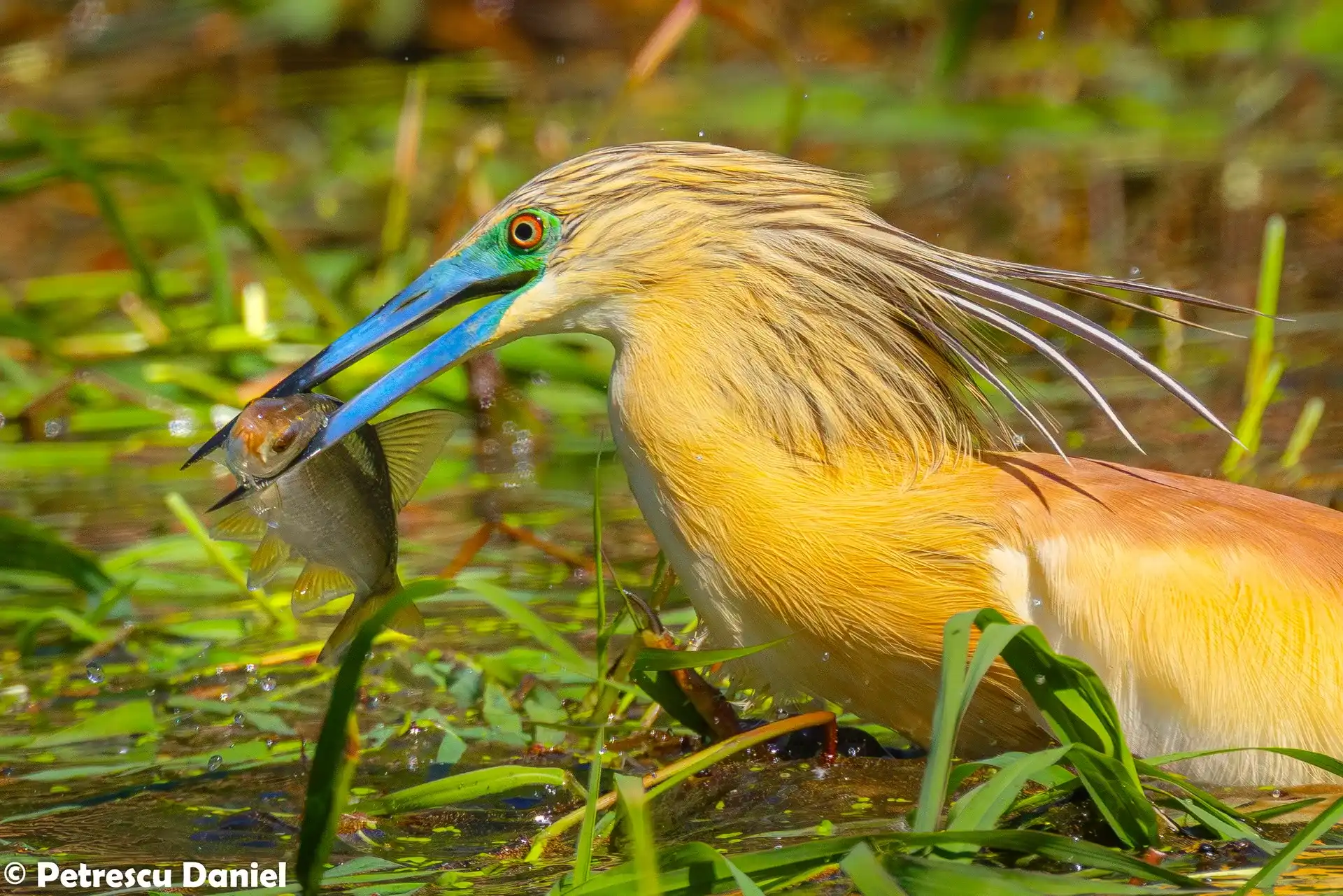
The Squacco Heron (Ardeola ralloides) is a small to medium-sized species, inconspicuous at rest but highly visible in flight due to its entirely white wings. In the Danube Delta it is a summer visitor, associated with shallow pools, low vegetation and lake margins. Identification: at rest has buff-yellow and streaked tones, making it almost invisible against reed stems; in flight the white wings and tail create a striking transformation. Breeding adults have blue-grey facial skin and an orange-buff mantle with a full crest. Ecology: hunts fish, frogs and invertebrates by standing motionless at the water's edge in dense low vegetation. In the Danube Delta: typically seen flushing from canal margins as boats pass; early morning excursions along narrow channels offer the best views. Conservation: dependent on undisturbed shallow wetlands with emergent vegetation; sensitive to loss of feeding habitat through drainage.
Identification
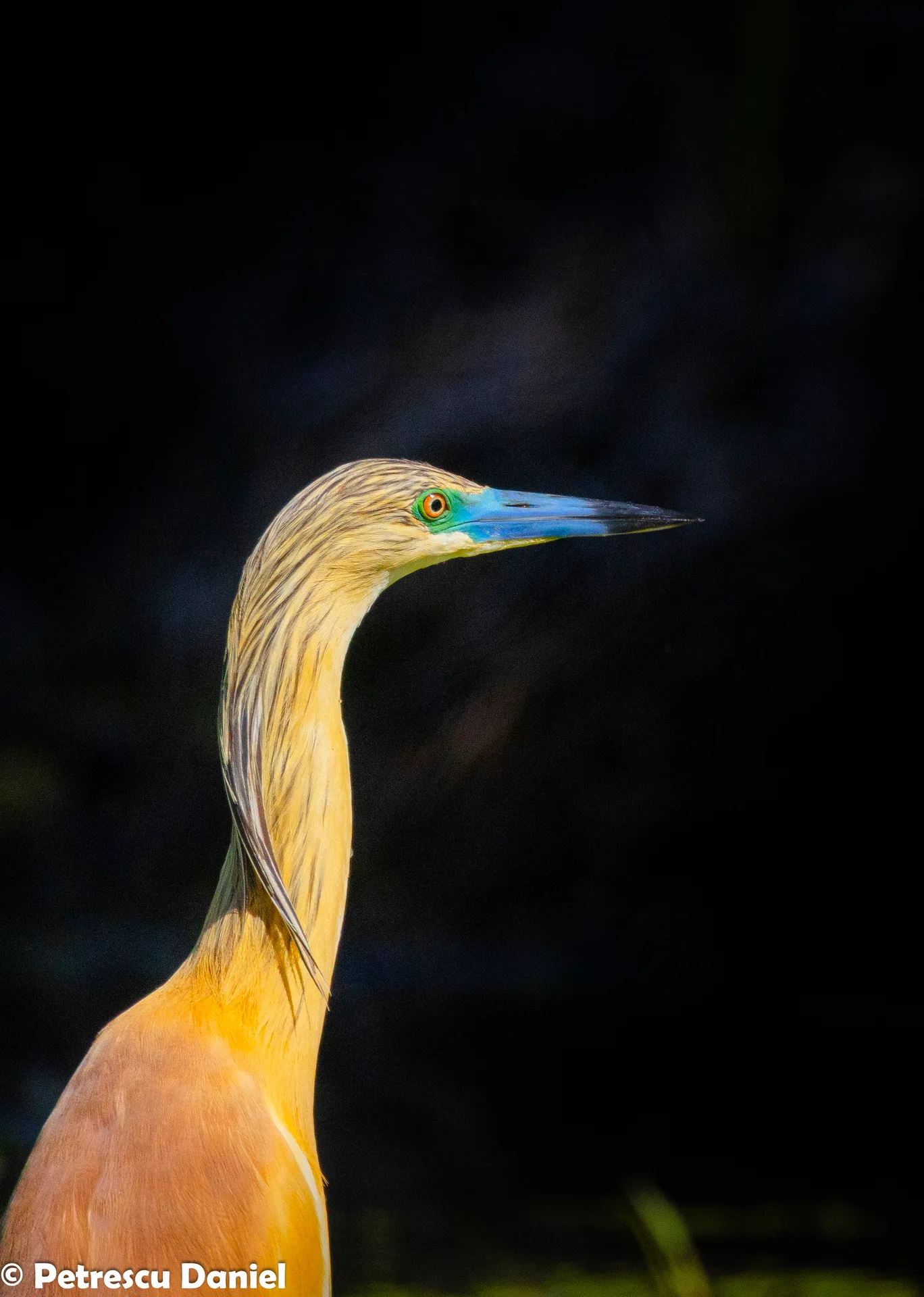
The Squacco Heron's most useful feature is paradoxical: it looks brown and inconspicuous at rest, but white in flight. Breeding adults (April–July) have blue-grey facial skin, a buff streaked crest, and buffy-orange mantle. Non-breeding birds are duller and browner. In all plumages the white wings are diagnostic in flight.
Field Marks at a Glance
Confusion species: Little Egret (Egretta garzetta) — white in all plumages, longer, more elegant. Squacco Heron only shows white in flight. At rest, its brown colouring is unique among delta herons.
When to See It in Romania
The Squacco Heron is a long-distance migrant, wintering in tropical Africa. It arrives in the Danube Delta from late April and is present through September. Peak breeding activity is May–July. Autumn departure is relatively rapid, with few birds remaining after October.
Monthly Presence & Abundance
Where to See It
Squacco Herons are found throughout the delta wherever there are sheltered, reed-fringed channel margins and shallow water. They prefer sites where floating vegetation and reed stems provide cover at the water's edge.
Channel edges
Primary foraging habitat. Birds perch motionless on floating vegetation or at the reed stem base, 0–30 cm above water. Seen from every excursion.
Mixed heron colonies
Nests alongside Night Heron, Purple Heron, and Little Egret in reeds and willows. Colonies visible from the slow exploration boat.
Plauri margins
The floating islands (plauri) unique to the delta provide ideal perching habitat with dense surrounding vegetation.
Lake shallows
Individuals visible foraging at lake margin shallows, particularly in the early morning when light is low and water surface glassy.
How to See It on Our Tours
All Ibis Tours programmes depart from Tulcea and operate within ARBDD-permitted zones.
4-Day Danube Delta Wildlife Cruise
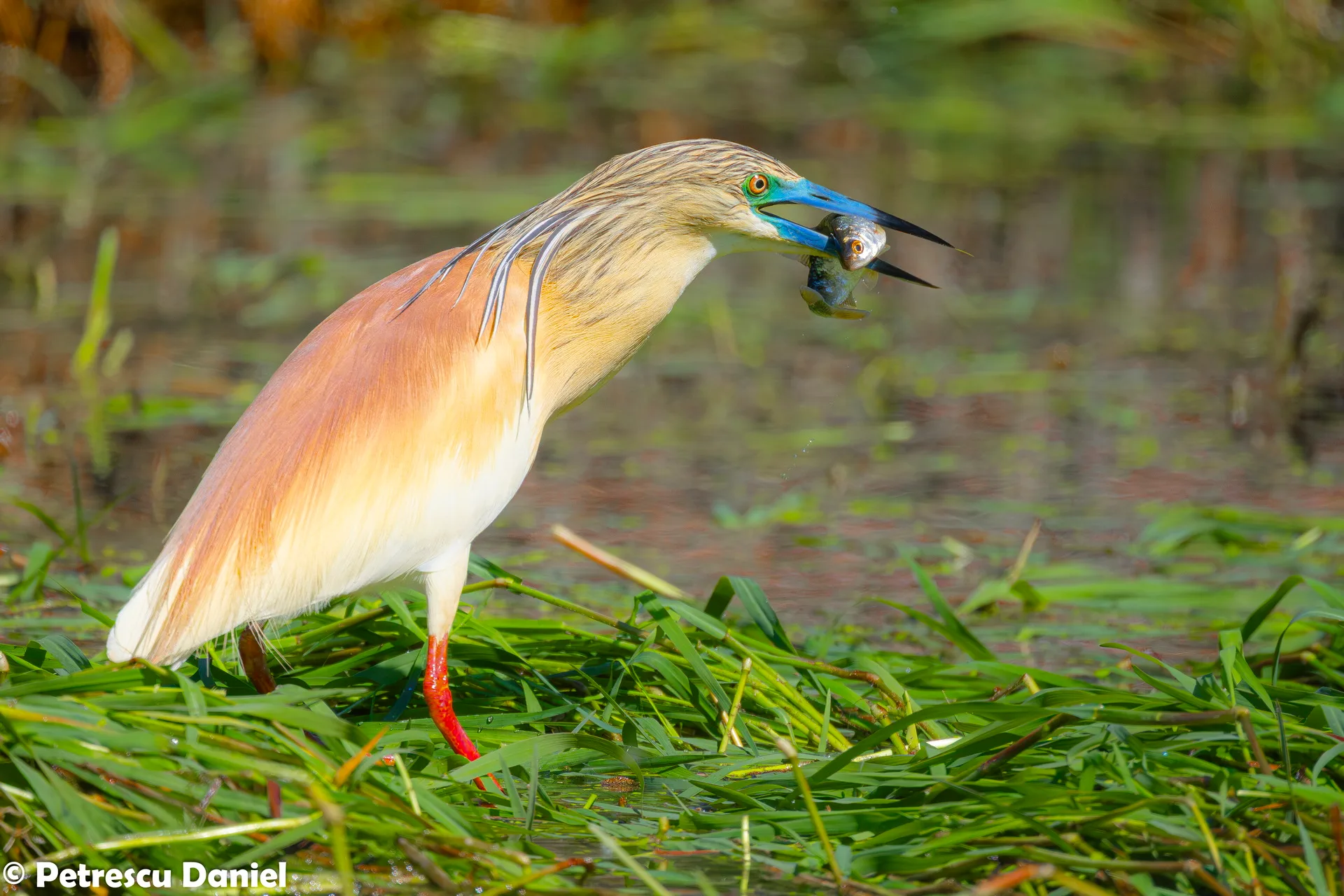
📅 Days 2–3 — reed edges and floating vegetationSquacco Herons are seen regularly on all summer-season cruises. Their habit of perching on floating vegetation close to the boat makes them excellent photography subjects. The 4-day cruise spends multiple hours in narrow reed channels where squaccos concentrate.
View tour details → Photography FocusWildlife Photography Tours
📅 Early morning reed sessionsSquacco Herons often perch motionless at dawn within 5–10m of the stationary boat — exceptional frame-filling opportunities.
View tour details →Behaviour & Ecology
The Squacco Heron is a stand-and-wait predator like other herons, but unusually specialised in hunting from floating or emergent vegetation at the water surface. It rarely wades deeper than its ankle. Prey includes small fish, aquatic invertebrates, frogs, and large insects. The distinctive white wing flash on take-off may serve to startle prey into movement, making it easier to locate in the first seconds of flight. Breeding colonies are established within mixed heron groups, providing collective early-warning against predators. The full breeding plumage — including extended crest feathers and vivid blue facial skin — is at its most intense in May, making it an excellent photography subject.
🛡 Conservation Status
Currently Least Concern (LC) globally. The Danube Delta, with its vast extent of protected reed beds and shallow wetlands, supports one of the most important European breeding populations. Local threats include reed bed burning and water level management. The delta's status as a Biosphere Reserve under strict ARBDD management has kept the population stable.
Photography Guide
The Squacco Heron offers two very different photographic opportunities: the subtle portrait of a perched bird in full breeding plumage, and the dramatic flight shot showing the brilliant white wings. Both are achievable from the slow exploration motorboat.
📸 Photography Tips
- Breeding plumage: May is the optimal month — the blue facial skin, buff-orange mantle, and extended crest are at maximum intensity. Early morning light on a perched bird gives the best colour reproduction.
- Flight shots: The transformation from brown to white is startling and brief. Anticipate by watching birds that are showing signs of agitation (neck raised, body upright). Set continuous burst mode before the bird moves.
- Lens: 400–500mm for perched birds at 5–15m from the boat. The compact size of the bird requires good focal length to fill the frame.
- Background: Position the boat so the bird is framed against water surface or clean green reed background rather than cluttered vegetation.
- Patience: A perched Squacco Heron will often remain stationary for 5–15 minutes. Use this time to adjust position and focus rather than shooting immediately on finding the bird.
See It With Expert Guides
Squacco Heron is seen on 85%+ of May–September Ibis Tours cruises. May offers the most spectacular breeding plumage. The slow motorboat allows patient approach to reed-margin birds.