
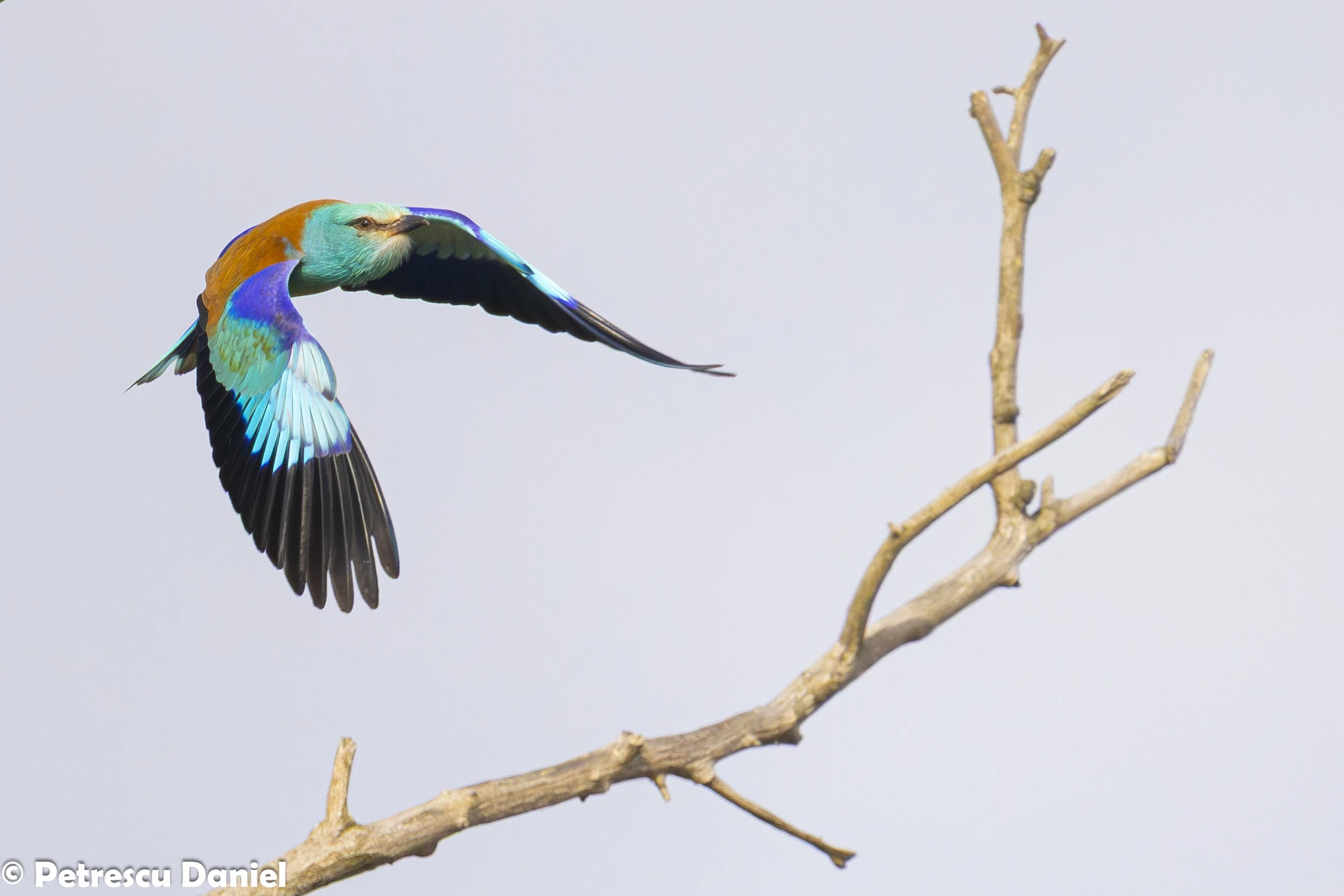
The European Roller (Coracias garrulus) is a migratory species associated with mosaics of grassland, extensive farmland and old trees or artificial structures for nesting (cavities, nest boxes). In Dobrogea and southern Romania it can be observed from spring to late summer. Identification: striking turquoise-blue and chestnut-brown plumage; stout, slightly hooked black bill; aerial acrobatics during display flight — the origin of the name 'roller'. Often perches conspicuously on wires and posts. Ecology: hunts large insects, lizards, small rodents and frogs from a prominent perch; nests in cavities in old trees or banks. Observation: look for perched birds on wires and fence posts near open ground; most active in warm sunny conditions. Conservation: declining across much of Europe due to loss of extensive grassland, old trees and a reduction in large insect prey; locally important populations remain in Dobrogea.
Identification
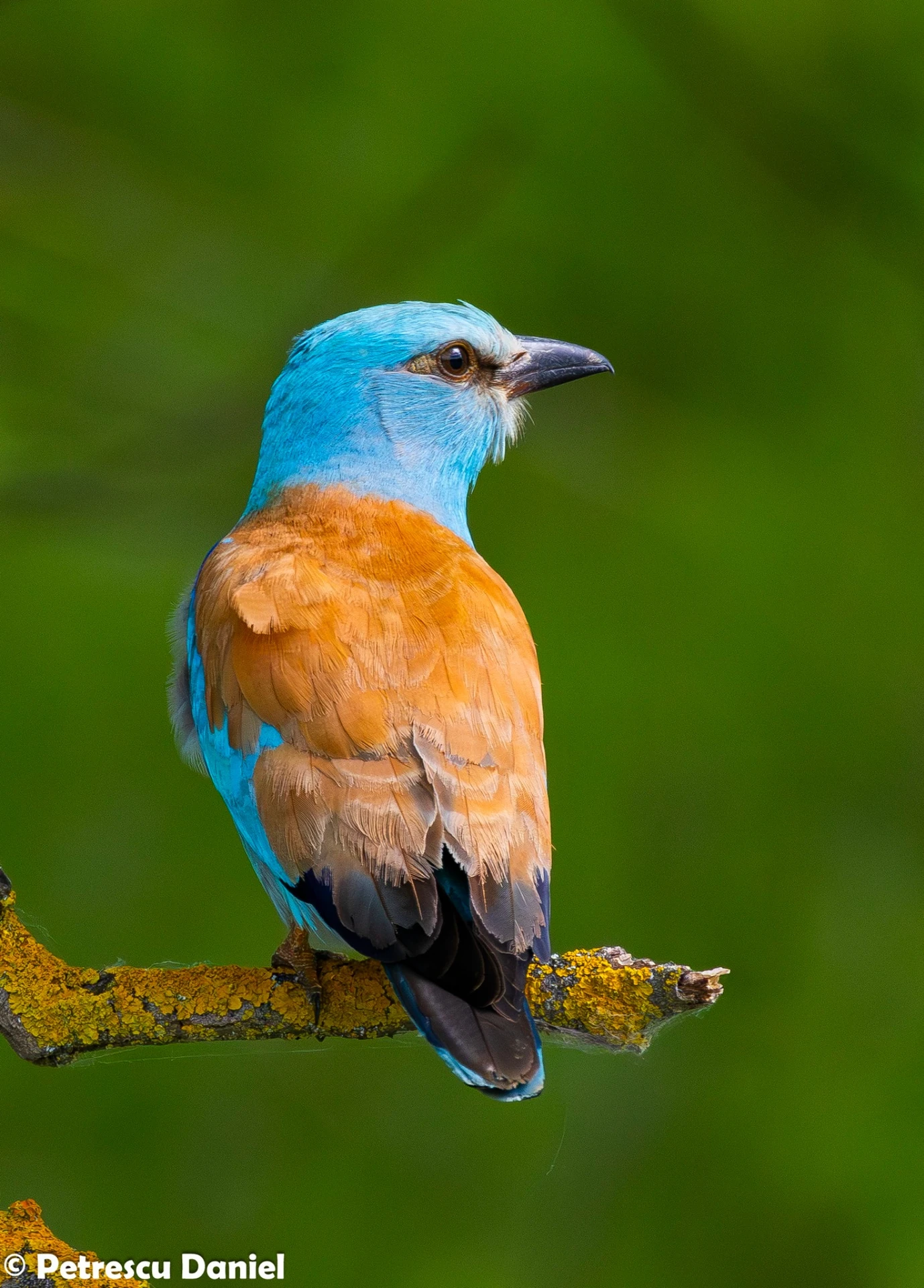
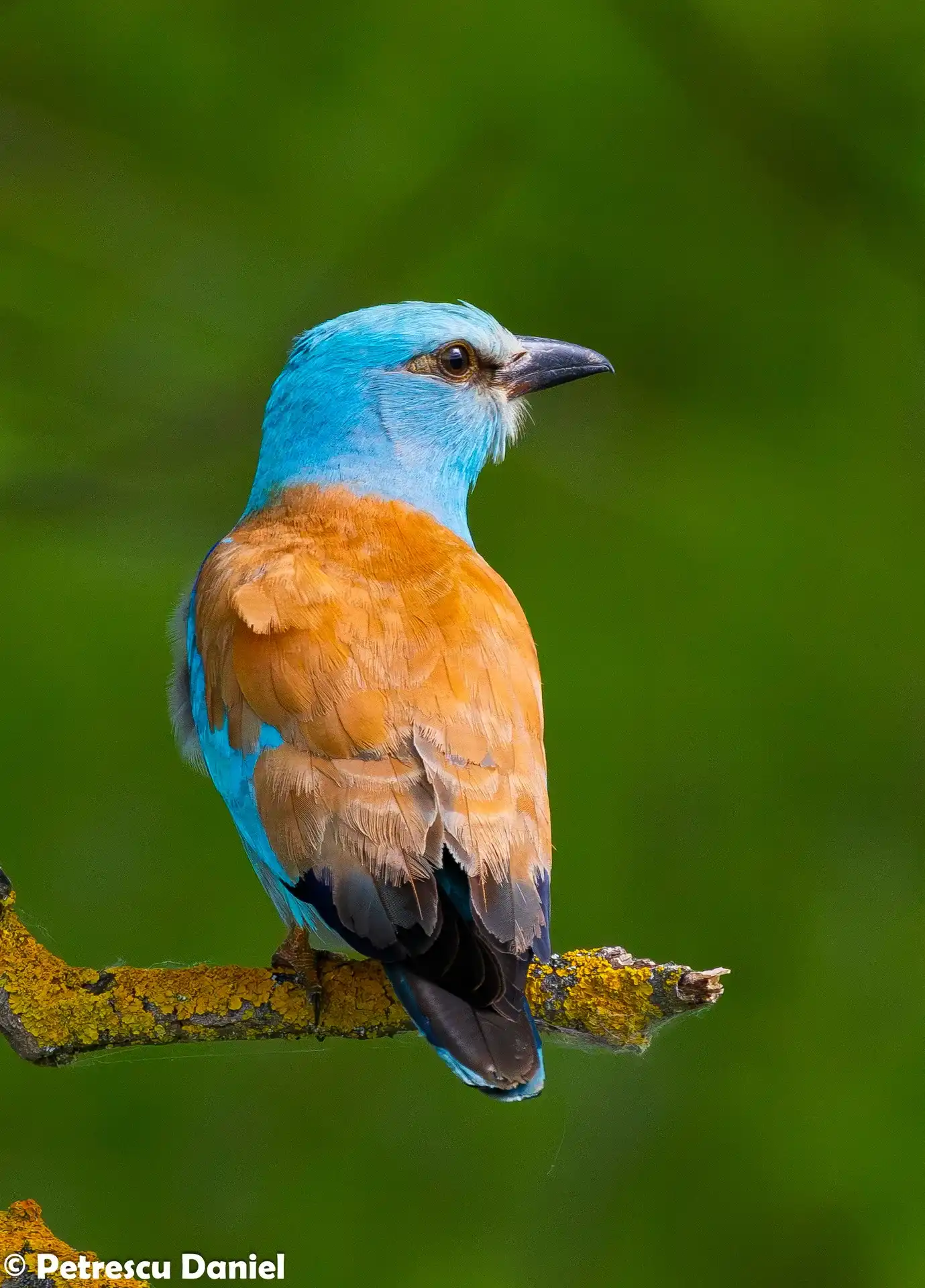
No other bird in Europe is remotely similar. The European Roller is a stocky, crow-sized bird with electric turquoise-blue plumage on the head, underparts and wings, rich chestnut back, and darker wingtips. At rest it often sits motionless on an exposed wire or post for extended periods, making it very easy to observe and photograph.
Field Marks at a Glance
Confusion species: Unmistakable in Europe. No other species has this colour combination. The Kingfisher is superficially turquoise but tiny, associated only with water.
When to See It in Romania
The European Roller is a long-distance migrant, wintering in sub-Saharan Africa and arriving in Romania from late April. Peak breeding activity is May–July. Most birds depart by August–September. The best month for display behaviour is May and early June.
Monthly Presence & Abundance
Where to See It
In the Danube Delta, the European Roller is associated primarily with the Letea Forest — a sub-Mediterranean oak forest on sand dunes, unique in Europe. Away from the delta, the Dobrogea plateau is also excellent, with Rollers visible on wires along every country road in May–June.
Letea Forest
Romania's oldest nature reserve (protected 1938). Old oaks provide nest cavities. Sandy clearings give exposed perches. Rollers on virtually every visit in May–June.
Dobrogea plateau
Open farmland with wires and old orchards. Rollers perch prominently on power lines — easiest long-distance viewing.
Caraorman area
Sandy banks with old willows and open ground. Rollers nest in cavities alongside Bee-eaters.
Traditional rural areas
Old buildings with roof cavities in delta villages. Rollers tolerate proximity to humans and often nest in old structures.
How to See It on Our Tours
All Ibis Tours programmes depart from Tulcea and operate within ARBDD-permitted zones.
4-Day Danube Delta Wildlife Cruise
📅 Days 1 & 4 — Dobrogea grasslands en routeEuropean Rollers are seen on the road transfer sections and stops at Dobrogea plateaux — typically on the first and last day of the cruise when travelling between Tulcea and the delta proper. The vivid electric-blue plumage is unmistakable on roadside wires.
View tour details → Photography FocusWildlife Photography Tours
📅 Dobrogea grassland stopsPhoto-focused itineraries include dedicated Dobrogea plateau time targeting Roller at post/wire perches — predictable, accessible, excellent light.
View tour details →Behaviour & Ecology
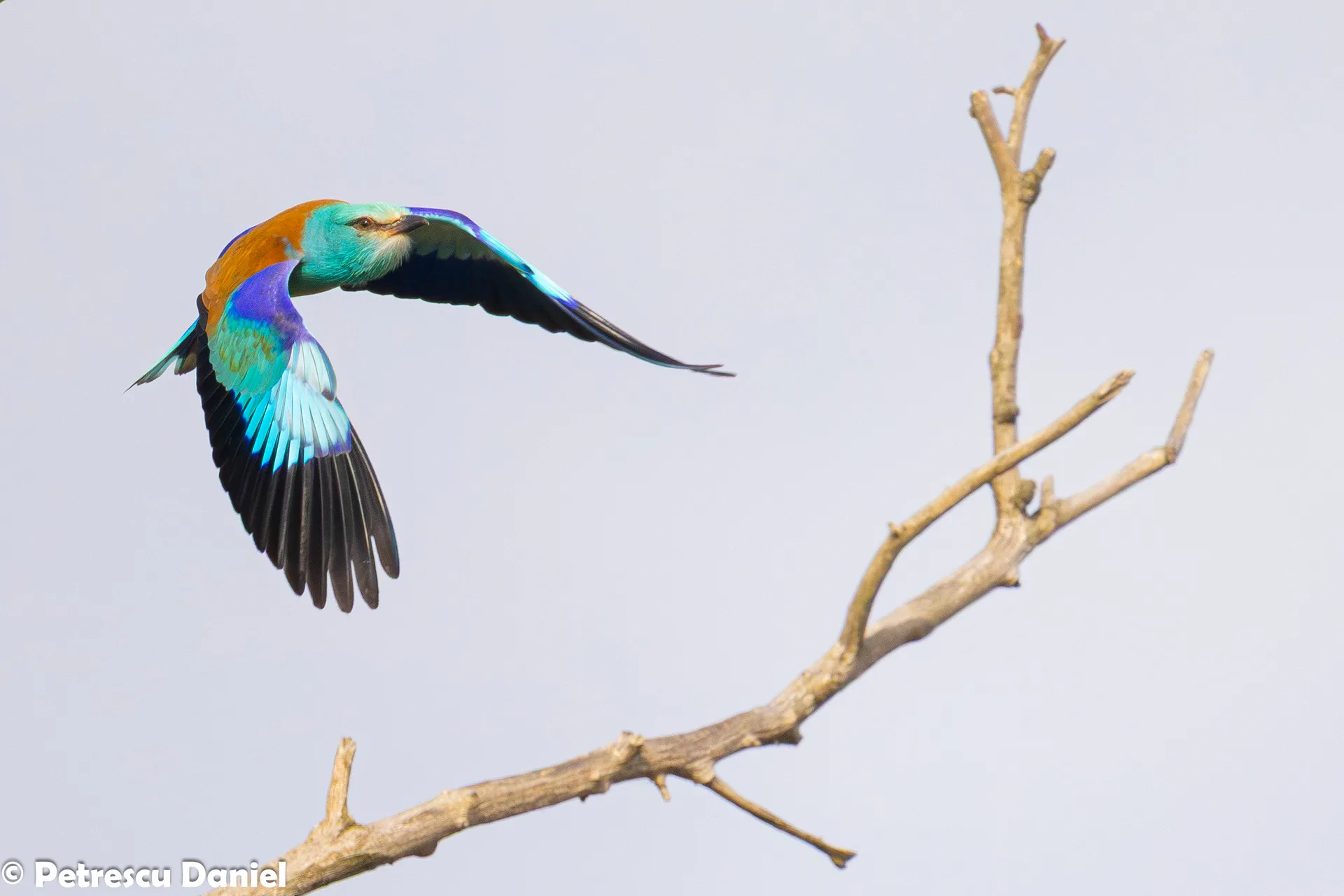
The European Roller is a sit-and-wait predator, hunting large insects, lizards, frogs, and small rodents from exposed perches. It drops to the ground to catch prey and returns to the same perch repeatedly — making it an excellent photography subject. The display flight is spectacular and diagnostic: the male tumbles side-to-side in rolling dives over the nest cavity while calling loudly, showing off the brilliant wing pattern. Rollers nest in natural cavities — old woodpecker holes in ancient oaks, cracks in dead trees, or holes in sandy banks — and reuse the same cavity for many years.
🛡 Conservation Status
The European Roller has declined significantly across much of Western and Central Europe due to agricultural intensification, loss of old trees with nest cavities, and reduced large insect prey. Romania remains one of the species' strongholds. Currently Least Concern (LC) globally but Near Threatened in Europe. Traditional low-intensity farming in Dobrogea and the delta's protected status maintain good populations.
Photography Guide
The European Roller is the most photogenic bird in Romania by consensus among visiting wildlife photographers. The combination of spectacular colour, predictable perching behaviour, and tolerance of slow vehicles makes it very accessible.
📸 Photography Tips
- Approach: Rollers tolerate slow-moving vehicles well. Drive slowly to the perch position and cut the engine. Window-down photography from a car works excellently along Letea tracks.
- Lens: 400–500mm from a car. Shorter (300mm) for birds on low wires close to the road.
- Display flights: In May, display flights happen repeatedly through the morning. Pre-focus on the nest tree and wait — the flight starts with a distinctive call.
- Light: Turquoise plumage looks best in soft morning or evening light. Harsh midday sun can oversaturate the colour. Golden hour shots are spectacular.
- Background: Sandy backgrounds and old oak textures complement the bird. Avoid shooting against bare sky which loses the Letea habitat context.
See It With Expert Guides
European Rollers are a guaranteed sighting on all Ibis Tours itineraries that include Letea Forest — typically on Day 3 of the 4-Day cruise and Days 3–4 of the 5-Day programme.