
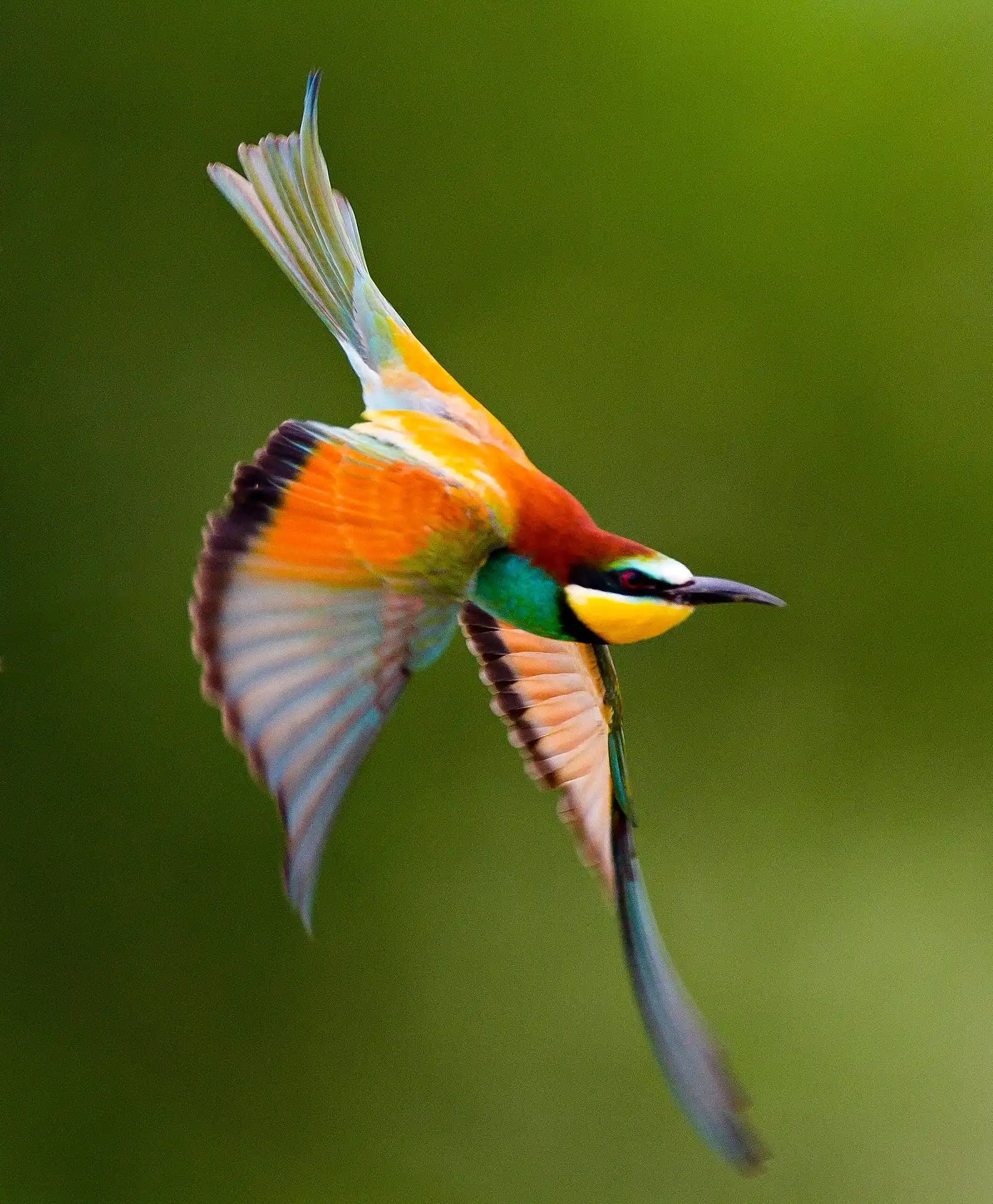
The European Bee-eater (Merops apiaster) is a spectacular migratory species associated with open landscapes, sandy or clay soils for nesting and an abundance of flying insects. In Dobrogea and the Danube Delta area it is present from spring to late summer. Identification: multicoloured plumage (turquoise, yellow, chestnut-red), black eye-mask, slender slightly curved bill; buoyant flight, often in small groups. Ecology: specialist insectivore (bees, wasps, dragonflies, butterflies). Nests in burrows dug into banks. Observation: warm mornings near exposed banks and open fields; calls are an excellent cue for locating the species. Conservation: sensitive to changes in nesting habitat and decline in insect prey; responsible observation means avoiding disturbance close to colonies during the breeding season.
Identification
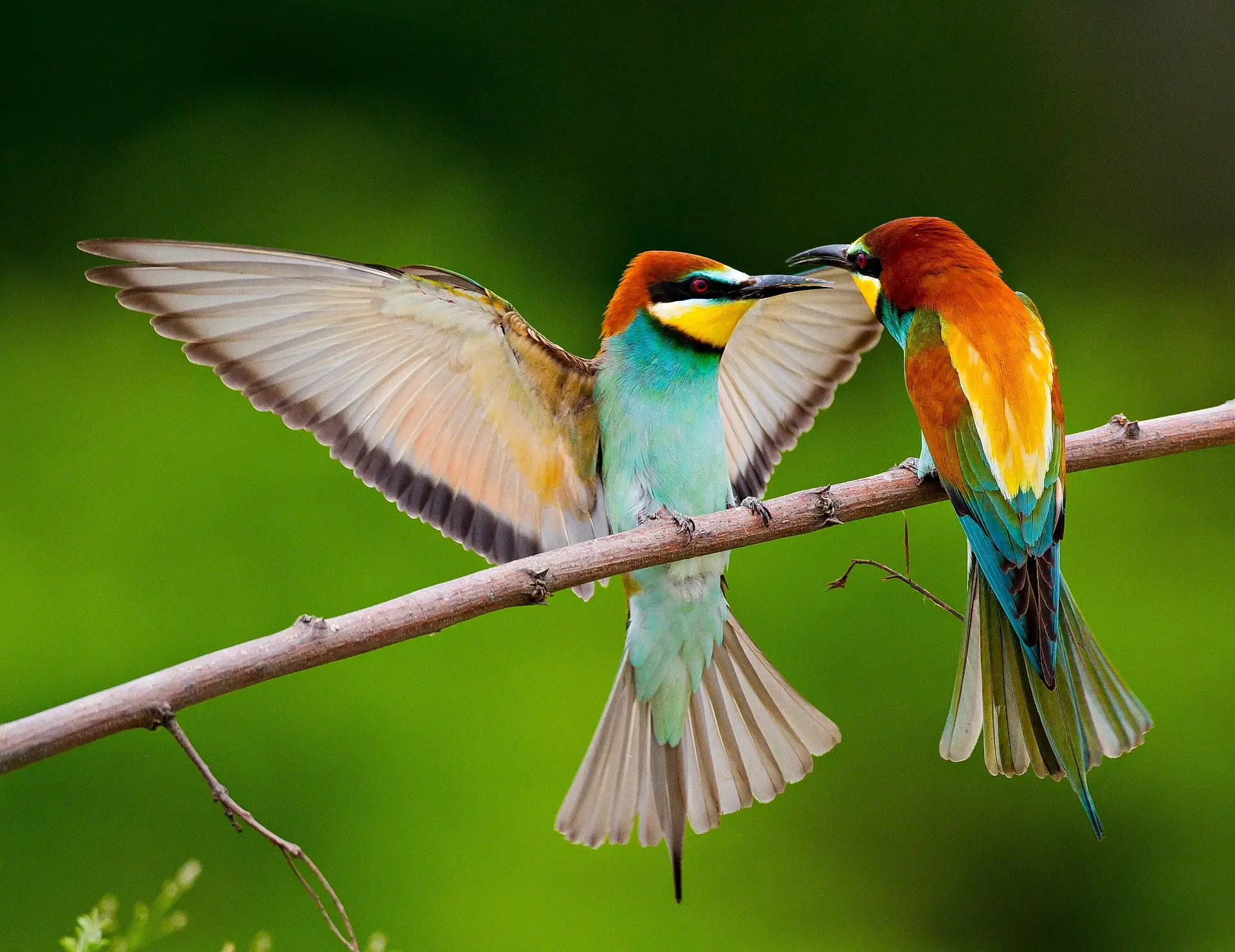
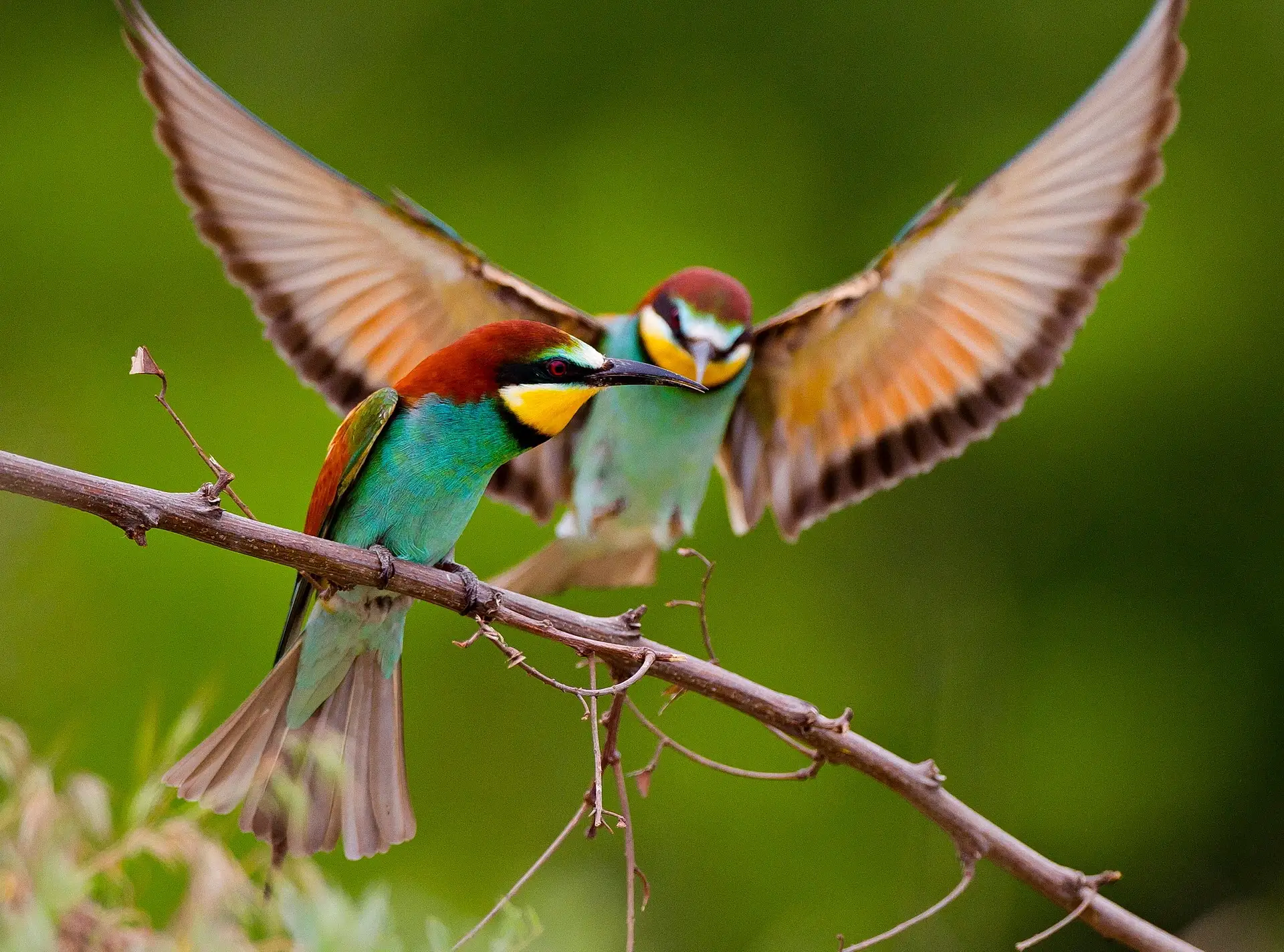
Unmistakable when seen well: a slender, long-tailed bird with vivid green upperparts, yellow throat, blue-green underparts, and a chestnut crown and back. The long central tail feathers project beyond the tail tip, giving the bird a distinctive elongated silhouette in flight. The call — a liquid, rolling prrrip — is the first indication of presence and carries considerable distance.
Field Marks at a Glance
Confusion species: Unmistakable in Europe. No other species combines these colours with the elongated central tail feathers. The European Roller is similar in size but completely different in plumage.
When to See It in Romania
The European Bee-eater arrives in Romania from sub-Saharan Africa from late April. Colonies are established by early May. Breeding activity peaks May–July. Pre-migratory gatherings in August can involve hundreds of birds on overhead wires. Most have departed by September.
Monthly Presence & Abundance
Where to See It
Bee-eaters require vertical sandy banks for nesting burrows and open ground for hunting. In the Danube Delta, the most accessible colonies are along the Caraorman canal and at several Dobrogea plateau locations visited on the Letea excursion day.
Caraorman canal banks
The primary accessible colony site in the delta — sandy vertical banks with 30–80 nest burrows. Visible from the motorboat; birds perch on wires above the bank.
Road cuttings and gravel pits
The plateau approach roads have exposed sandy banks with multiple Bee-eater colonies. Easily observed from a stationary vehicle.
Over open water
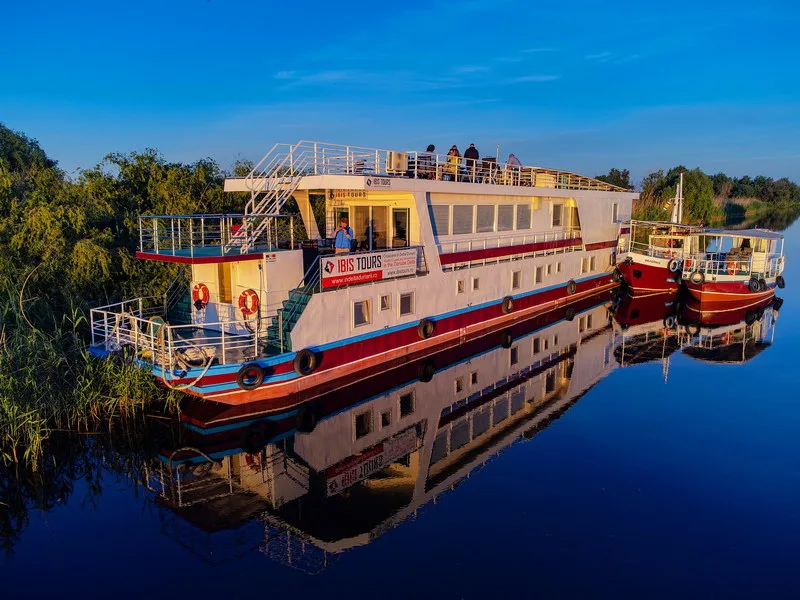
Bee-eaters hunt dragonflies and large insects over the open channels — aerial acrobatics visible from the floating hotel deck.
Overhead wires
Lines of Bee-eaters perching on wires above the bank are a classic delta sight — easy photography from below.
How to See It on Our Tours
All Ibis Tours programmes depart from Tulcea and operate within ARBDD-permitted zones.
4-Day Danube Delta Wildlife Cruise
📅 Days 1–4 — sand bank colonies on delta channelsBee-eater colonies in sandy channel banks are passed daily on all delta cruises. The slow boat speed and quiet engine approach allows prolonged observation of birds at the nest entrances — often within 20m.
View tour details → Photography FocusWildlife Photography Tours
📅 Colony sessions (all days)Photo tours stop opposite active colonies for extended sessions — bee-eaters return to perches predictably after each hunting flight, giving repeated flight-sequence opportunities.
View tour details →Behaviour & Ecology
Bee-eaters are aerial hunters, catching insects in flight and returning to a perch to process and eat them. Despite the name, they take a wide variety of large insects — dragonflies, wasps, moths, butterflies, and beetles in addition to bees. The prey is struck against the perch to remove stingers before eating. Nesting is colonial: pairs excavate a horizontal burrow 50–60 cm long in soft vertical banks, with an egg chamber at the end. The colony is surprisingly quiet except during incubation relief and food delivery. Pre-migratory congregations in August see hundreds of birds gathering on overhead wires before departure — one of the most atmospheric wildlife spectacles of the late delta season.
🛡 Conservation Status
Currently Least Concern (LC) globally and expanding its range northward in Europe as climate change shifts the suitable zone. Romania remains a core stronghold, with Dobrogea and the delta among the most productive areas. The species requires intact sandy banks and open hunting habitat — both well-preserved in the Danube Delta Biosphere Reserve.
Photography Guide
Bee-eaters are among the most rewarding photographic subjects in Europe for one simple reason: they return to the same perch repeatedly after each hunting foray. You have unlimited time to compose, wait for the right light, and select the moment.
📸 Photography Tips
- Perch shots: Identify a regularly used perch and position yourself below it for upward shots. The bird will return within 30–60 seconds of a successful hunt.
- Background: Blue sky backgrounds for perch shots can work well with backlit plumage. Reed or foliage backgrounds give more natural images.
- Colony: Early morning at the colony gives the most activity — pairs returning to burrows, chicks calling at the entrance, aerial hunting above the bank.
- Lens: 400–500mm for perch shots. 500mm+ for flight shots.
- Flight shots: Bee-eaters fly in predictable patterns between the colony bank and hunting territory. Pre-focus on a known flight line and use continuous AF.
See It With Expert Guides
European Bee-eater colonies are visited on the Caraorman excursion (Day 2–3 of both cruise programmes). Pre-migratory August gatherings are one of the delta's most spectacular late-season sights.