
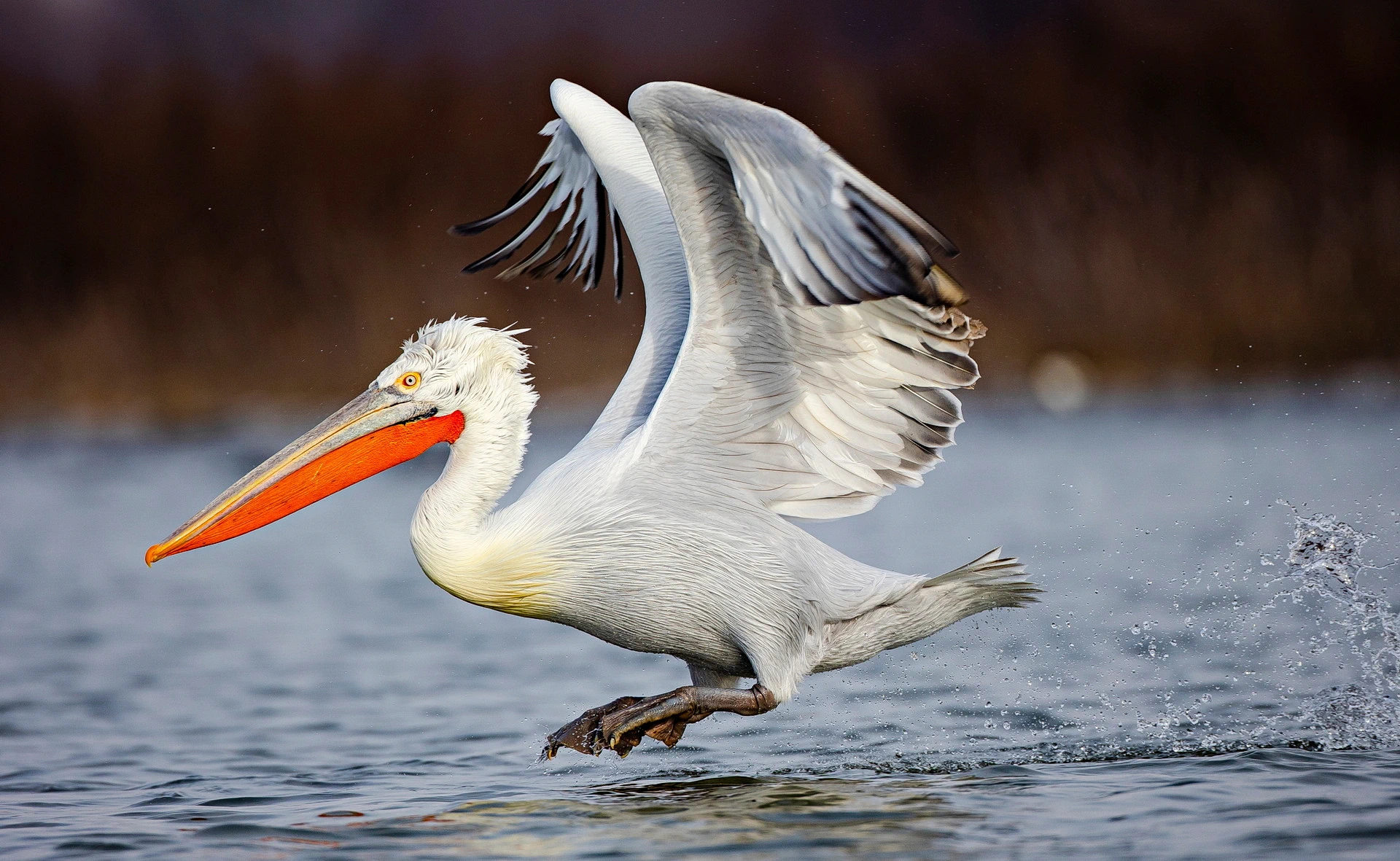
The Dalmatian Pelican (Pelecanus crispus) is the largest pelican species in Europe and an excellent indicator of healthy wetland ecosystems. In the Danube Delta it is present mainly during the warm season, using expansive lakes, shallow canals and reed zones for resting and feeding. Quick identification: massive body; greyish-white plumage; in breeding season, curly feathers on the nape with yellowish tones; very large bill with gular pouch; powerful flight with slow wingbeats and long glides. Ecology: feeds almost exclusively on fish, caught by active surface fishing or in shallow water. Prefers fish-rich waters and undisturbed areas with low boat traffic. In the Danube Delta: one of the best regions in Europe for observation; early mornings and evenings on open lakes and wide channels offer excellent photography opportunities. Conservation: species of European conservation concern; main threats include disturbance during sensitive periods, habitat degradation and fluctuations in fish stocks. Responsible observation (keeping distance, avoiding colonies) increases the chance of seeing natural behaviour.
Identification
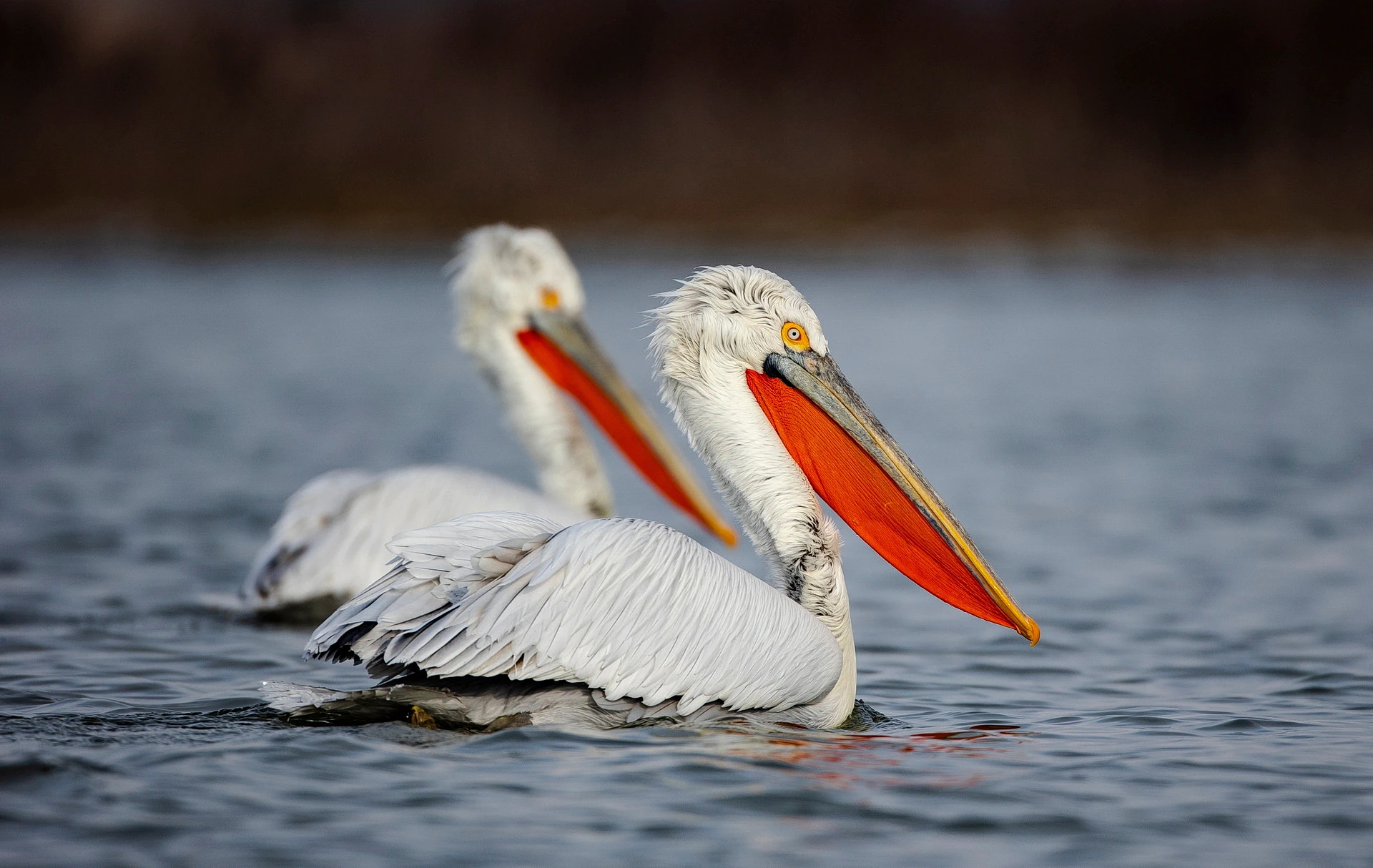
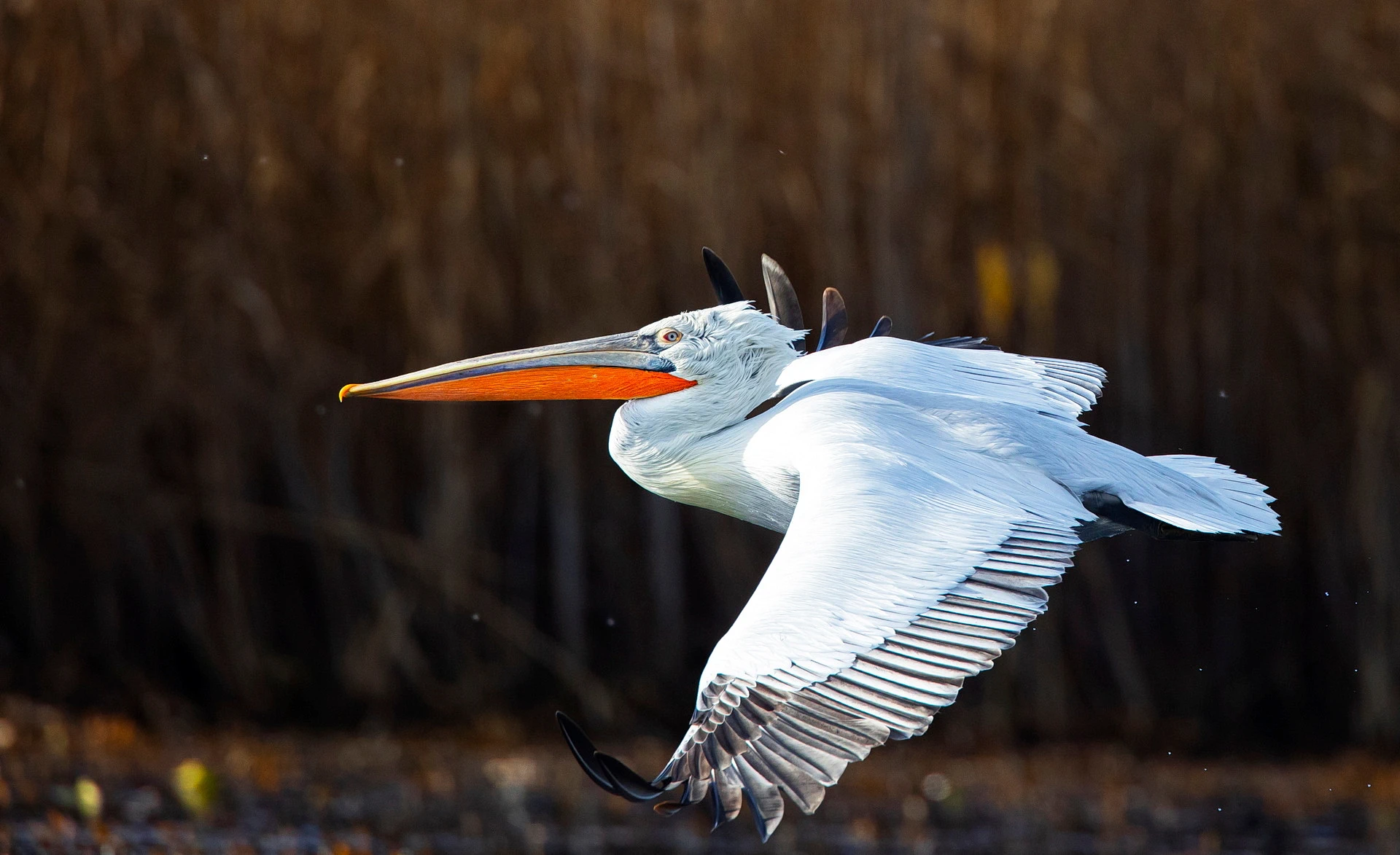
The Dalmatian Pelican is the world's largest pelican. At rest it can be confused with the Great White Pelican, which also breeds in the delta. The key distinction is the curly crest — Dalmatian has tight, curly white feathers on the nape; Great White has a flat, smooth head. In flight, Dalmatian shows grey primaries and secondaries (white in Great White).
Field Marks at a Glance
Confusion species: Great White Pelican (Pelecanus onocrotalus) — both breed in the delta. The curly crest and grey flight feathers confirm Dalmatian at any range.
When to See It in Romania
The Dalmatian Pelican arrives from wintering grounds (Turkey, Greece) in late February–March. Breeding peaks April–June. By October most birds have departed southward.
Monthly Presence & Abundance
Where to See It
Dalmatian Pelicans concentrate in the strictly protected UNESCO core zones — areas requiring a licensed naturalist guide and ARBDD permit. Ibis Tours holds all permits and operates within these zones under responsible wildlife protocols.
Sireasa — Lac Nebunu
The western delta's most important pelican area. Open lakes with shallow margins where pelicans fish cooperatively. Dawn access is critical.
Lac Furtuna
Large open lake with pelican roost of 500–1,000 birds. Best in early morning before day-trip boats disturb the area.
Canal Sontea
Narrow channel connecting core lakes. Pelicans use the canal for individual fishing — often passes within 15–20m of the motorboat.
Nesting islands
Remote vegetated islands in the strictly protected core. Approached to 200m minimum, engine off, with licensed guide.
How to See It on Our Tours
All Ibis Tours programmes depart from Tulcea and operate within ARBDD-permitted zones.
4-Day Danube Delta Wildlife Cruise
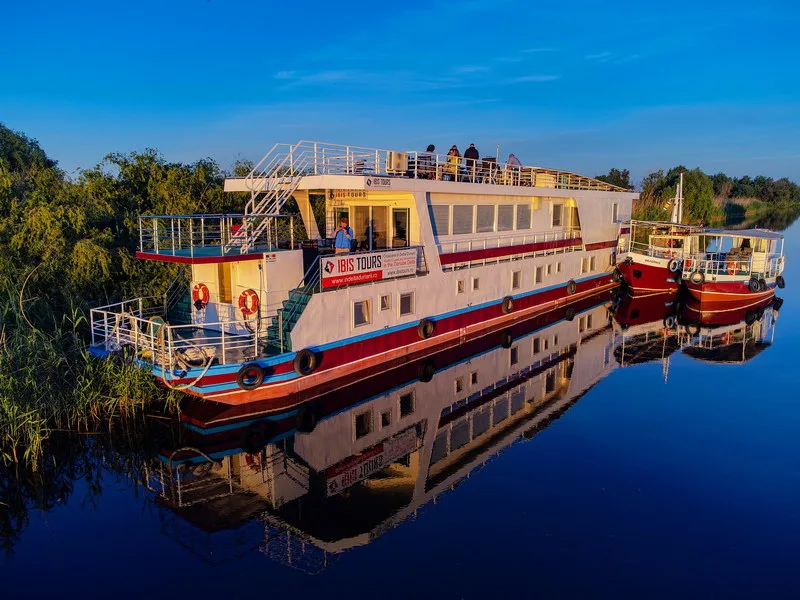
📅 Days 2–3 — open lake crossings at dawnCore-zone access on Lac Nebunu and Lac Furtuna gives close views of cooperative fishing groups (15–30 m). The floating hotel's overnight permit means you're positioned at the lakes before day-trip boats arrive — critical for the best pelican encounters.
View tour details → More Time5-Day Extended Cruise
📅 Days 2–4 — multiple visits to core zonesTwo additional days allow return visits to the best pelican lakes in different weather and light conditions. Includes Letea Forest stop, often with pelicans along the Sulina channel.
View tour details →Behaviour & Ecology
The Dalmatian Pelican is highly social, breeding colonially and fishing cooperatively. Groups of 10–50 birds herd fish into shallow water, then simultaneously dip their bills — a dramatic spectacle visible from the motorboat. Adults in breeding plumage develop a vivid orange-red throat pouch and a blood-red spot at the tip of the bill. The wingspan up to 3.5 metres makes this species unmistakable in flight, particularly when thermal-soaring in groups over the delta in warm afternoon air.
🛡 Conservation Status
Listed as Vulnerable (VU) on the IUCN Red List. Global population ~12,000 pairs. The Danube Delta hosts one of the most important Dalmatian Pelican colonies in Europe, contributing significantly to the global breeding population estimated at approximately 10,000–15,000 pairs. The species has recovered from a low of ~1,000 pairs in the 1980s through strict protection. Ibis Tours applies a non-disturbance protocol at all colony approaches: engine cut at 200m, no vessel movement until birds resume normal behaviour.
Photography Guide
The delta offers unrivalled pelican photography access — large cooperative groups, close approach distances, and dramatic morning light over the open lakes.
📸 Photography Tips
- Lens: 300–500mm covers most colony and fishing shots. Isolated individuals at 20m can fill the frame with 200mm.
- Timing: Dawn (first 90 minutes) gives the best light. For flight shots, mid-morning thermals carry groups overhead.
- Settings: 1/2000s or faster for flight. Push ISO to 800–1600 in flat morning light rather than underexposing.
- From the boat: Use a beanbag on the gunwale. Wait for the bird to turn toward you.
- Behaviour: Cooperative fishing sequences last 3–5 minutes and are predictable — pre-focus on the group and shoot bursts.
See It With Expert Guides
The Danube Delta's Dalmatian Pelican colonies are accessible only from a vessel with overnight ARBDD permits. Ibis Tours operates the only 4-star floating hotel in the delta — with core-zone permits since 1995.