
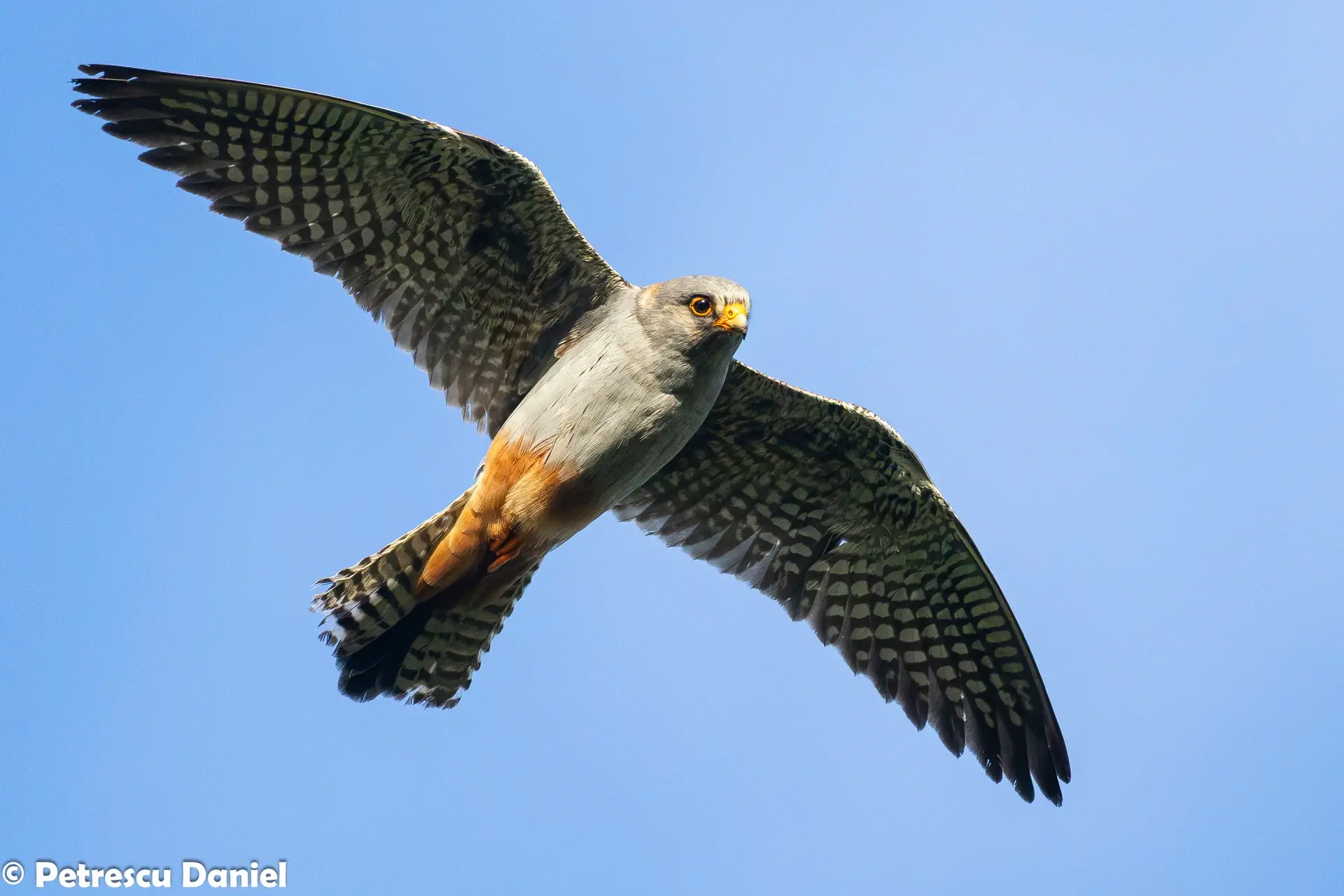
The Red-footed Falcon (Falco vespertinus) is a migratory species of conservation concern, associated with open habitats and colonial nesting in rookeries (using existing crow and rook nests). In Romania it can be observed during the warm season, particularly in agricultural areas and grasslands adjacent to wetlands. Identification: male is slate-grey with red-orange feet and vent; female and immature have orange-buff crown and underparts with dark eye-mask. Smaller and more buoyant in flight than Kestrel. Ecology: hunts large insects (especially beetles, crickets and dragonflies) in flight or from a hovering perch; forms post-breeding flocks before migration. In Romania: Dobrogea and the Danube Delta area are among the most reliable European sites; large flocks can gather in late summer before southward migration. Conservation: Near Threatened (IUCN); declining due to loss of colonial nesting sites, reduction in insect prey through pesticide use and hunting pressure on migration.
Identification
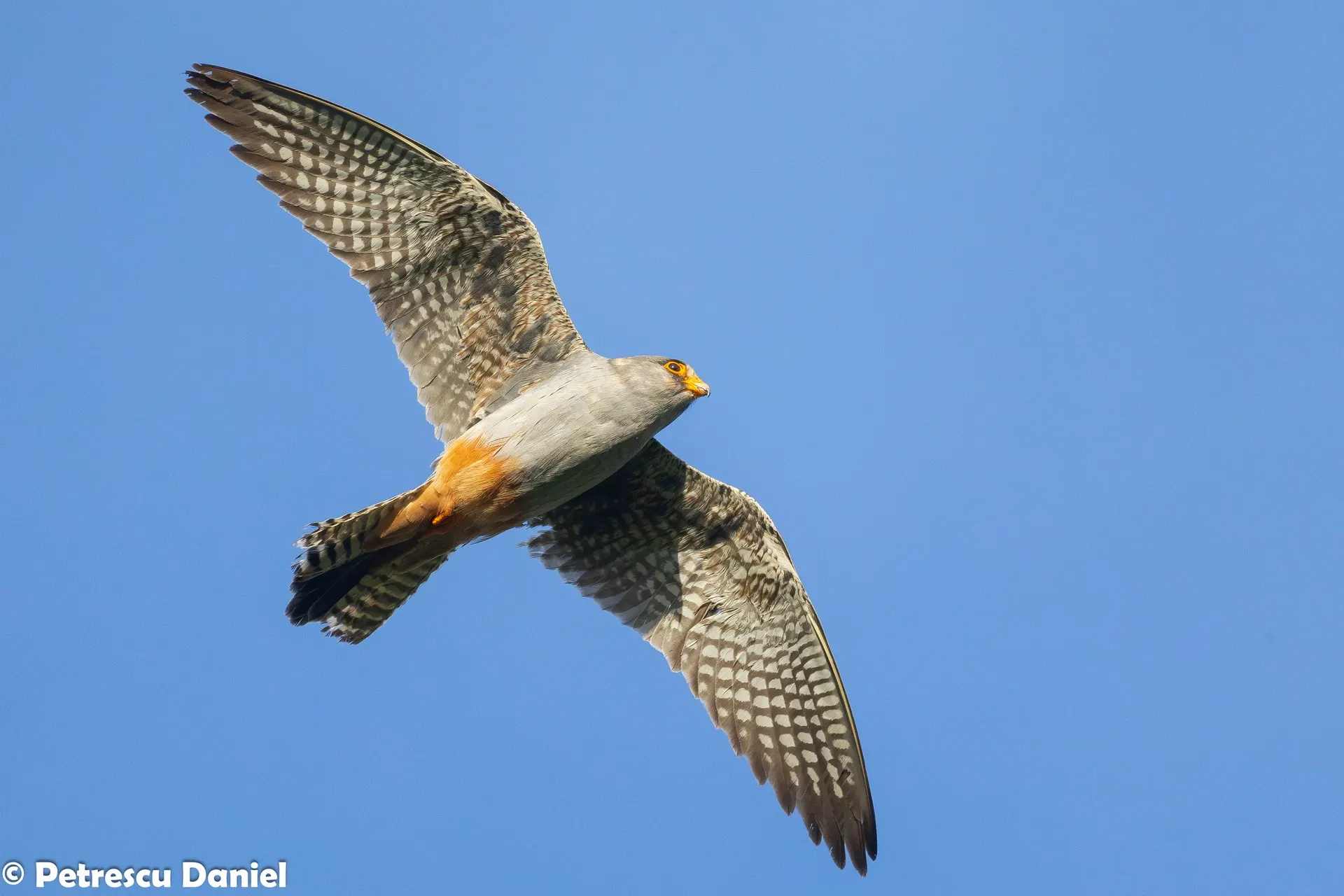
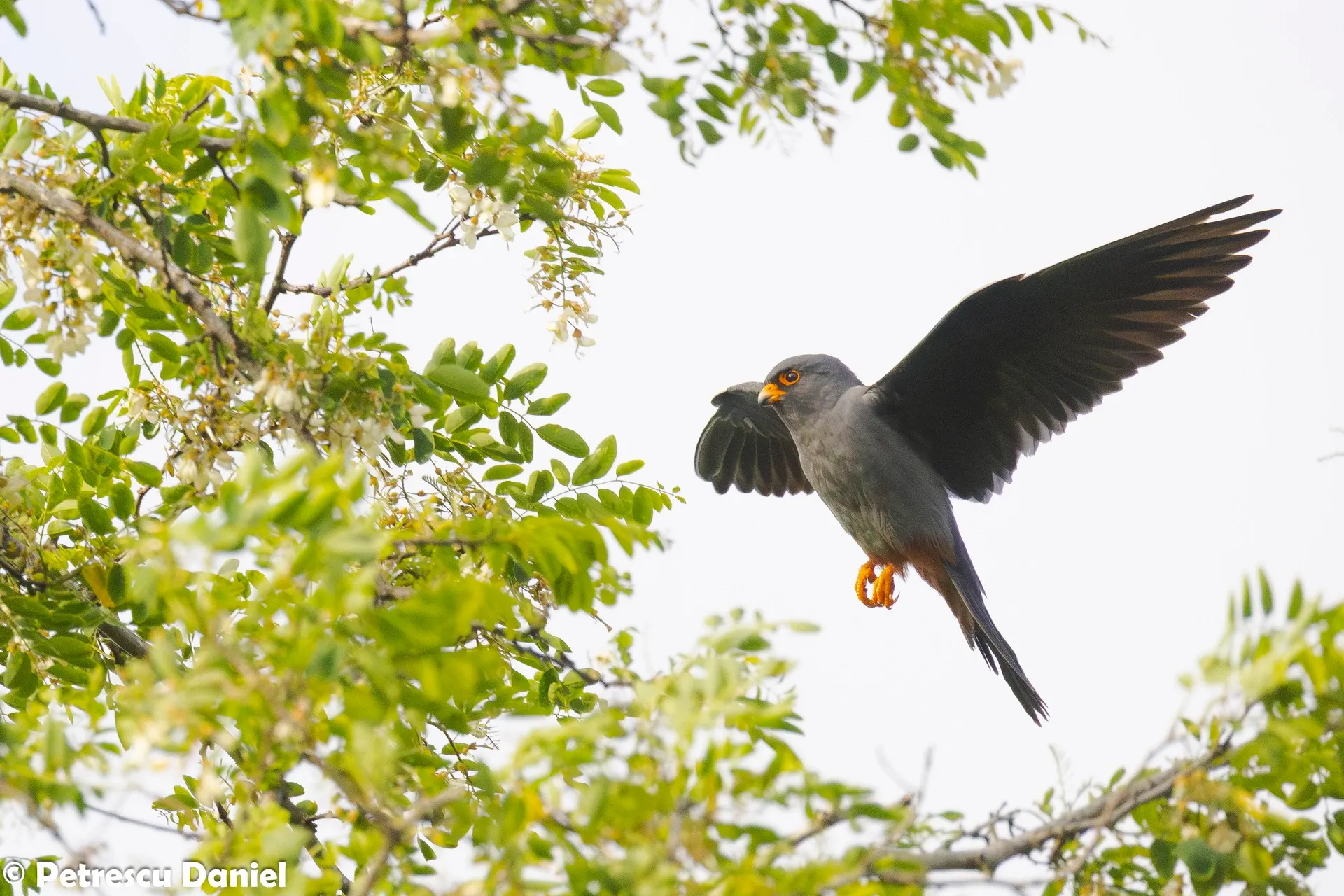
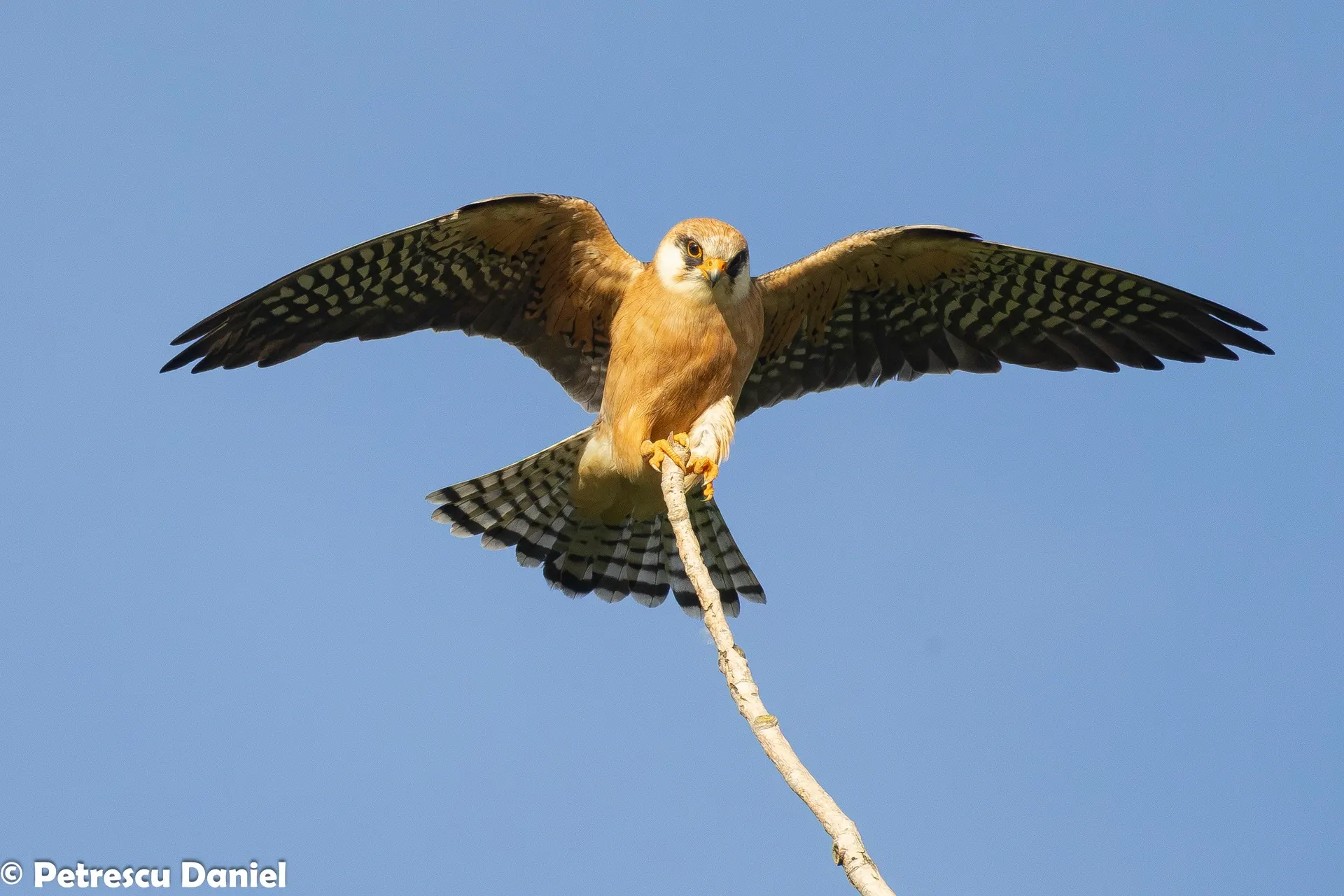
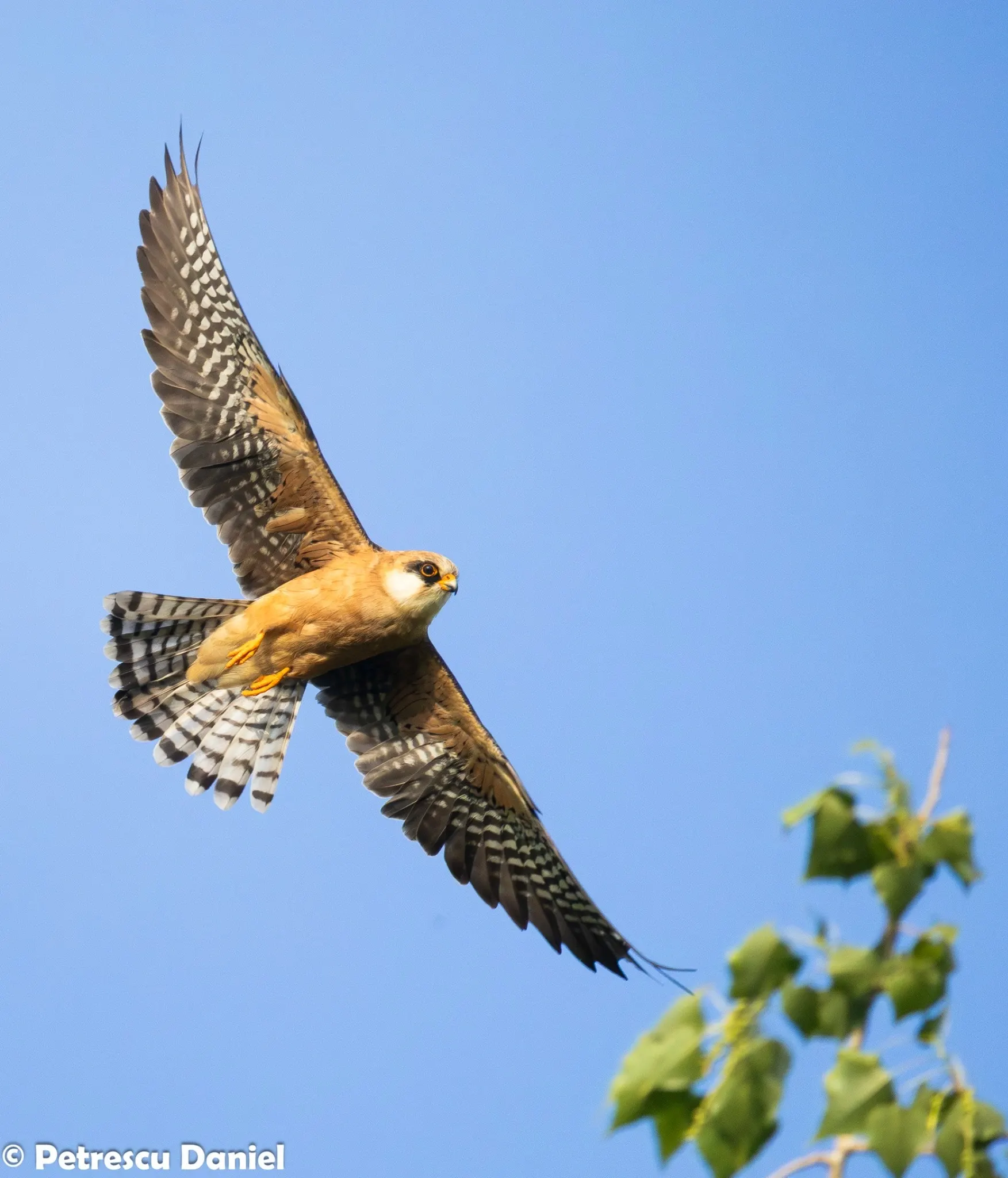
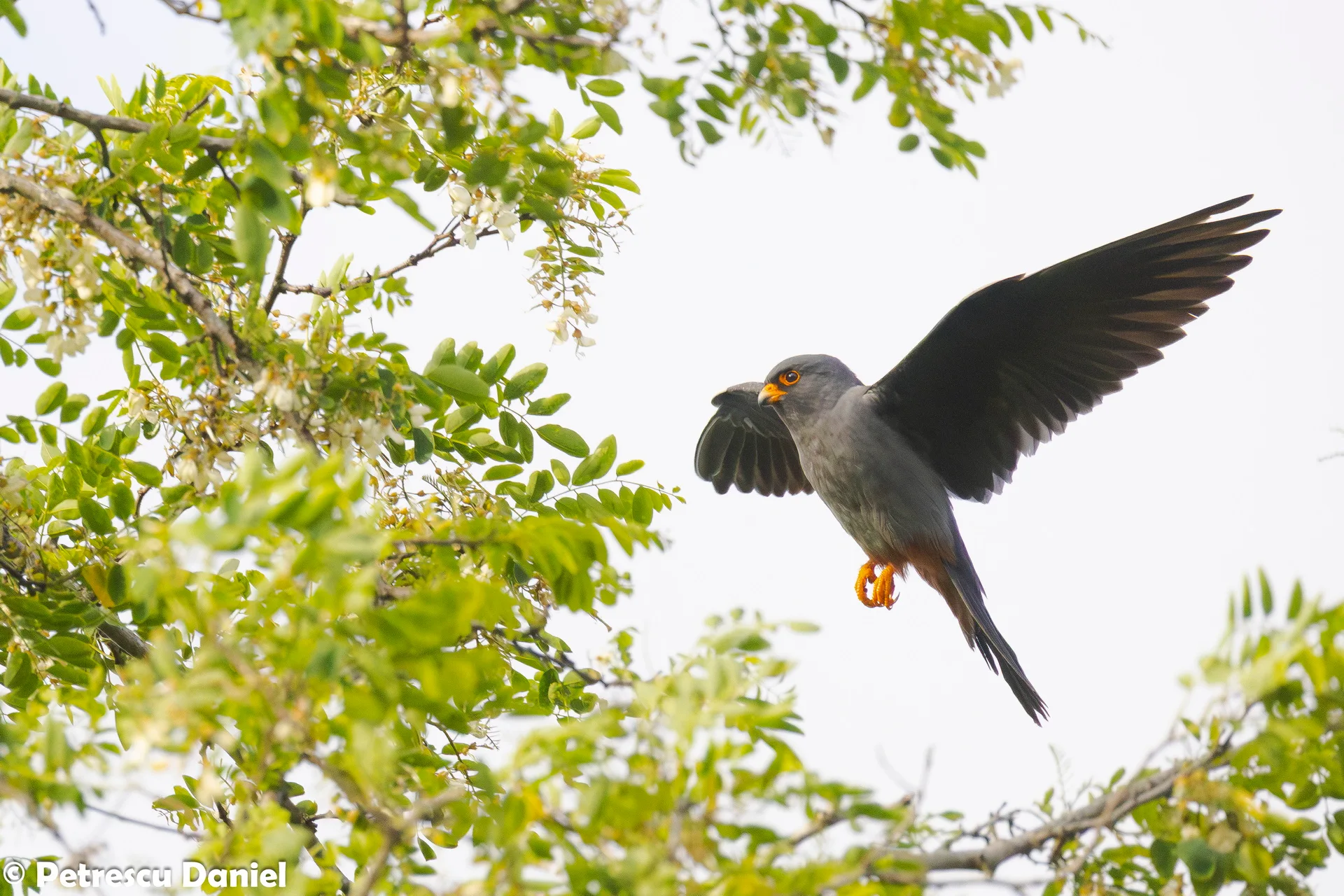
A medium-small, long-winged falcon — similar in build to a Hobby but less contrasted. The adult male is unmistakable: blue-grey with bright orange-red feet and cere. The female is beautifully patterned with orange-buff crown, pale grey upperparts, and spotted underparts. Both sexes have a buoyant, kestrel-like flight with frequent hovering.
Field Marks at a Glance
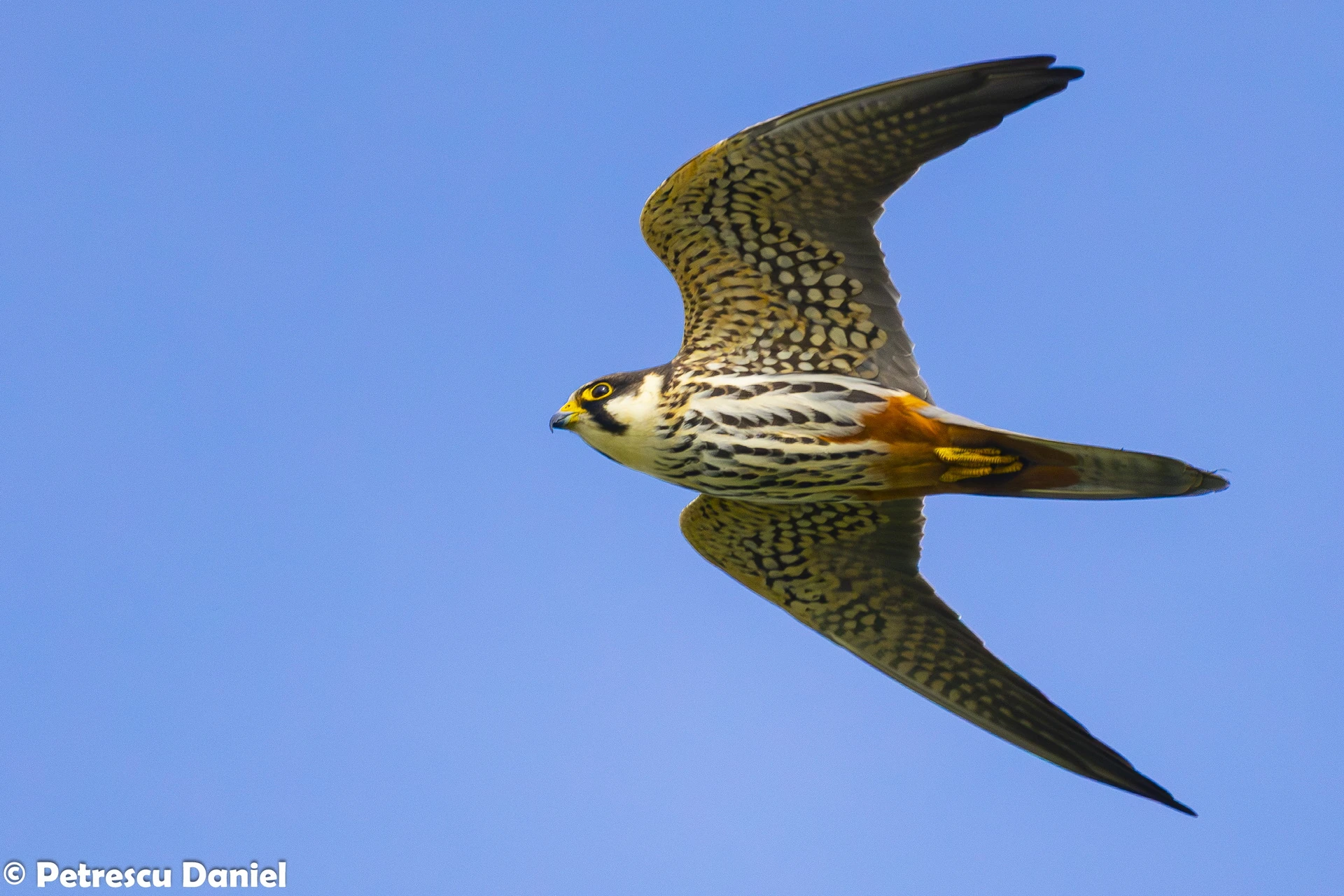
Confusion species: Eurasian Hobby (Falco subbuteo) is similar in size and silhouette. Adult male Red-footed is blue-grey (not dark slate/black above). Female Red-footed has the distinctive orange-buff crown absent in Hobby. Kestrel is larger with longer tail and different hovering posture.
When to See It in Romania
Red-footed Falcons are migratory visitors to Romania, arriving from sub-Saharan Africa in late April–May. Breeding birds are present through July. Autumn passage (August–September) brings large aggregations at traditional roost sites. Most birds depart by October.
Monthly Presence & Abundance
Where to See It
Red-footed Falcons favour open, lightly-wooded country — steppe grassland, arable fields, and the open margins of wetlands. They nest colonially in old Rook or Magpie nests in isolated trees. The Dobrogea region is the primary area in Romania.
Dobrogea plateau
Primary habitat. Breeding pairs in isolated trees and small copses across the steppe. Hunting insects in the open fields throughout the day.
Open land adjacent to the delta
Small groups and pairs visible along the roadsides between Tulcea and the delta, particularly in May–June.
Autumn communal roosts
August–September communal roosts in trees and reedbeds can hold 50–500+ birds. Traditional sites are known to local guides.
Rook colony sites
Breeds in disused Rook nests — finding active Rook colonies in spring is the key to locating Red-footed Falcon breeding pairs.
How to See It on Our Tours
All Ibis Tours programmes depart from Tulcea and operate within ARBDD-permitted zones.
4-Day Danube Delta Wildlife Cruise
📅 Days 1 & 4 — Dobrogea agricultural areasRed-footed Falcons are seen on the Dobrogea agricultural plains during the overland transfers on Days 1 and 4. Large communal roosts in roadside trees are sometimes observed in May and August during migration. The delta proper also has scattered breeding pairs.
View tour details → Migration HotspotsBirding Romania — Complete Guide
📅 May migration peakThe Dobrogea plateau is one of Europe's best Red-footed Falcon migration watchpoints — up to 200 birds in a single tree at peak migration.
View tour details →Behaviour & Ecology
The Red-footed Falcon is primarily an insect hunter, catching large insects (beetles, orthoptera, dragonflies) in flight or pouncing on them on the ground. Unlike most falcons, it frequently hunts on foot, running across short grass in pursuit of prey. In May–June, pairs are conspicuous around colony trees, perching on wires and fence posts throughout the day. Autumn passage brings the species together in loose, wandering flocks — sometimes mixing with Hobbies and other falcons at productive insect concentrations. The aerial courtship of breeding males in May — buoyant, circling displays above the nest tree with rapid wingbeats — is one of the most elegant raptors displays in Europe.
🛡 Conservation Status
Currently Near Threatened (NT). The global population has declined significantly since the mid-20th century due to agricultural intensification — loss of large insects (its primary prey), destruction of Rook colonies (its primary nest sites), and pesticide use. Romania, Hungary, and Bulgaria hold the most important remaining European breeding populations. Any improvement in agricultural practices that benefits insects and maintains small wooded areas in steppe habitats will benefit this species.
Photography Guide
The Red-footed Falcon is an outstanding photography subject — small, approachable, and often perching on exposed wires and posts in good light.
📸 Photography Tips
- Adult male: The blue-grey and orange-red combination is most spectacular in May morning light. Males perch conspicuously near the nest. Early morning gives the best colour rendering.
- Perch shots: Wire-perched birds are the most accessible. Drive slowly along Dobrogea roads in May–June and scan wires. Birds often allow vehicle approach to 10–20m.
- Adult female: The orange-buff crown and patterned face make the female almost as striking as the male. Early morning light enhances the warm tones.
- Lens: 400–500mm for wire birds. Hovering birds can be approached more closely — 300mm usable.
- Autumn passage: August–September roosting flocks in good numbers — use a roost site known to your guide and photograph the pre-roost gathering at dusk.
See It With Expert Guides
Red-footed Falcon is reliably seen on May and June departures in the Dobrogea steppe and delta margins. The Ibis Tours driver-guide includes roadside scanning on the Tulcea transfer.