
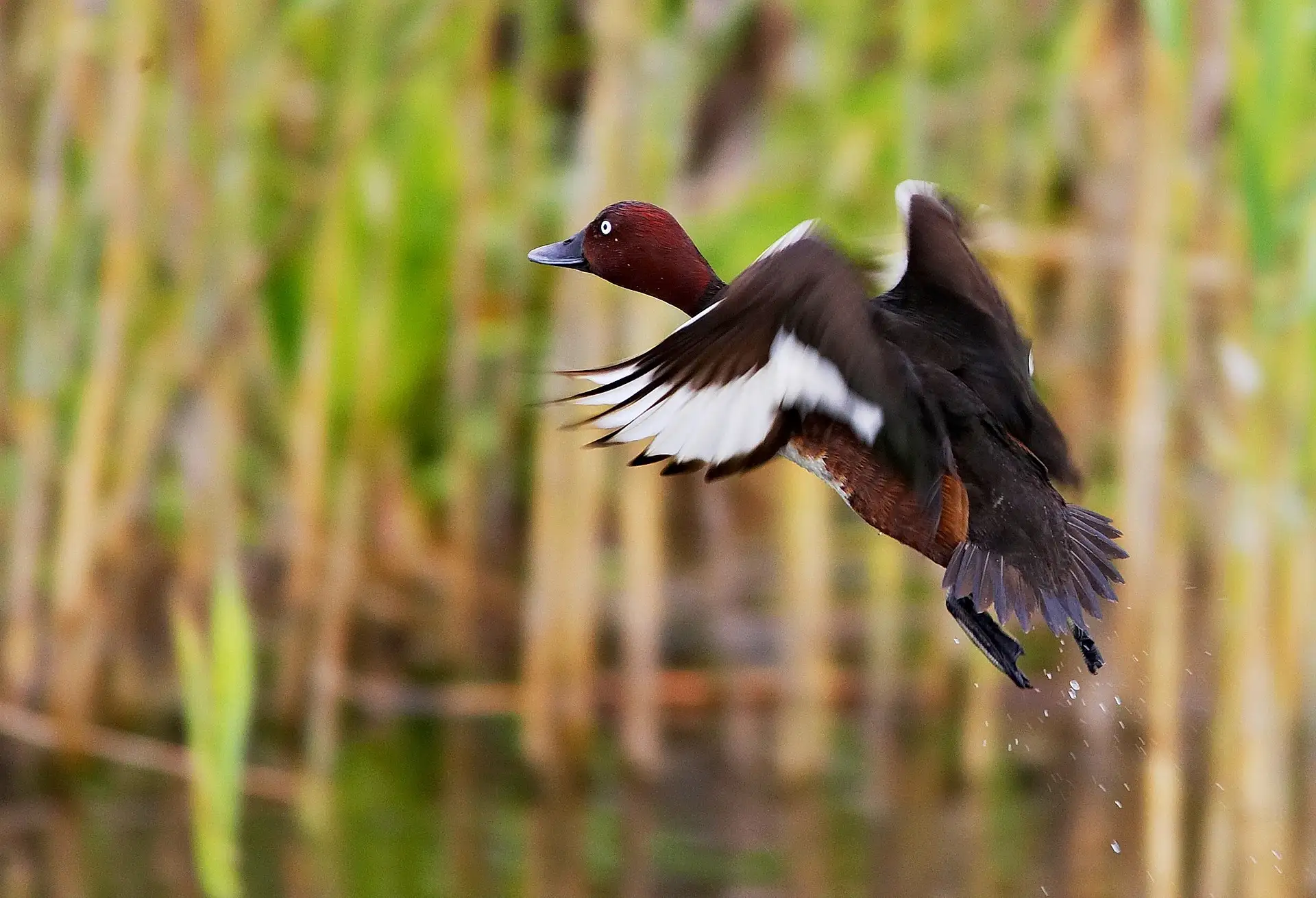
The Ferruginous Duck (Aythya nyroca) is a diving duck associated with lakes with abundant vegetation, calm waters and well-preserved wetlands. In Romania it is of conservation concern, and the Danube Delta provides suitable habitat during the warm season and on migration. Identification: male has deep chestnut-red head and body, white eye, white undertail coverts — diagnostic; female and immature are duller brown but retain the white undertail. White wing-bar visible in flight. Ecology: dives for aquatic plants, invertebrates and small fish in vegetated lakes; nests in dense emergent vegetation. In the Danube Delta: found on lakes with submerged and floating vegetation; often seen in small groups, sometimes alongside other diving ducks. Conservation: Near Threatened globally; vulnerable to loss of shallow vegetated wetlands, hunting pressure and predation at nest sites.
Identification
The male Ferruginous Duck is distinctive — deep chestnut-mahogany overall, with a striking white eye and a white vent clearly visible when the tail is raised. At rest it sits low in the water with a peaked crown. The female is duller brown but retains the white eye and white vent. Both sexes show a white wingbar in flight.
Field Marks at a Glance
Confusion species: Tufted Duck (Aythya fuligula) female can superficially resemble female Ferruginous, but Tufted is larger, broader, has a different head shape, and lacks the clean white eye and white vent of Ferruginous.
When to See It in Romania
The Ferruginous Duck is mainly migratory in the delta, though some birds overwinter in mild years. The main breeding population is present April–September, with males most visible during courtship in April–May before females begin incubation.
Monthly Presence & Abundance
Where to See It
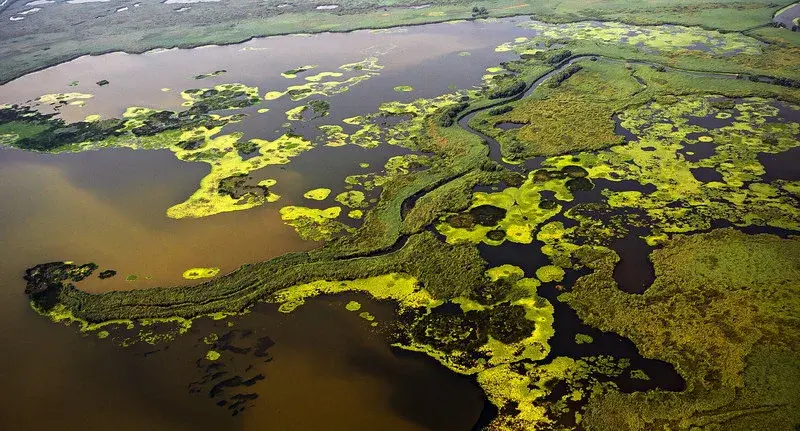
The Ferruginous Duck requires dense aquatic vegetation, particularly the floating islands (plauri) unique to the Danube Delta. The core UNESCO zones — accessible only with an ARBDD permit and licensed guide — hold the highest densities.
Canal Magearu floating islands
The most reliable location in the delta. Males visible on open water at the edge of plauri. Approached slowly, engine cut, with the licensed guide.
Sireasa–Sontea lakes
Smaller numbers but regularly present in the reed margins. Often found alongside Tufted Duck.
Deep reed channels
In June–July during incubation, females are largely invisible in deep reed. Males disappear into eclipse plumage. Sighting rates drop after May.
Delta open water
Small numbers winter in the delta in mild years — Lac Roșu and similar open-water areas in January–February.
How to See It on Our Tours
All Ibis Tours programmes depart from Tulcea and operate within ARBDD-permitted zones.
4-Day Danube Delta Wildlife Cruise
📅 Days 2–3 — open delta lakesFerruginous Ducks concentrate on the quieter open lakes in the delta core — the same areas covered on Days 2–3. The species is often found in small groups loafing on lake margins or diving in shallow water near the reeds.
View tour details → More Locations5-Day Extended Cruise
📅 Days 2–4 — extended lake coverageThe 5-day itinerary covers a wider range of delta lakes with higher probability of locating this scarce diving duck.
View tour details →Behaviour & Ecology
The Ferruginous Duck is a diving duck, pursuing aquatic invertebrates, plant seeds, and small fish by propelling itself with its feet underwater. It is notably shy compared to other Aythya ducks — at the slightest disturbance it dives or skulks into vegetation rather than flushing openly. Males are most conspicuous during April–May courtship, when the deep chestnut plumage is at its most vivid and males display actively to females on open water. By June, males enter eclipse plumage and become considerably harder to identify — the white eye and white vent remain but the overall plumage becomes duller brown.
🛡 Conservation Status
Listed as Near Threatened (NT) by IUCN. The global population has declined by an estimated 30% over three generations, primarily due to drainage of breeding wetlands across Eastern Europe, hunting pressure on wintering grounds, and degradation of wintering sites. Romania, and specifically the Danube Delta, is one of the species' most important remaining breeding strongholds in the EU. Ibis Tours' strict no-disturbance protocol in the core zones — engines cut before approach, minimum 30m distance from birds on vegetation — is particularly important for this sensitive species.
Photography Guide
The Ferruginous Duck is a rewarding but challenging photographic subject. The male's vivid chestnut plumage glows in low morning light, but the bird's secretive nature means patience and a good guide are essential.
📸 Photography Tips
- Approach: Cut the engine well before the bird comes into view. Any noise causes the duck to dive or retreat into vegetation. Silent drift is essential.
- Light: Deep chestnut plumage is most vivid in low angled morning light — the first 90 minutes after dawn. Flat midday light flattens the colour.
- Lens: 500mm minimum. These are wary birds at 20–40m, not 5m. A 1.4× extender is useful.
- Water level position: Birds on open water near the plauri edge are the most photographable. The guide knows which channels have these open-water margins.
- April–May: Target this window specifically. After June, eclipse males are much duller and females are largely invisible in deep reed.
See It With Expert Guides
Ferruginous Duck is a Near-Threatened species that requires the quiet, licensed access Ibis Tours provides to the UNESCO core zones. Sighting rates are highest on April and May departures.