
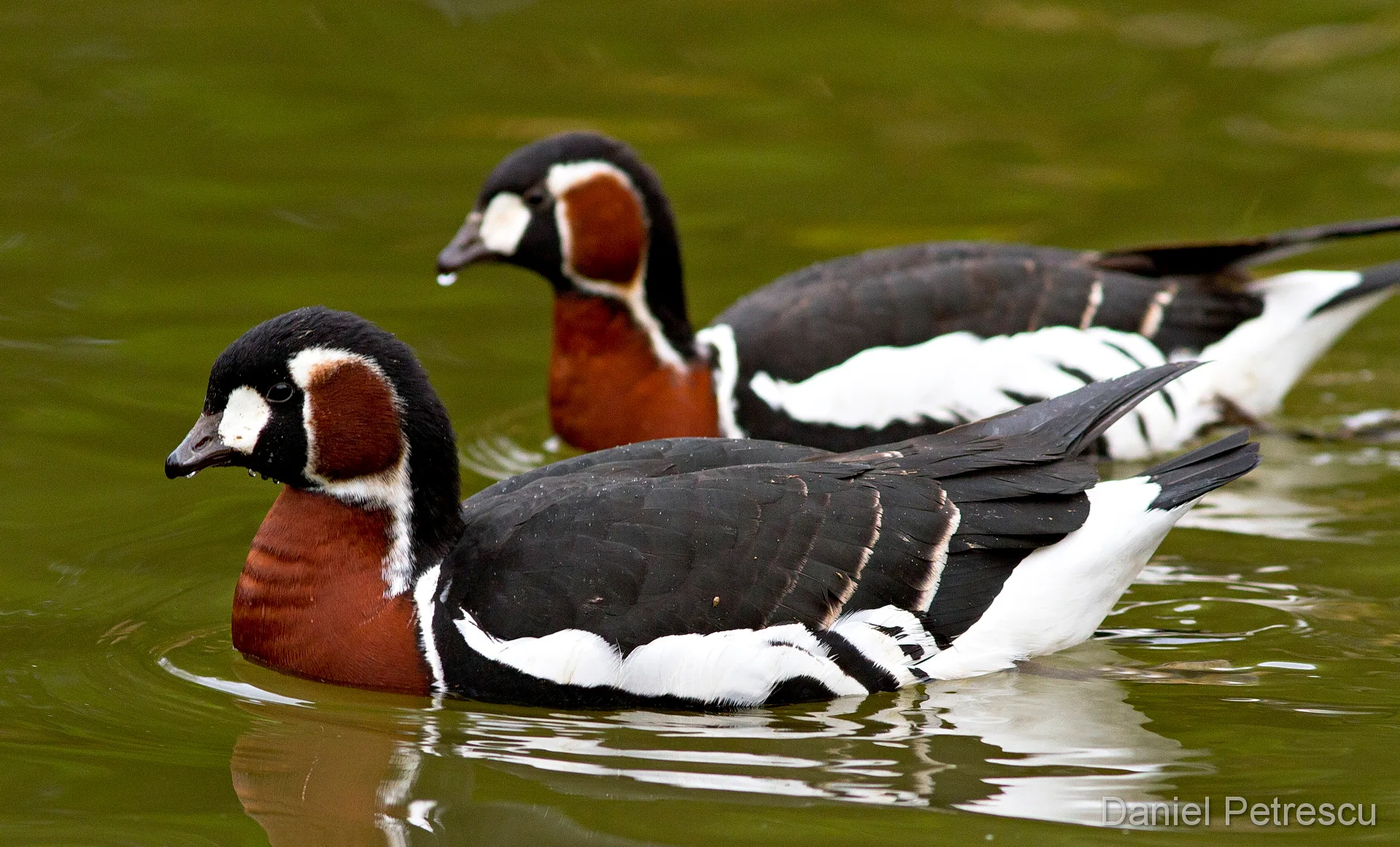
The Red-breasted Goose (Branta ruficollis) is one of the most sought-after winter species in Romania, with an important wintering range in Dobrogea, including the area adjacent to the Danube Delta. It is a globally threatened species, associated with agricultural land (cereals, oilseed rape) and open habitats, often mixing with White-fronted and Lesser White-fronted Geese. Identification: unmistakable at close range — chestnut-red breast and cheek patch outlined in white, black back and belly; small and compact compared with other geese. Bold white flank stripe. Ecology: grazes on stubble, winter crops and grassy fields; roosts on large open water bodies or sandbanks. In Romania: the Dobrogea plateau near the Black Sea coast holds internationally important concentrations from November to March; groups of several thousand birds are regular. Conservation: Vulnerable (IUCN); the global population declined sharply from the 1950s; key threats include illegal hunting on migration and wintering areas, and changes in agricultural land use.
Identification
The Red-breasted Goose is the most vividly patterned goose in the world. No other species has this combination of rich chestnut-red throat and breast, black upperparts, and multiple white markings. At rest in a mixed goose flock, the black-and-chestnut pattern is unmistakable. In flight, the small size relative to the accompanying Brent or White-fronted Geese is also useful.
Field Marks at a Glance
Confusion species: No confusion possible with any other European goose — the chestnut-red breast and cheek patch are unique. In poor light or at long range, size and shape relative to accompanying Greater White-fronted Geese is the first clue. Brent Goose (Branta bernicla) is similar in size but entirely dark without chestnut tones.
When to See It in Romania
Red-breasted Geese are strictly winter visitors to Romania, arriving from Arctic Siberia from late October–November. Peak counts occur December–February. Most birds depart by late March on northward migration. The species is absent entirely from May to October.
Monthly Presence & Abundance
Where to See It
Red-breasted Geese in Romania concentrate at a small number of specific sites — primarily the steppe and agricultural land of Dobrogea (the region between the Danube Delta and the Bulgarian border), and the large lakes adjacent to the delta margin. They do not typically enter the delta itself, preferring open agricultural land for feeding.
Dobrogea plateau
The primary wintering habitat — arable stubble fields and steppe grassland. Flocks of hundreds to thousands visible from roadside vantage points on clear winter days.
Lake Sinoe & Lake Razelm
Large lagoon lakes on the delta margin used for roosting. Pre-dawn and post-dusk movements between roost and feeding areas involve thousands of geese.
Greater White-fronted Goose flocks
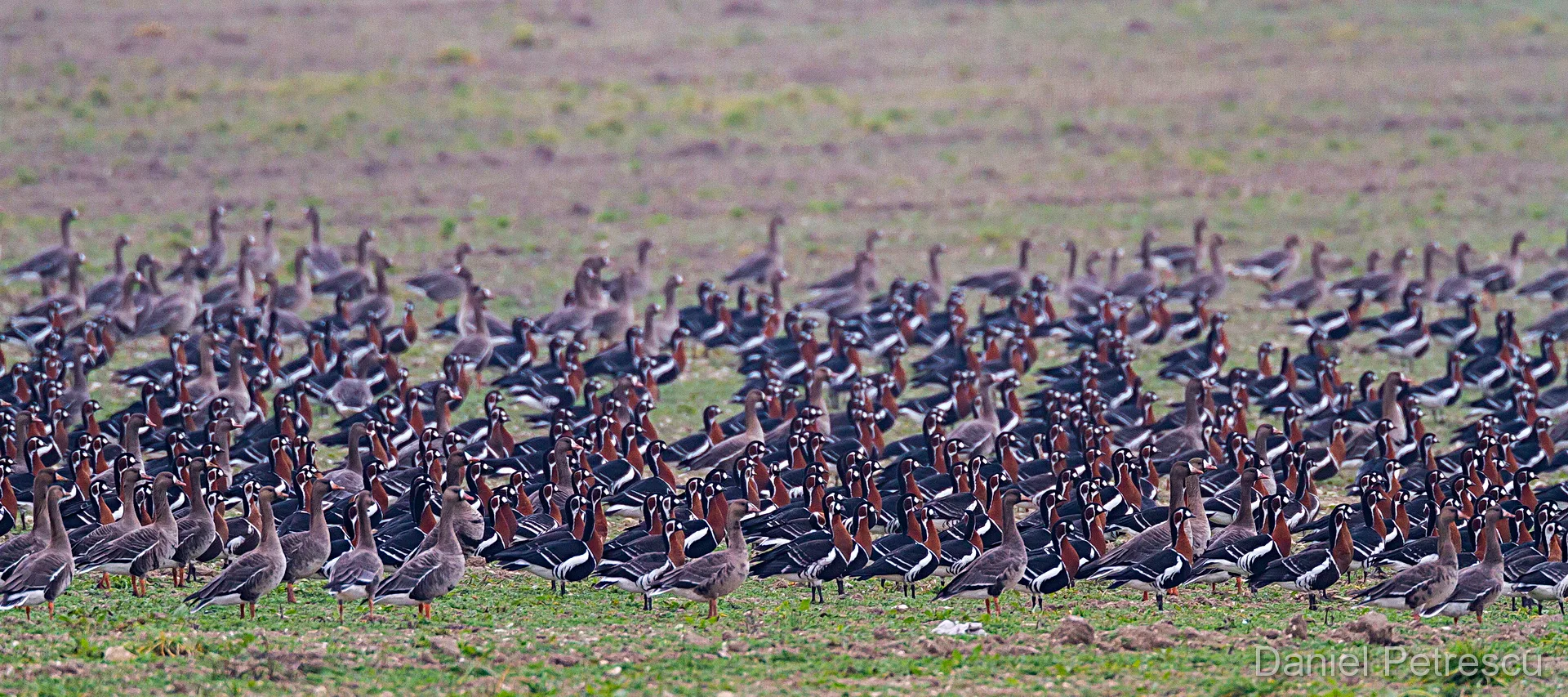
Red-breasted Geese almost always associate with Greater White-fronted Geese. Finding the larger goose flocks is the key to locating them.
Harvested cereal fields
Post-harvest stubble fields provide the primary food source. Flocks shift between fields as food is depleted — local knowledge is essential.
How to See It on Our Tours
All Ibis Tours programmes depart from Tulcea and operate within ARBDD-permitted zones.
4-Day Danube Delta Wildlife Cruise
📅 November–February — winter season toursRed-breasted Geese winter in the delta in mixed flocks with White-fronted Geese on the agricultural plains north of Tulcea. Winter-season cruises target the stubble fields at dawn — flocks of 50–500 birds including Red-breasted among larger goose flocks.
View tour details → Winter BirdingBirding Romania — Complete Guide
📅 December–January peakRead our full Romania birding guide for complete winter itinerary options including Red-breasted Goose sites.
View tour details →Behaviour & Ecology
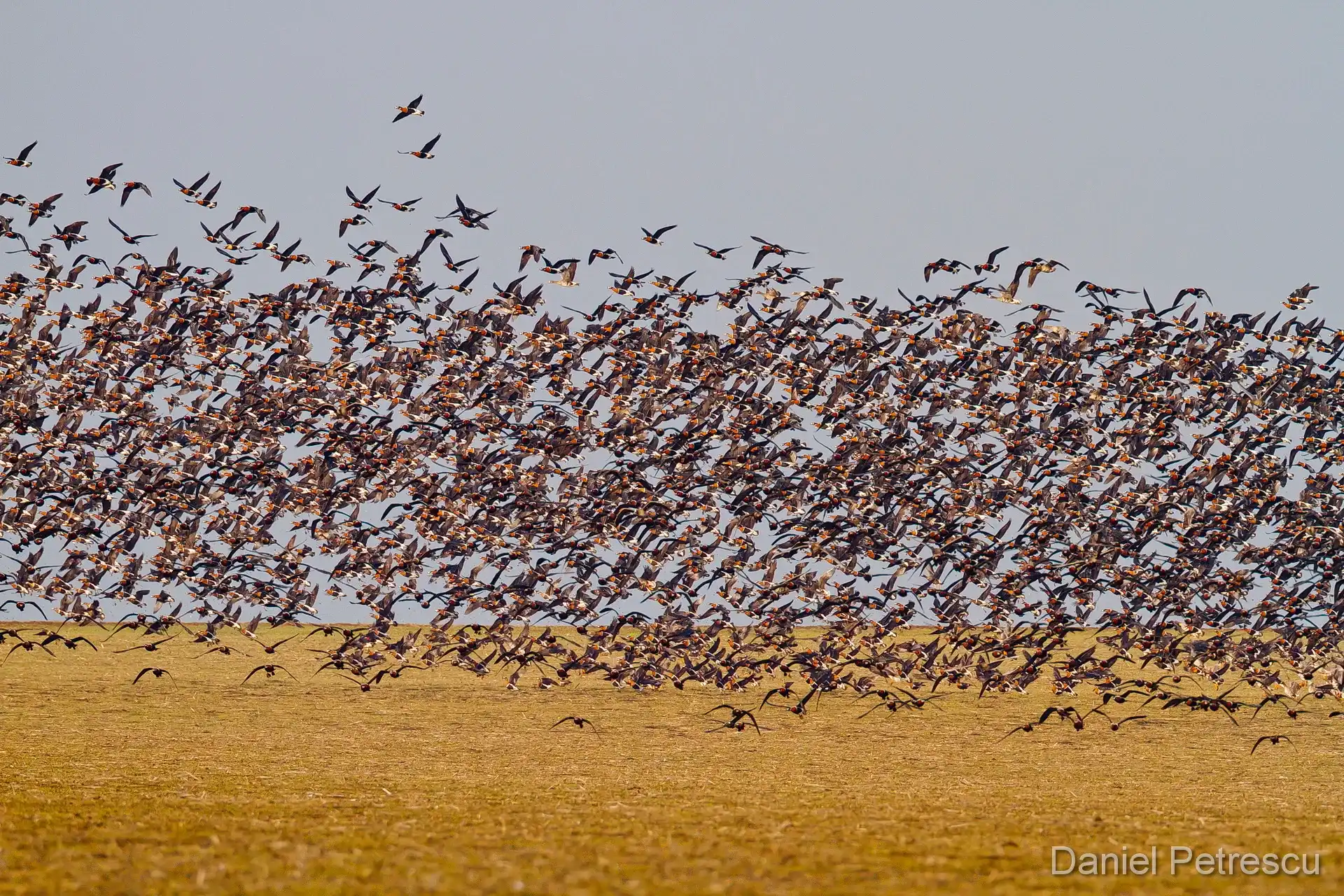
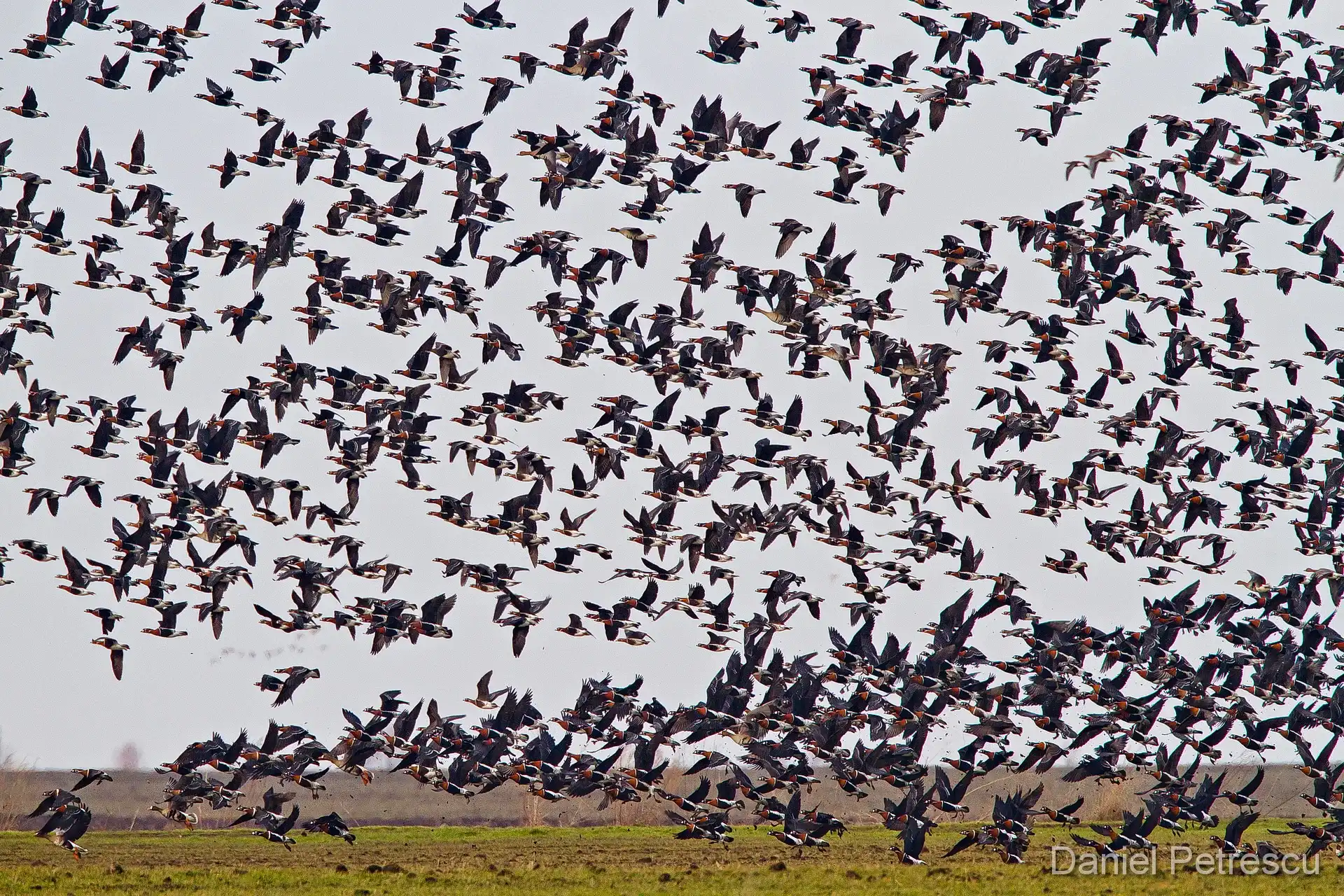
Red-breasted Geese are highly gregarious, almost always seen within mixed flocks of Greater White-fronted Geese which provide cover and early-warning of predators. The association is so consistent that birders locate Red-breasted Geese by first finding White-fronted Goose flocks and searching within them. Daily movements follow a predictable pattern: roost at the lakeside overnight, fly to feeding fields at dawn, return to roost at dusk. The pre-dawn and post-dusk flights can involve thousands of birds in tight skeins over the steppe, one of the most spectacular wildlife movements in European winter. The species has a rapid, direct wingbeat and tends to stay low when moving between fields.
🛡 Conservation Status
Currently Vulnerable (VU) on the IUCN Red List, with the global population estimated at approximately 60,000–80,000 birds. Threats include agricultural change on wintering grounds (loss of stubble fields to intensive management), disturbance at roost sites, and climate change affecting breeding success in the Arctic. Romania and Bulgaria together hold the overwhelming majority of the wintering population, making conservation of Dobrogea steppe habitats internationally critical. Numbers in Romania vary annually — recent winter counts usually range between 8,000 and 24,000 birds.
Photography Guide
The Red-breasted Goose is a winter photography challenge — the birds are shy, the light is low, and the open steppe provides little cover for approach. Specialist winter tours to Dobrogea, combined with vehicle-based observation (geese are more tolerant of stationary vehicles than people on foot), give the best results.
📸 Photography Tips
- Vehicle hide: Geese tolerate a parked vehicle much better than a person on foot. Drive slowly past a flock to assess distance, then stop and photograph from inside. Do not exit the vehicle.
- Lens: 500–600mm minimum for field birds at typical distances. The open steppe means birds are often 100–300m distant. Longer is better.
- Dawn flight: The pre-dawn flight from roost to feeding fields passes over predictable routes. Position before first light at the roost departure point. Geese are silhouetted against the early sky — dramatic even without full colour.
- Light: Winter light in Dobrogea is harsh and low. Overcast days (diffuse light) often produce better results than hard winter sun.
- Season: December–January offers best chances of large flocks and settled birds. Milder winters may reduce numbers.
See It With Expert Guides
Red-breasted Goose is a winter specialist — Ibis Tours' Dobrogea winter birdwatching add-on extends any delta cruise with a morning in the steppe for this globally Vulnerable Arctic visitor.