
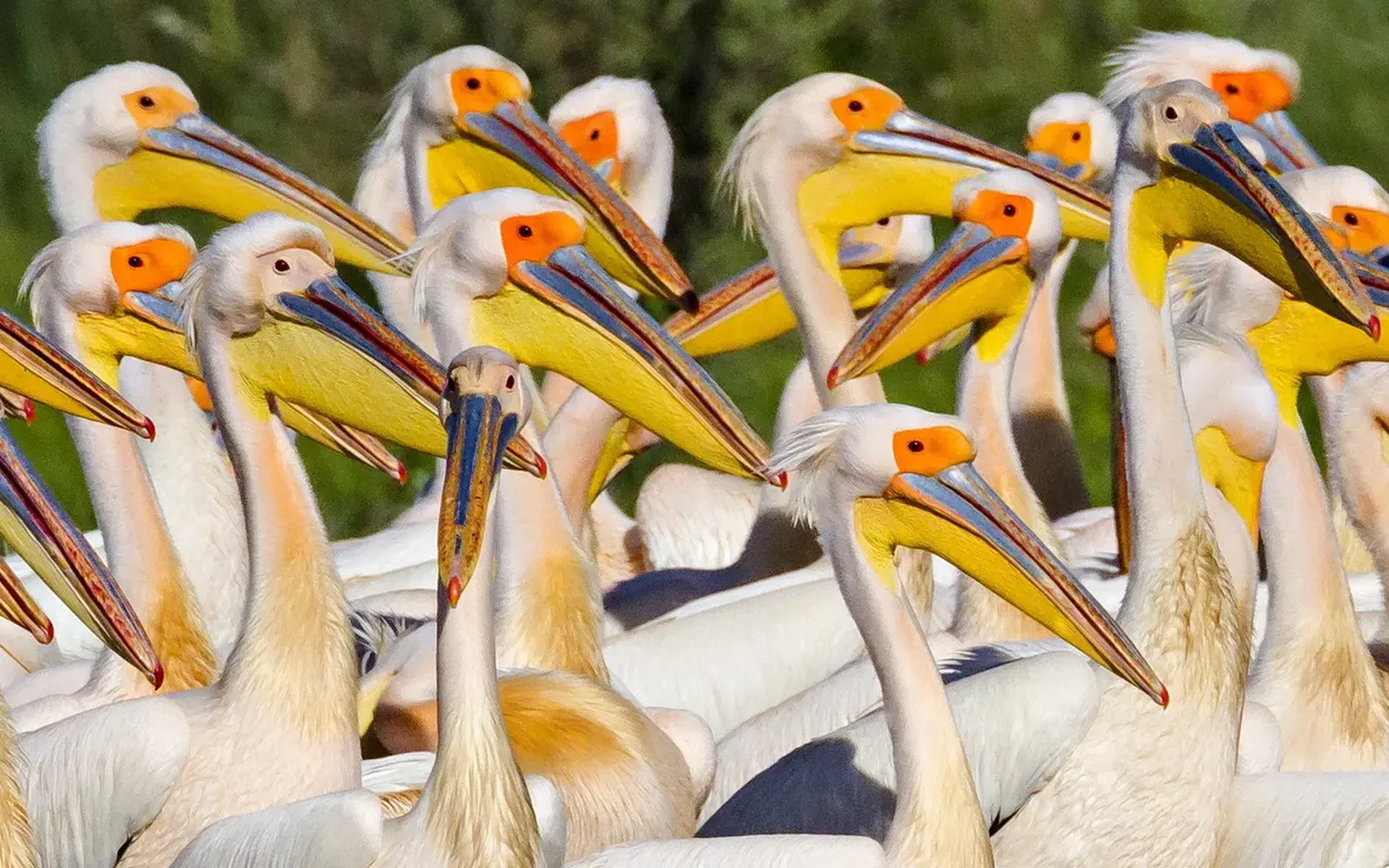
The Danube Delta in early May contains approximately 32,000 pelicans. Two species, nesting simultaneously in the same wetland: the Great White Pelican — 14,000–15,000 breeding pairs, one of the largest colonies of this species in Europe — and the Dalmatian Pelican — 450–500 pairs, representing a significant population of this globally Vulnerable bird.
There is no other place in Europe where you can observe two pelican species at this density. The sheer scale of 32,000 pelicans creates one of the continent's most spectacular wildlife experiences.
This is the story of how that happened, what it looks like when you're there, and what to know before you go.
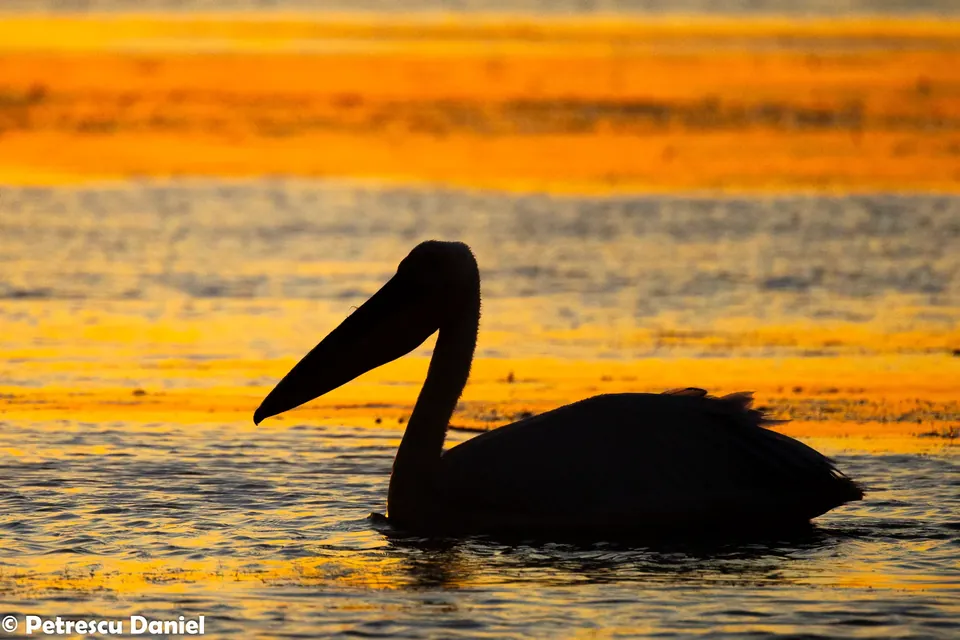
Why the Danube Delta?
Pelicans need three things in combination: safe nesting islands free from terrestrial predators, shallow productive water within flying range of the colony, and large fish populations to support thousands of adults and chicks.
The Danube Delta is one of the few places on Earth where all three exist at scale. The UNESCO strictly protected core zones — covering approximately 50,000 hectares of the most remote, least disturbed wetland — provide nesting islands that have been undisturbed since the protection system was established in 1990. The delta's extraordinary fish productivity (the delta processes the entire Danube catchment, one of Europe's largest rivers) supports pelican feeding within 10–30 km of the colonies. And the sheer scale — 5,800 km² of wetland — buffers the colonies from the effects of water level variation that can catastrophically affect smaller colonies.
The result is a population that has grown substantially over recent decades. The Great White Pelican population of 14,000–15,000 pairs represents one of Europe's largest concentrations, while the Dalmatian Pelican population of 450–500 pairs, though smaller in absolute numbers, represents an important European stronghold for this vulnerable species.
Two Species, One Lake
The Dalmatian Pelican and Great White Pelican coexist in the delta without significant competition, occupying slightly different ecological niches.
The Dalmatian Pelican (Pelecanus crispus) is the larger, heavier species — wingspan up to 3.5 metres, weight up to 13 kg. It is distinguished from the Great White by its grey flight feathers (visible in flight), curly white crest, and pale grey eye. The Dalmatian tends to nest in the most remote, strictly protected core areas and is the species most dependent on the delta's core zone protection.
The Great White Pelican (Pelecanus onocrotalus) is slightly smaller, with bold black flight feathers that create the unmistakable 'flying cross' wing pattern. It has a smoother head, darker eye ring, and is slightly more tolerant of human presence. Great White Pelicans are visible even from the main Sulina arm; Dalmatians are most reliably observed in the protected core zones.
Both species fish cooperatively — herding fish into shallow water before simultaneously plunging their enormous bills. Mixed-species feeding flocks of 200–800 birds are a regular sight on the open lakes.
| Dalmatian Pelican | Great White Pelican | |
|---|---|---|
| Scientific name | Pelecanus crispus | Pelecanus onocrotalus |
| IUCN status | Vulnerable (VU) | Least Concern (LC) |
| Wing pattern | Grey primaries | White body, black primaries |
| Head | Curly white crest | Smooth, flat head |
| Eye | Pale grey | Yellow ring |
| Delta colony | 450–500 pairs | 14,000–15,000 pairs |
| World population | ~12,000 pairs | ~400,000 pairs |
| Delta = world % | ~4% of world total | ~4% of world total |

A Pelican's Day in May
Understanding the pelicans' daily rhythm transforms what you observe from random bird movements into intelligible behaviour.
04:30 — First light: The overnight roost comes alive. A Great White Pelican colony that has been silent all night begins calling. Individual birds stretch, preen, and test their wings. Pairs display — the male's throat pouch flushing vivid orange-red.
05:00–06:30 — Flight to fishing grounds: The colony lifts in waves. Groups of 50–300 birds fly low over the channels toward the open lakes 5–15 km away. From a motorboat inside the delta, this flight passes directly overhead — birds at 10–20 metres altitude, wingbeats audible, the grey primaries of the Dalmatians and the bold black-and-white of the Great Whites unmistakable.
06:30–10:00 — Cooperative fishing: On the open lakes, groups form and fish cooperatively. The sequence is consistent: a loose crescent of birds forms on the water surface; at a signal (seemingly spontaneous), all birds plunge their bills simultaneously; fish are trapped between the bills. The sequence lasts 3–8 seconds, then reforming. This behaviour continues through the morning.
10:00–16:00 — Resting: Midday heat drives pelicans to rest on sandbars and lake margins. Large static rafts of 200–2,000 birds are visible from a distance.
16:00–19:30 — Afternoon fishing: A second feeding session before the return flight to the colony.
20:00 — Return to colony: Pelicans return to the nesting island in the evening — large groups wheeling overhead before descending to the protected island. The last birds land as darkness falls.


How Close Can You Get?
The most common question from first-time visitors. The honest answer depends on the situation:
Cooperative fishing groups on open lakes: 15–30 metres. The guide positions the motorboat downwind, cuts the engine well before the birds come into view, and drifts. Feeding birds are highly focused and tolerant of a quiet, still vessel. This is the standard close encounter on Ibis Tours morning excursions.
Colony islands: 200 metres minimum — this is our non-negotiable protocol, consistent with ARBDD guidelines. At 200 metres, the colony is fully visible through binoculars (10 cm apparent size per bird); through a 500mm camera lens, individual birds fill the frame. Approaching closer causes nest abandonment, which can result in egg cooling and chick mortality.
Flight lines: When birds fly to and from the colony past the anchored vessel, they pass at whatever altitude they choose — sometimes 5 metres, sometimes 100. This is entirely up to the pelicans.
The key principle: the pelicans set the terms of close encounters. The guide's skill is in placing the boat where those terms work in your favour.
The Conservation Context
The pelican populations in the Danube Delta represent important conservation successes. The Great White Pelican colony of 14,000–15,000 pairs is one of Europe's largest, while the Dalmatian Pelican population of 450–500 pairs represents a significant stronghold for this vulnerable species. Both populations have benefited from:
- Protected zone establishment: The Danube Delta Biosphere Reserve (1990) removed the nesting islands from direct human interference. The ARBDD permit system, requiring licensed guides for all core-zone access, prevents casual disturbance. - Agricultural chemical regulation: DDT — which caused catastrophic eggshell thinning in large predatory birds and pelicans — was banned in Romania in the 1970s. Recovery was slow but consistent. - Anti-hunting enforcement: Pelicans were historically shot as competitors by fishermen. Legal protection and a change in community attitudes (partially driven by wildlife tourism) reduced this significantly. - Fishing net regulations: Entanglement in fixed gill nets remains a mortality factor. Work with local fishing communities to modify net designs and placement has been ongoing since the 1990s.
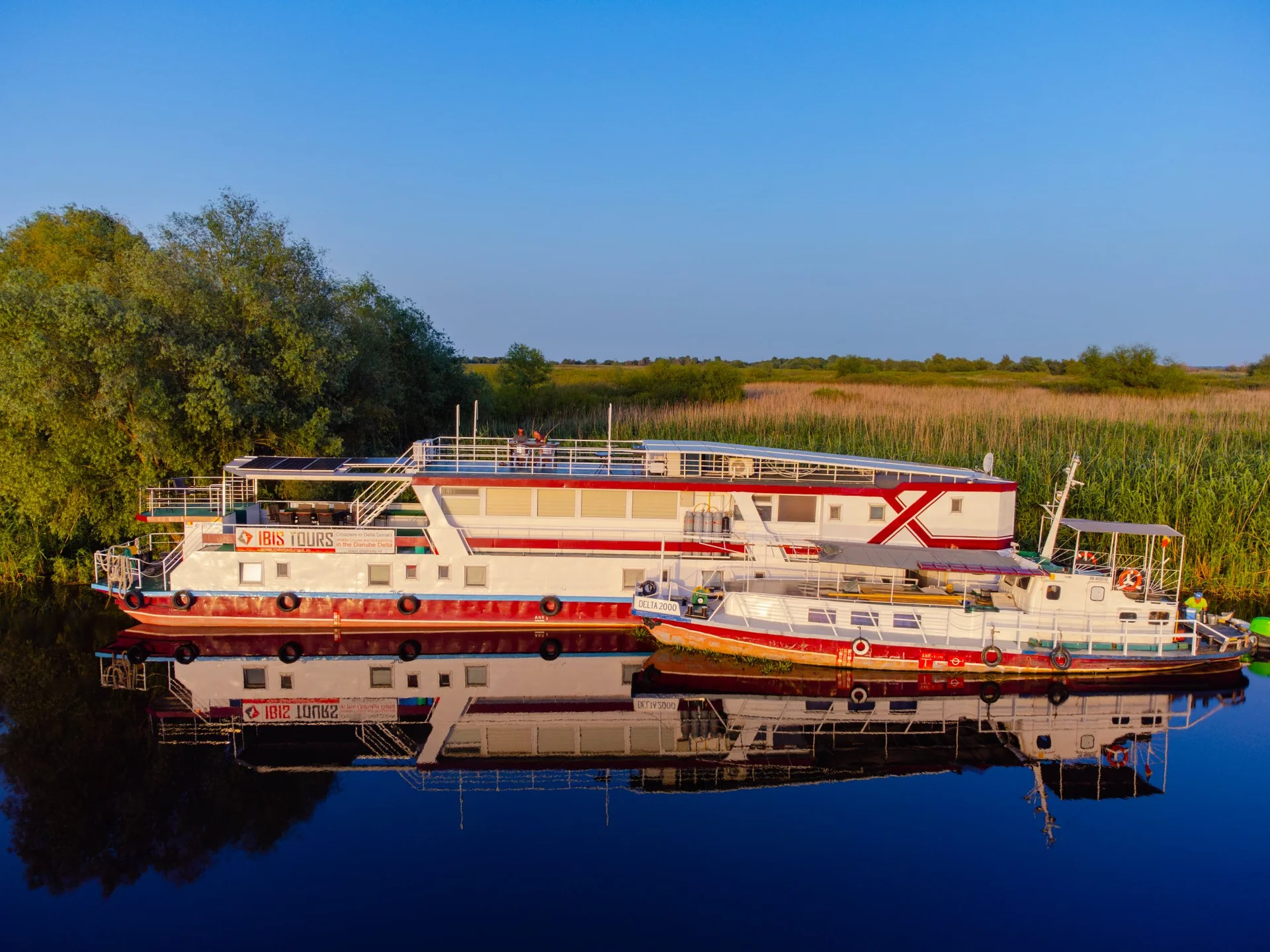
Ibis Tours has applied a voluntary non-disturbance protocol at pelican colonies since the company's founding in 1995. The protocol — engine cut at 200m, no approach during critical incubation April 1–May 15, no vessel movement until birds resume normal behaviour — is described to all guests before the first colony approach. We consider this as important as any other aspect of the programme.
When to Visit for the Best Pelican Experience
All our April–October departures offer pelican encounters. But the quality varies:
April: Adults arrive on the colony. Courtship and nest-building active. Pouch colour vivid orange-red. Numbers building. Good encounters but colonies still settling — some disruption possible.
May: Peak season. Both species at maximum colony activity. Cooperative fishing groups at largest. Adults in full breeding plumage. Long days. This is the month where 95%+ sighting rates are achieved.
June: Chicks visible in the colony (at 200m distance). Adults flying long distances carrying fish for chicks — the extraordinary sight of a Great White Pelican landing with a pouch full of fish for a chick the size of a small dog.
July: Post-breeding concentrations. Enormous rafts of adults and juveniles on the open lakes — groups of 1,000–3,000 birds. Less dramatic colony behaviour but more raw numbers.
August–October: Numbers declining as birds move south. Last remaining adults and juveniles still on the lakes. Good conditions for large-scale flight photography.
Ready to see it? Our 4-Day and 5-Day cruises include full core-zone access, morning dawn excursions to the pelican fishing grounds, and 30 years of experience positioning the motorboat where you're most likely to see cooperative fishing flocks at close range. Contact us or book directly — our 2026 season departures run from April through October.