

The short answer: yes, you can visit the Danube Delta without a guide, and it's still a worthwhile experience. The longer answer requires understanding what the delta actually consists of — and why the access zones matter so much for wildlife watching specifically.
The Danube Delta Biosphere Reserve is divided into strict protection zones, core zones (requiring an ARBDD permit and licensed guide), and buffer/tourist zones that are freely accessible. The tourist zone is substantial and genuinely beautiful. It contains good birding. What it doesn't contain is the Dalmatian Pelican colony.
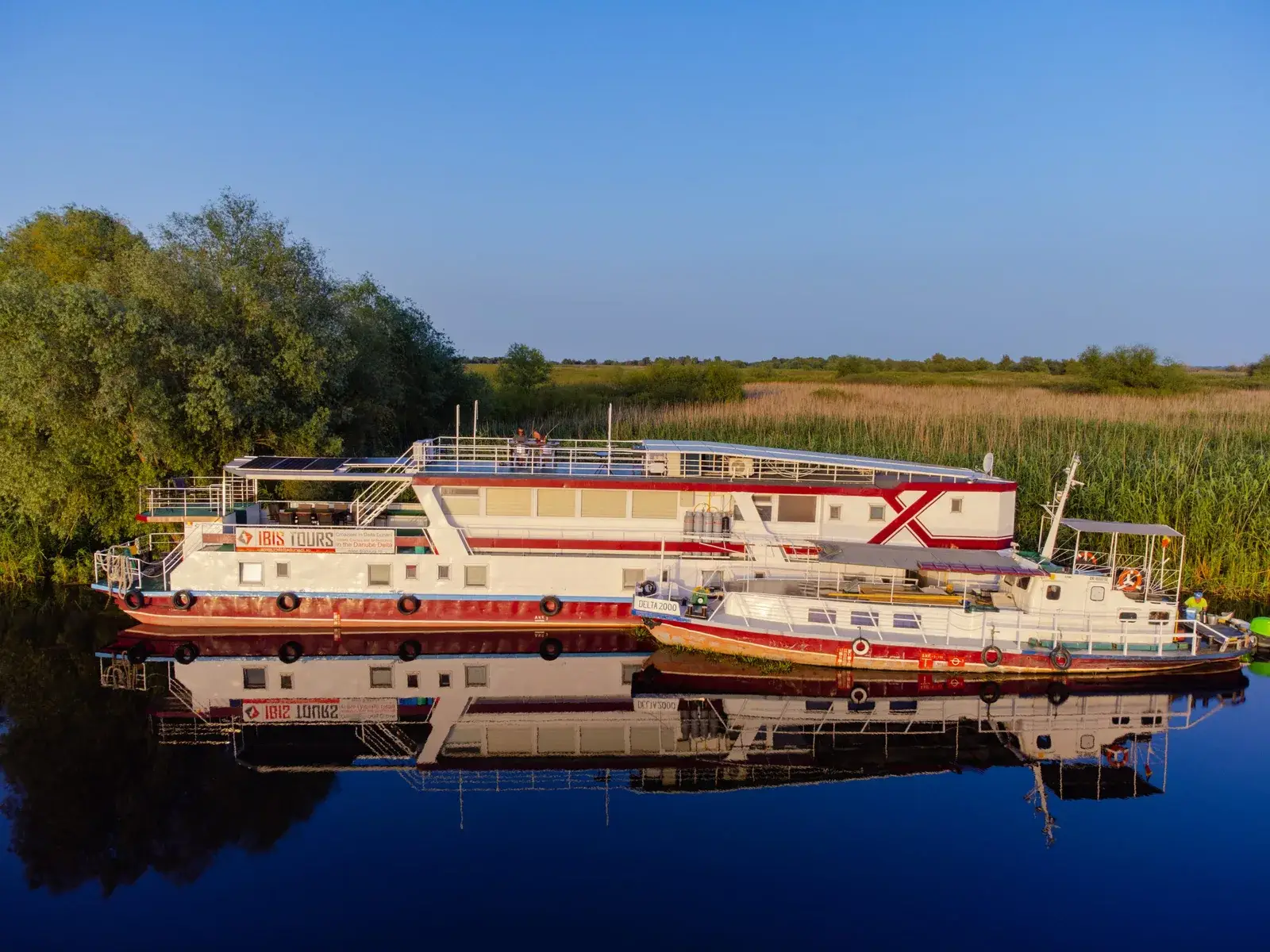
Getting to the Delta
The Danube Delta is accessed from Tulcea, a small city on the northern arm of the Danube approximately 4 hours from Bucharest by road. There is no airport in Tulcea — all visitors fly into Bucharest (Henri Coandă, OTP) and transfer.
Bucharest to Tulcea options: - By car or transfer: 4 hours on the A2 motorway to Constanța, then north on the DN22. Direct and easy. - By bus: Several daily services from Bucharest, 4–5 hours. Affordable. - By train: Slower (5–6 hours) but comfortable, with connections from Bucharest Nord.
From Tulcea, the delta is reached by boat. The state ferry (NAVROM) connects Tulcea to the delta villages of Sulina, Sfântu Gheorghe, Crişan, and Mila 23. Journey times vary: Sulina 2.5 hours, Sfântu Gheorghe 2–3 hours.
Fast boats (hidroglisoare) reduce journey times significantly but are more expensive.
Which Village to Base In
Sfântu Gheorghe is the best choice for wildlife-focused independent visitors. It sits on the southernmost arm (Sfântu Gheorghe arm), is accessible by NAVROM ferry, has a beach on the Black Sea coast 3km away, and local boat operators offer reasonable excursions into nearby channels. The village has a few guesthouses (pensiuni) and a camping site.
Crişan sits on the Sulina arm (the main navigable channel) and offers the most frequent ferry connections. Several guesthouses and one hotel. Local boat hire is easy to arrange. Proximity to Mila 23 gives options for varied day trips.
Sulina is the furthest town on the Sulina arm — historically significant (European Commission headquarters, 19th century) with a cemetery worth visiting and channels nearby. Less natural habitat immediately accessible than Sfântu Gheorghe.
Mila 23 is a small village popular with Romanian tourists. Quiet, basic, peaceful. Limited wildlife access compared to Sfântu Gheorghe.
What You Can See Independently
A self-guided visitor spending 2–3 days based in Sfântu Gheorghe or Crişan, hiring a local boat for morning excursions, can expect the following in May:
Almost certainly: Great White Pelican (often in groups on the main arms), Squacco Heron, Grey Heron, Purple Heron, Little Egret, Great Egret, Pygmy Cormorant, Whiskered Tern, Common Tern, Black Tern, Marsh Harrier, Reed Warbler, Great Reed Warbler, Sedge Warbler, Kingfisher, Common Kingfisher.
Likely: Night Heron (dusk), Penduline Tit, Bearded Tit, Cetti's Warbler, Savi's Warbler, Little Bittern, Garganey, Ferruginous Duck (outer areas).
Possible but not guaranteed: Dalmatian Pelican (distant views on the outer arms, occasionally), White-tailed Eagle (occasional fly-over), Spoonbill.
Unlikely without core zone access: Close-range Dalmatian Pelican approach, Ferruginous Duck at nest, Collared Pratincole (Dobrogea only), any nocturnal species with confidence.
A realistic self-guided May total: 60–80 species with effort and competent identification skills.
Hiring a Local Boat
Local boat hire (barcă cu motor) is available in all delta villages. A boat with driver for a half-day typically costs €30–60 depending on distance and negotiation.
Practical points: - Agree the route and duration before departure. Drivers who are not birders will follow tourist routes unless directed otherwise. - Bring a field guide or species images to communicate target species to non-English-speaking drivers. - Agree on engine-cut protocol — the most important factor for wildlife observation. - Start early: depart by 06:00 if the driver agrees. Drivers accustomed to tourist groups often don't start until 08:00–09:00. - Bring your own food, water, and sun protection — there are no stops.
What local drivers can and cannot do: Local boat drivers operate in the buffer zone. They cannot legally take you into the strictly protected core zones, and they do not have the naturalist knowledge to identify species, predict behaviour, or position for photography. This is not a criticism — it's simply what local boat hire is.
The Honest Assessment
A self-guided visit to the Danube Delta is genuinely worthwhile. The outer delta is beautiful, the birding is good by any European standard, and the atmosphere — still water, reed beds, the sound of a hundred species at dawn — is unlike anywhere else on the continent.
But if Dalmatian Pelican at close range, access to the remote core lakes, or a species count above 80 are important to you, self-guided is the wrong approach. The delta's most significant wildlife areas are protected exactly because they need protecting — and the ARBDD permit system exists for good reason.
The guided/self-guided choice is not about competence or budget. It's about access. The core zones are closed to independent visitors by law. No amount of skill, experience, or persistence changes that.
The Guided Alternative
4-day floating hotel cruise, full board, core zone access, expert guide. From €1,090 per person — less than most UK operators charge for a comparable programme.