

The Danube Delta — Europe's second largest river delta and the continent's finest wetland — is open to visitors from April through October. But within that window, each month offers a completely different wildlife experience. Whether you are chasing pelican colonies at peak breeding season, photographing waders during autumn migration, or simply wanting the warmest weather and longest days, the timing of your visit matters.
This guide draws on 30 years of running wildlife cruises in the delta. We have been out on the water in every month of the season, in every kind of light and weather. Here is what we have learned.
April & May — Peak Breeding Season
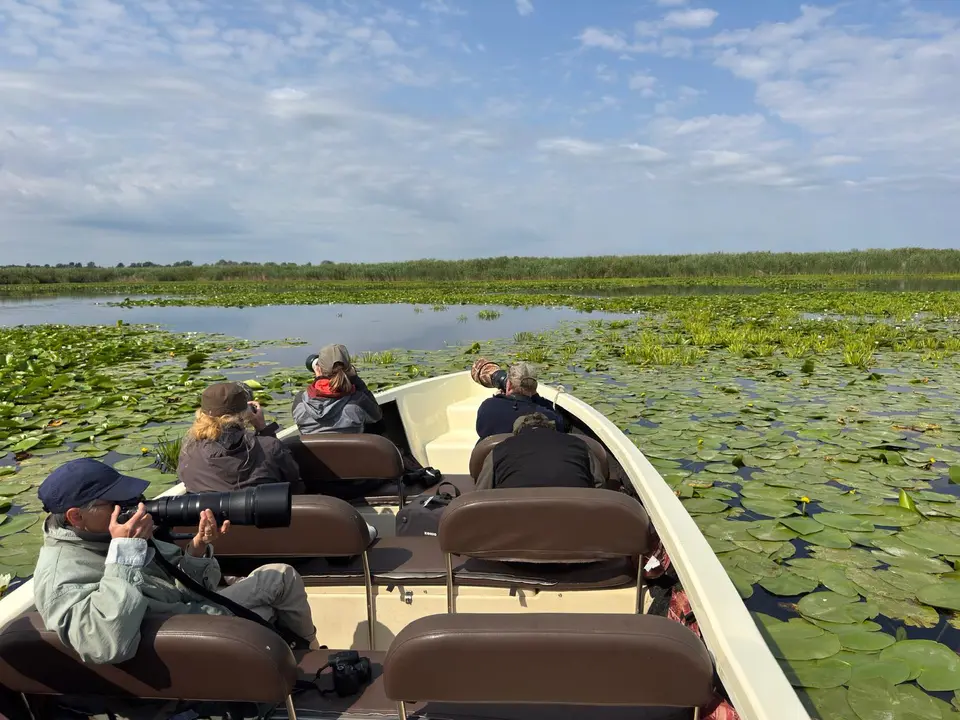
April and May are widely considered the best months to visit the Danube Delta for birdwatching. The delta is at its most dramatic: the Great White Pelican and Dalmatian Pelican colonies are establishing nests on remote islands, herons and cormorants are displaying, and migratory species are pouring through on their way north.
On a good May morning at Lake Fortuna or Trei Iezere, you can expect to see 50 to 60 species before breakfast. The light is soft and golden, temperatures are comfortable (18–24°C), and the reed beds are alive with the calls of Marsh Harriers, Bitterns, and hundreds of singing warblers. Glossy Ibis feed in shallow bays in flocks of hundreds. Pygmy Cormorants — one of Europe's rarest birds — are breeding on every willow island.
For photographers, May combines the best light conditions with the highest density of subjects. The pelican feeding colony at Lacul Fortuna alone can hold 1,000 pairs of Great White Pelicans.
June & July — Long Days, Water Life
June brings the longest days and the highest water temperatures. The delta quietens slightly as spring migration ends, but the breeding colonies remain active and the landscape is lush and green. Water lily flowers begin blooming in masses on the open lakes — a spectacular sight.
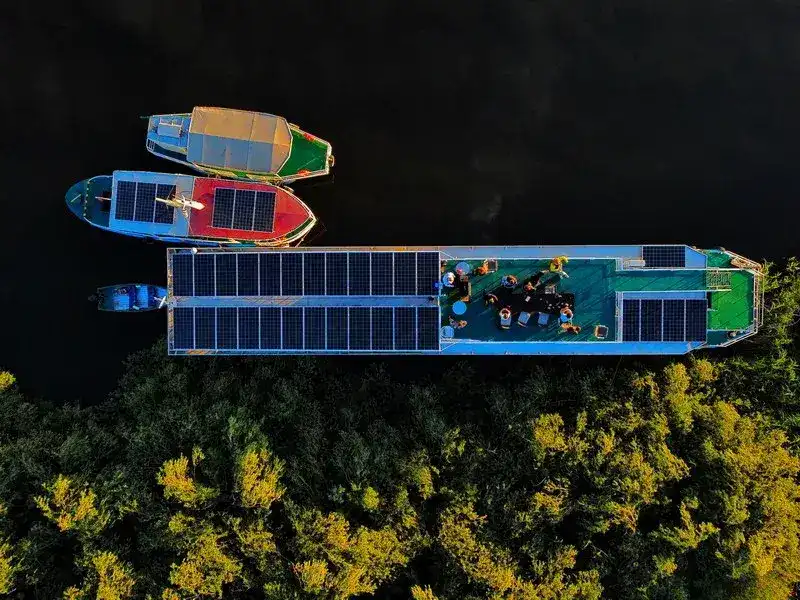
July is excellent for waterbirds in general. Young pelicans are learning to fly, Little Egret colonies are at full activity, and the White-tailed Eagle — Europe's largest eagle — is frequently seen hunting over the open water. Nights at anchor deep in the delta are warm and starlit, with the calls of Night Herons echoing across the water.
Temperatures in July can reach 32–36°C during the day. We always recommend early morning excursions (5:30 AM departure) and a quiet afternoon on the shaded deck during peak heat.

August & September — Migration Begins
By August the breeding season is winding down, but the delta transforms into one of Europe's great migration staging posts. Waders begin appearing on the mudflats and lake margins — Ruffs, Black-tailed Godwits, Curlew Sandpipers and Little Stints in numbers that rival even the UK's best estuaries.
September is arguably the most diverse month of the entire season. Post-breeding dispersal brings unexpected species — Spoonbill, Purple Heron, and Black Stork are seen daily. Autumn migration is in full swing. The Dobrogea steppe north and west of the delta comes alive with raptors: Montagu's Harrier, Levant Sparrowhawk, Short-toed Eagle.
Temperatures are ideal (22–27°C), the summer tourist crowds have largely departed, and the light — lower and more golden than in summer — is perfect for photography.
October — Quiet Beauty, Late Migration
October is the final month of our cruising season, and a hidden gem. The reed beds turn golden and amber, the light is extraordinary, and the delta is almost entirely free of other visitors. Wildfowl are arriving from the north — Mallard, Pintail, Pochard — and the open lakes host thousands of ducks and geese in staging flocks.
Raptor migration over the Dobrogea steppe continues until mid-October, with Steppe Buzzard and Long-legged Buzzard often seen in numbers. The last Dalmatian Pelicans depart in October, sometimes assembling in groups of 50 or more before their departure — a haunting sight.
The main risk in October is weather: strong northerly winds can make motorboat excursions uncomfortable, and fog is more frequent. But on a calm October morning with the mist lifting off golden reed beds, the Danube Delta is perhaps the most beautiful place in Europe.
Quick Reference: Month by Month
April | 15–20°C | Spring migration peak | Diversity, warblers, raptors
May | 18–24°C | Breeding colonies at full activity | Pelicans, photography, species count
June | 23–28°C | Water lily bloom, long days | Waterbirds, scenic cruising
July | 28–35°C | Young pelicans, eagles | Families, swimming, delta life
August | 26–32°C | Wader migration starts | Shorebirds, mixed species
September | 22–27°C | Post-breeding dispersal | Raptors, diversity, photography
October | 14–20°C | Wildfowl arrival, golden reeds | Atmosphere, late migrants
Plan Your Danube Delta Visit
Ready to time your visit perfectly? Our expert guides know exactly when and where to find each species.