
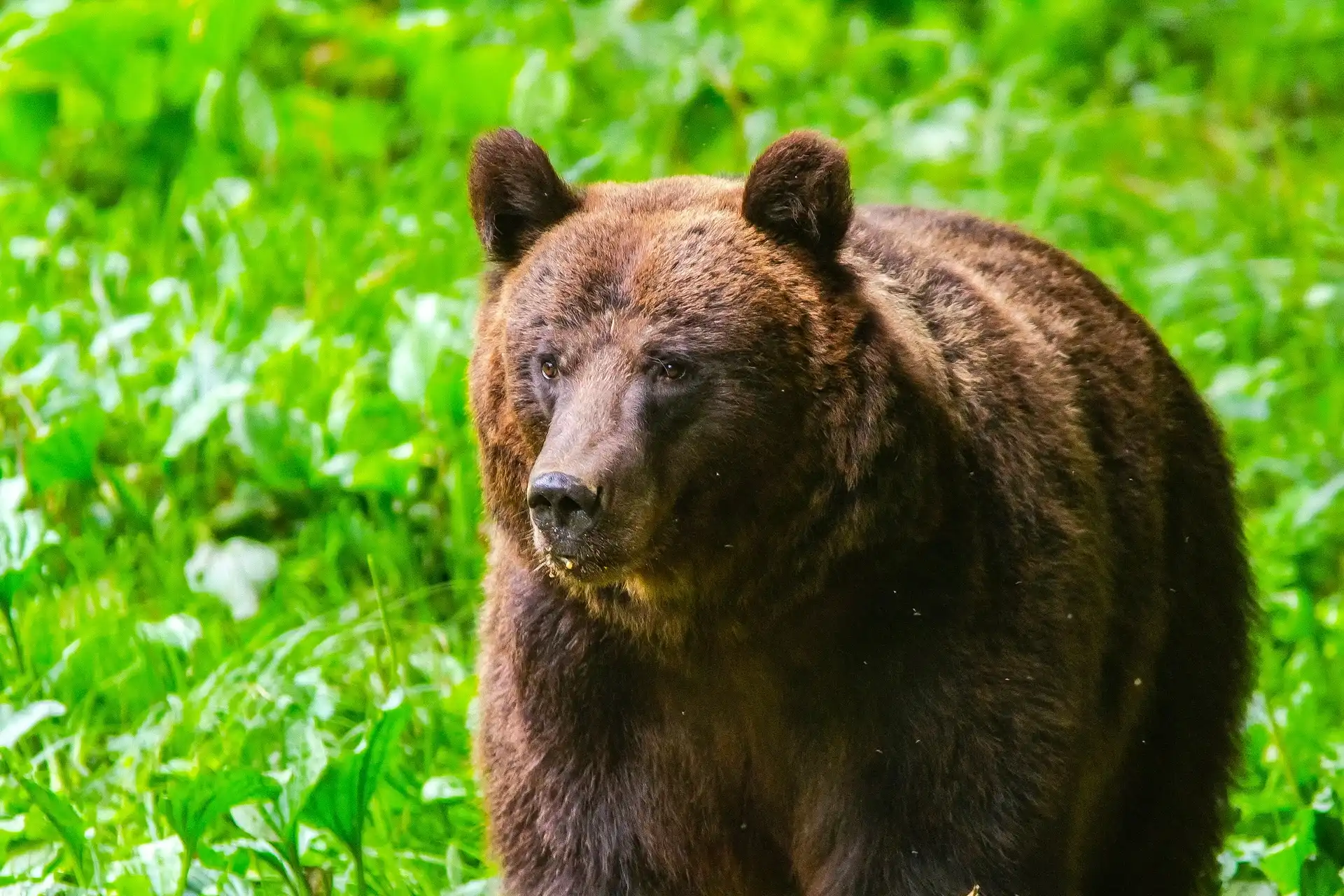
Romania is Europe's bear country. The Carpathian Mountains hold a population of approximately 6,000+ brown bears — more than all other European countries combined, excluding Russia. Yet despite this abundance, seeing a wild bear requires knowledge, patience, and local expertise. They are not found by walking forest paths. They are found by sitting quietly in purpose-built hides at dusk, in places where their behaviour has been studied for decades.
This guide explains where Romania's bears are, how bear watching works, what to expect on a guided trip, and how to combine it with a Danube Delta birdwatching cruise for the definitive Romanian wildlife experience.
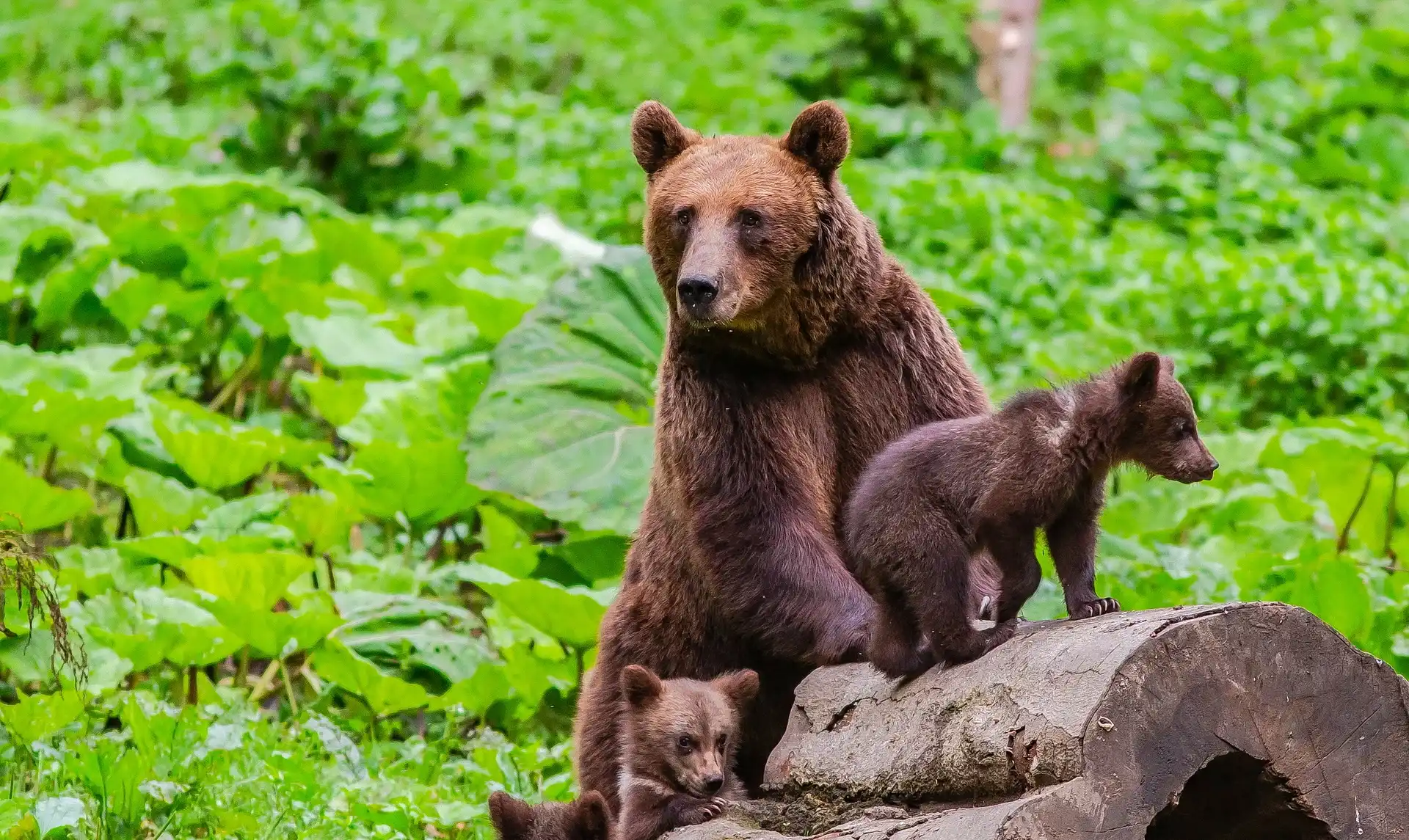
The Carpathian Bear Population
Romania's bears are concentrated in the arc of the Carpathian Mountains: the Southern Carpathians (Bucegi, Piatra Craiului, Retezat), the Eastern Carpathians (Ceahlău, Hăşmaş) and the curves around Braşov, which is the most accessible area for wildlife tourism.
The Braşov-Zărnești area has become Romania's bear-watching capital for good reason: the forest here has been managed sustainably for decades, the bears are habituated to the presence of hides (though not tame or food-conditioned in any way), and the mountain scenery — with the Bucegi Massif rising to 2,500m — is spectacular.
Our bear watching programme is based in Zărnești, a small town at the foot of the Piatra Craiului National Park. The forest hides used are operated by forestry and hunting management divisions who have been managing wildlife here for more than 130 years. Success rates — defined as seeing at least one bear — consistently exceed 95% across our visits.
How Bear Watching Works
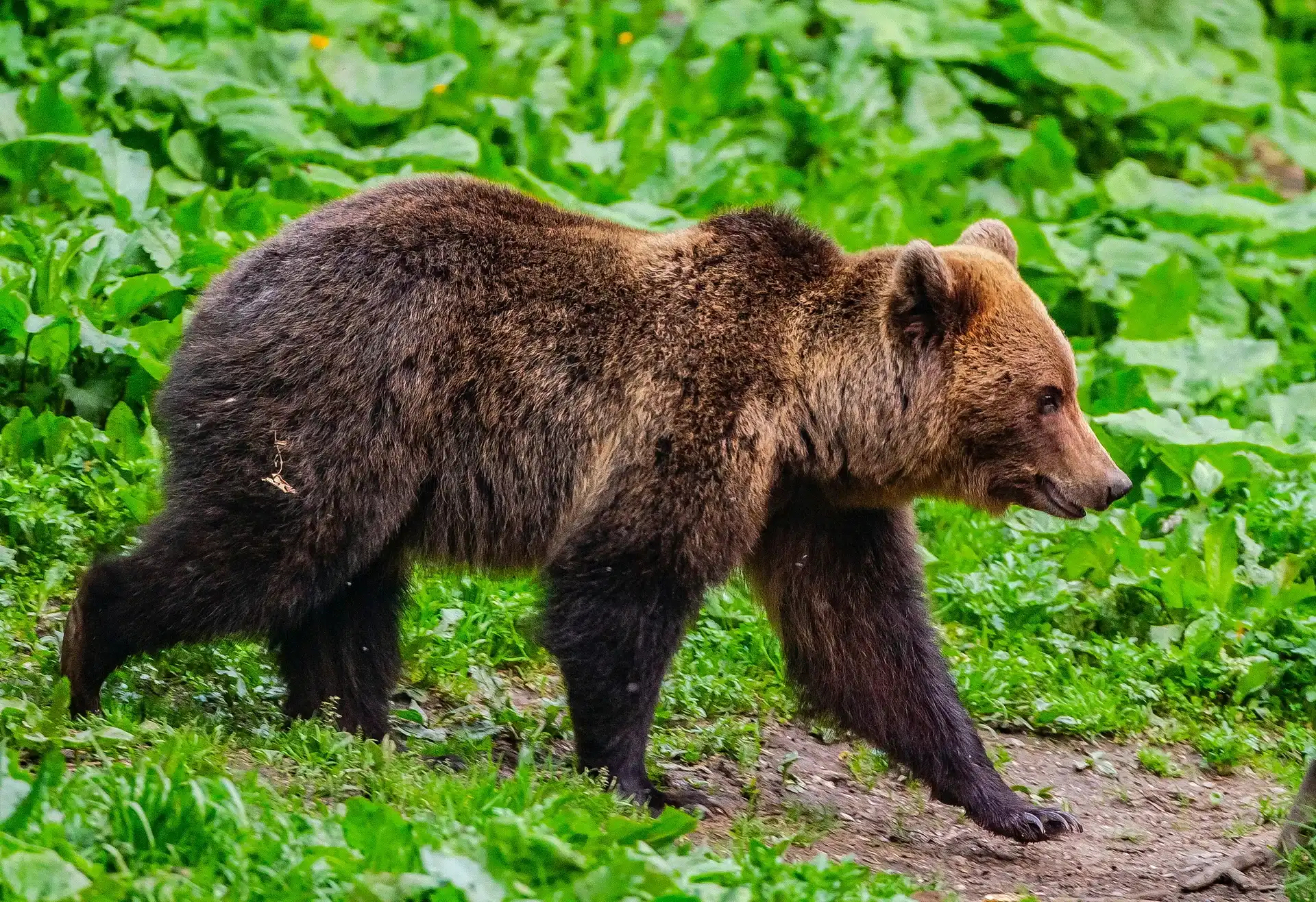
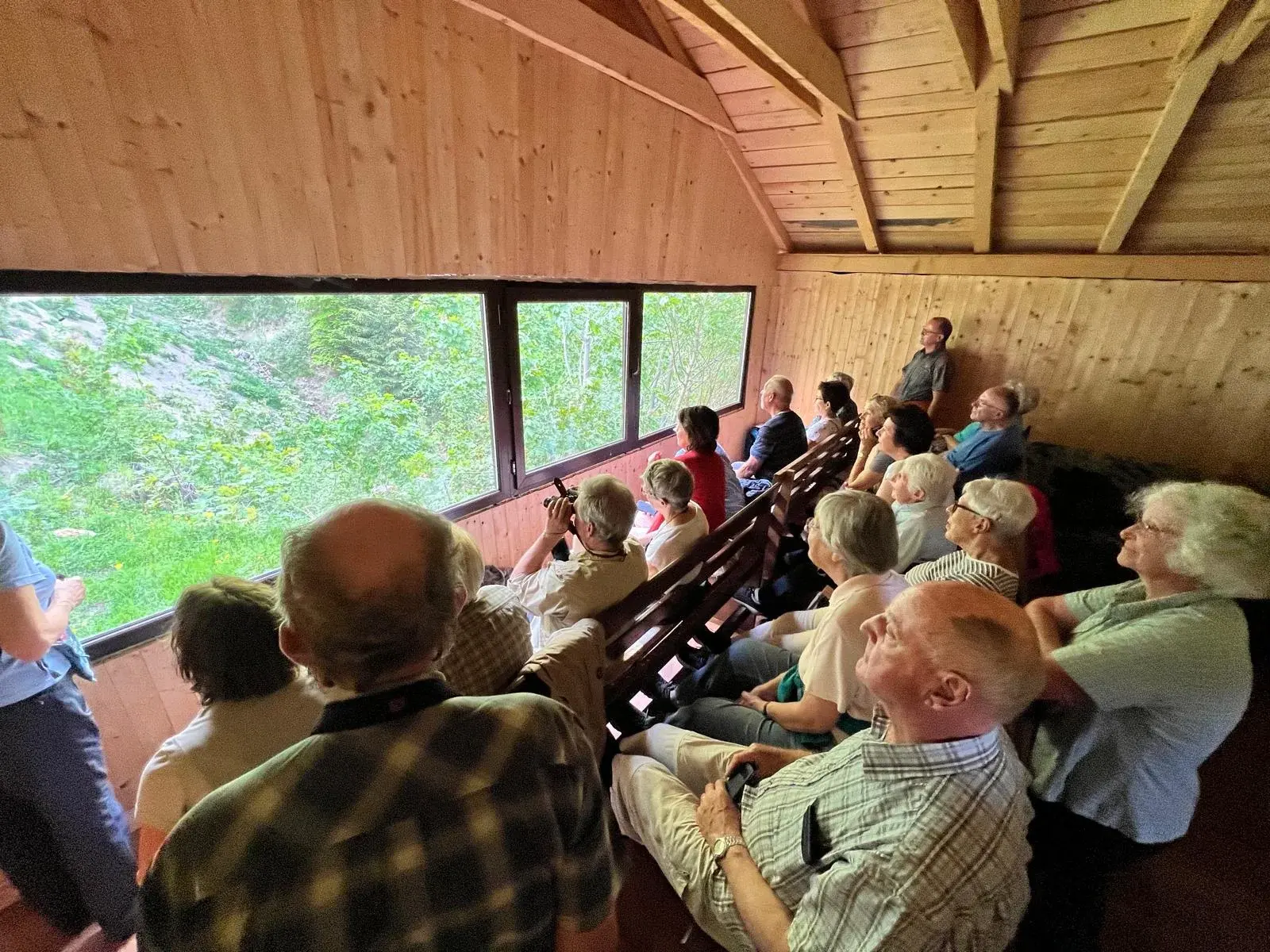
The standard approach is an elevated hide: a wooden platform 4–6 metres above ground, positioned at the edge of a forest clearing where bears are known to forage. The hide overlooks a natural feeding area — no artificial feeding is used by responsible operators.
You arrive at the hide in the afternoon, typically 2–3 hours before dusk. Movement and noise are kept to an absolute minimum. The guide communicates by written notes or whisper only. Bears begin appearing as the light drops — usually in the hour before sunset — and may remain visible until full dark.
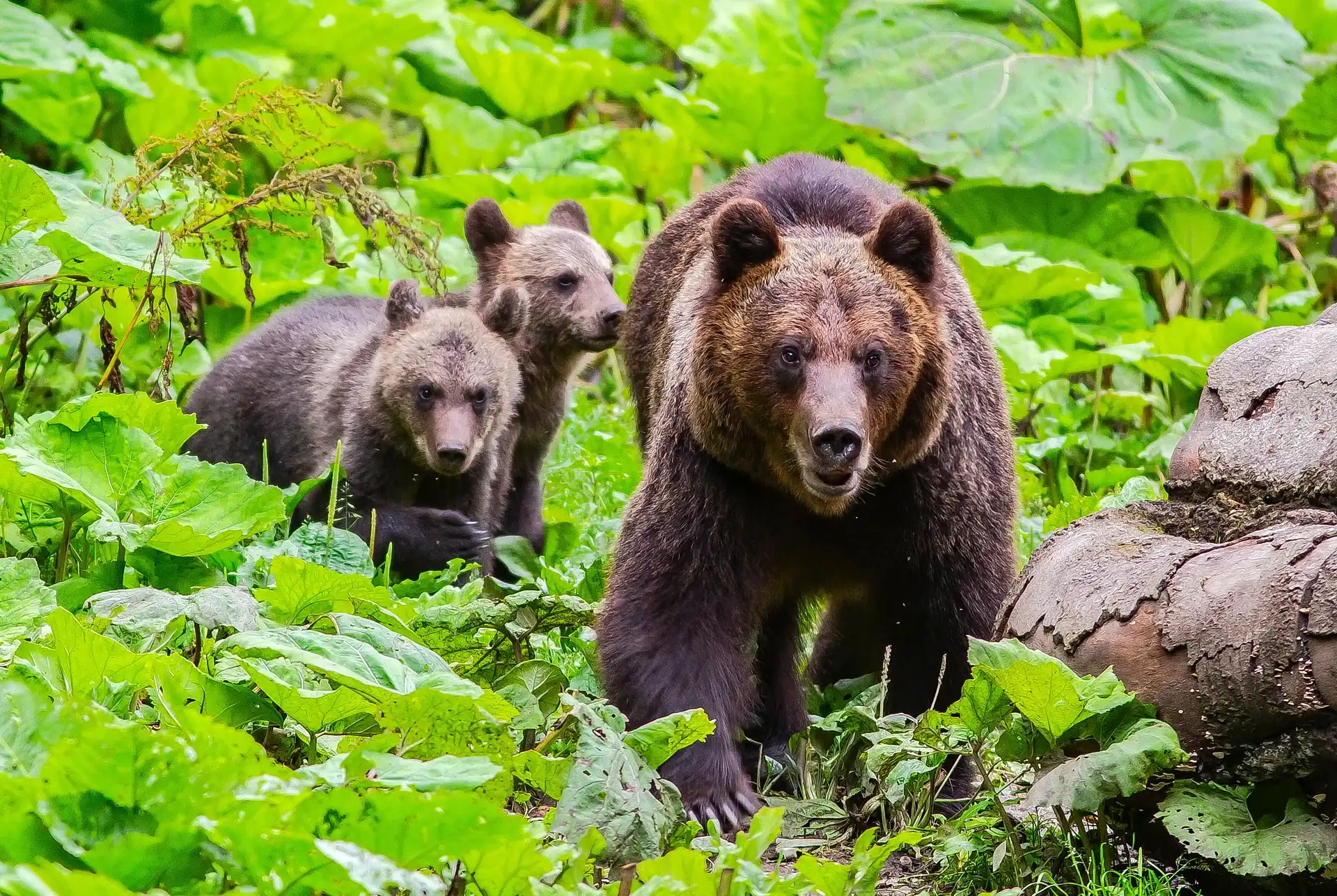
A typical session lasts 3–4 hours. On good evenings, you may see more than 3 or 4 individual bears, sometimes including females with cubs. Photography is best in the golden hour of light just before sunset; a 300–500mm lens is recommended.
Other species commonly seen from the hides include Red Deer, Roe Deer, Wild Boar, Red Fox, and occasionally Wolf. The Carpathian forests also hold Lynx, though sightings are very rare.
Best Time for Bear Watching
Bears are present in the Carpathians year-round but enter a dormancy period in winter (roughly December to March). The practical watching season runs May through October.
May–June is excellent: bears are active after winter and are often foraging widely. Cubs born in January-February are now 4–5 months old and accompany their mothers on foraging trips — family groups are the most sought-after sighting.
July–August sees bears gaining weight before winter. Activity peaks in the evening and early morning.
September–October is arguably the best period for consistent close sightings. The bears are in hyperphagia — a pre-hibernation feeding frenzy — and their movements become predictable. They need to eat 20,000 calories per day and spend most of their waking hours at known food sources. Red Deer are also rutting in October, adding the extraordinary sound of stags bellowing to the forest experience.
The 10-Day Romania Wildlife Tour
Our most popular combined programme links bear watching in the Carpathians with a 4-day delta cruise. The itinerary begins with 3 nights near Zărnești — two evenings in the hides, a day walk in Piatra Craiului National Park, and a scenic drive through the Braşov basin. You then travel to Tulcea private transfer (approximately 4 hours) and board the floating hotel for the delta cruise.
The contrast is remarkable: from forested mountain slopes and cool evening air in the Carpathians, to the vast flatness of the delta, the smell of reeds and river mud, and the extraordinary pelican flights of the early morning. Two of Europe's greatest wildlife habitats, separated by a few hours' drive — and only a handful of tour operators offer genuine expertise in both.
Experience Romania's Wild Places
Ready to see Europe's largest bear population? Our expert guides know exactly where and when to find them.